

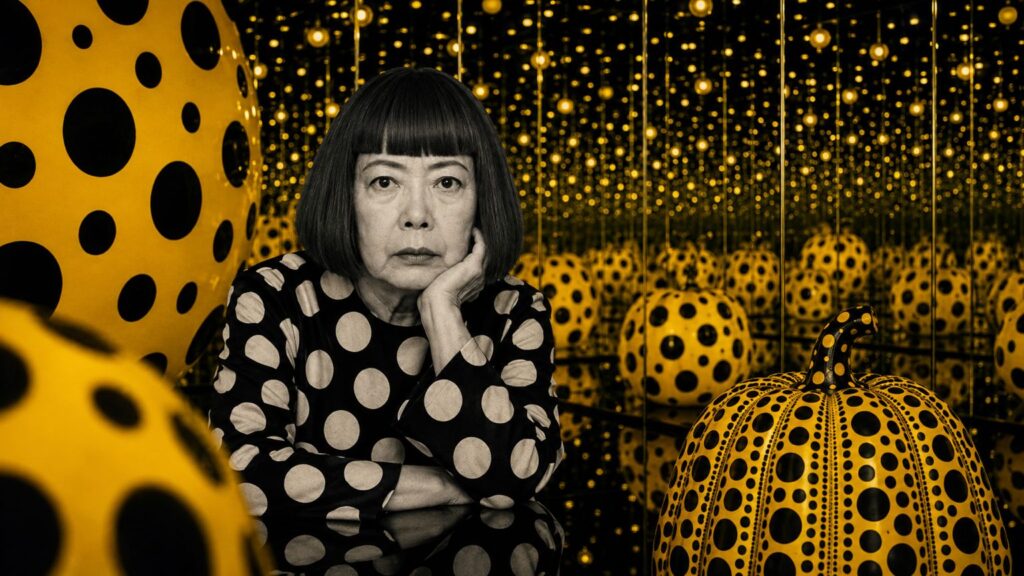
The death of Yayoi Kusama is not only the end of a long artistic life, but also an opportunity to look again at the legacy left by one of contemporary art’s most recognisable figures. Dots, mirrors, nets and pumpkins are now known throughout the world. Yet to remember Kusama only through these images is to overlook the deeper concerns of her art. At the centre of her practice were questions of selfhood, the body, repetition, infinity, and the boundaries that separate the individual from the world around them.
Born in 1929 in Matsumoto, Japan, Kusama’s relationship with art began in childhood. Although she grew up in an environment that did not support her wish to become an artist, she continued to draw and paint. The intense visual experiences she had as a child became an important source for the ideas of repetition and multiplication that would shape her later work. Her experiences of seeing objects, flowers and surfaces multiply would eventually reappear in her art as dots, nets and repeated forms.
Yet Kusama’s art cannot be explained simply through her psychological experiences. What she did was not merely reproduce what she experienced, but transform those experiences into an artistic language. Fear, obsession, repetition and anxieties surrounding the dissolution of the self gradually became part of a formal and conceptual investigation. For this reason, Kusama’s dots are not simply decorative elements, nor are her nets merely repeated patterns. Each repetition carries the idea of the individual crossing its boundaries and merging into a larger whole.
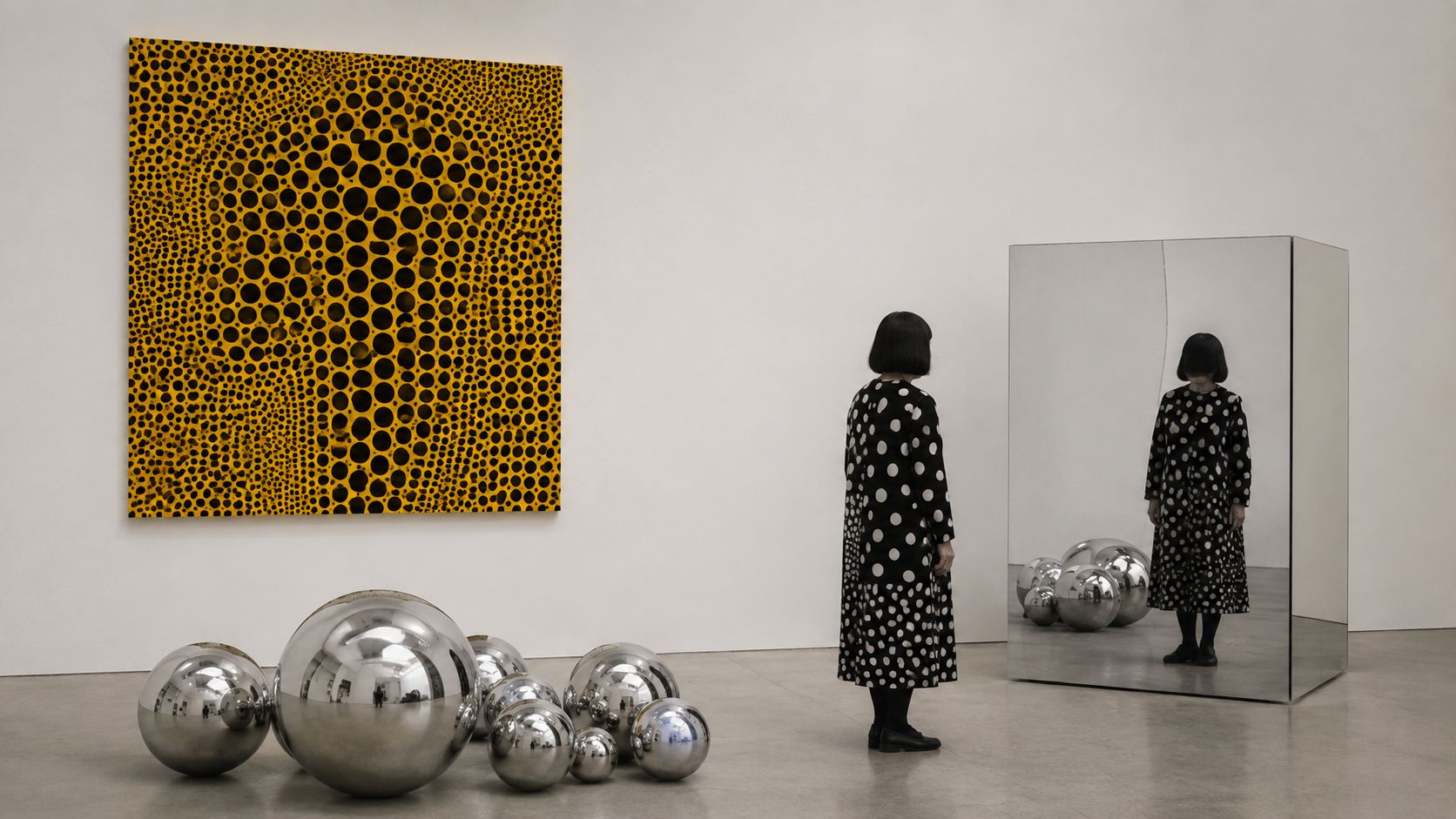
Her move to America in 1957 marked a new period in her artistic life. When she settled in New York, she did not find an art world ready to accept her. She faced financial difficulties and tried to establish herself in an environment dominated by male artists. Yet she did not retreat from her practice. Moving beyond painting, she turned to sculpture, performance and installation, questioning the idea that art had to exist only on canvas.
The struggle Kusama faced was not simply a struggle to be recognised as an artist. It was also an attempt to make her voice heard as a woman artist within a male-dominated art world. Female artists had far less visibility in the art world of the 1960s than they do today. Rather than accepting the limited space offered to her, Kusama sought to expand the boundaries of art. She used her body, entered public space, criticised the art market and challenged the position of the viewer as a passive observer.
Her performances of the 1960s are important in this respect. In works where bodies were covered with polka dots, she confronted nudity, sexuality, war and social conventions. The dots made the body visible while simultaneously making its individual boundaries less distinct. For Kusama, the body was not simply an object to be represented; it became the material of the artwork itself.
This approach also helps explain her place within avant-garde art. To be avant-garde does not simply mean producing unusual or unconventional works. It means questioning established assumptions about what art is, where it can take place, what materials it can use and how the viewer can relate to it. Kusama’s practice clearly embodies this questioning. Her movement from canvas towards objects, the body and space; her incorporation of performance and installation; and her challenge to the boundary between art and everyday life placed her among the important experimental artists of her time.
There was another dimension to Kusama’s struggle with the art world. She repeatedly spoke about her ideas not receiving sufficient recognition and about male artists gaining greater visibility with similar ideas. For this reason, her New York years should not be understood simply as the rise of a successful artist. They were also the struggle of a woman artist to have her ideas and work recognised as her own.
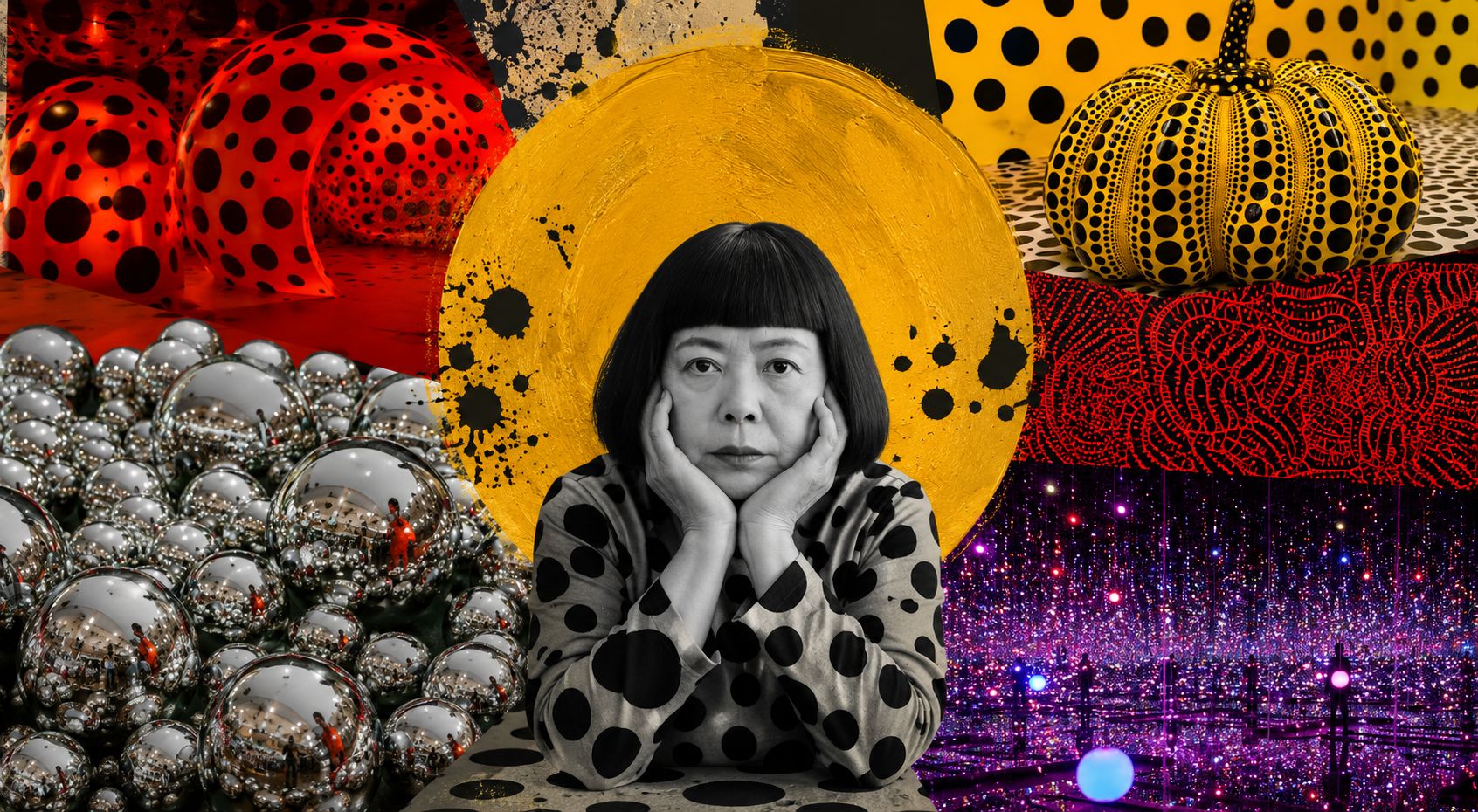
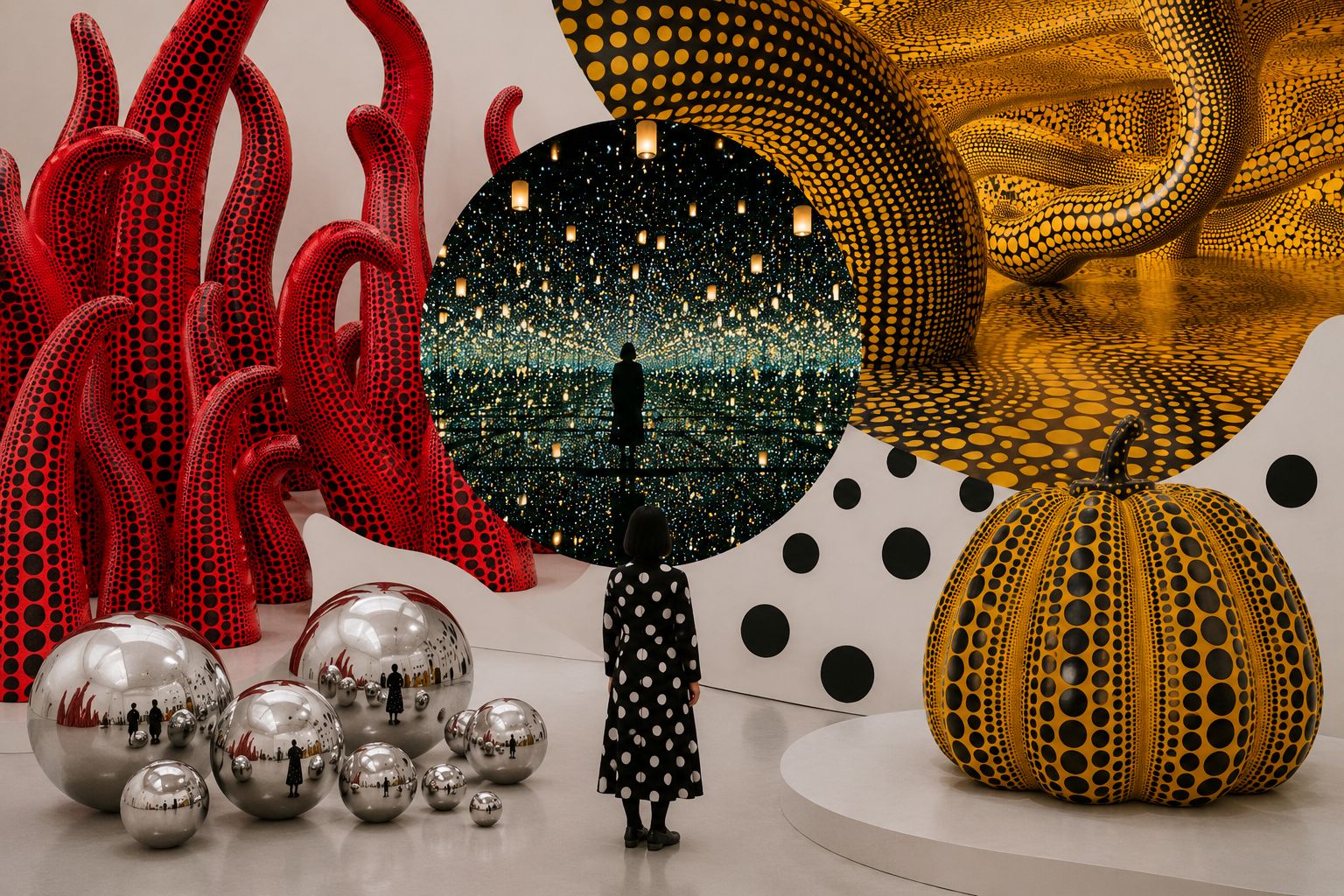
Her 1966 work Narcissus Garden is a striking example of this relationship with the art market. The installation of mirrored spheres confronted viewers with their own reflections while also questioning the economic value of the artwork. By offering the spheres for sale, Kusama made an ironic intervention into the way the art market transforms an aesthetic object into a commercial product. She was not simply making an artwork; she was also making the system in which she worked part of her subject.
The Infinity Nets paintings she developed during the same period show how systematically Kusama transformed repetition into an artistic language. Covered with small, continuously repeated nets, the surfaces have no clear centre. The eye struggles to find a beginning or an end. As a single form continues to multiply, the importance of the individual element diminishes and the entire surface becomes a unified system.
Kusama did not merely represent infinity; she turned it into a method of making.
This idea was later transferred into space through her mirror rooms. In the Infinity Mirror Rooms, the viewer is no longer simply an eye standing before the artwork, but a body entering it. Mirrors, lights and repeated forms make the boundaries of space uncertain. Seeing their own image multiplied seemingly without end, viewers are also encouraged to question where the boundaries of their own bodies begin and end.
These works are not disconnected from Kusama’s earlier practice. In the Infinity Nets paintings, repetition destabilises the boundaries of the surface; in the mirror rooms, it destabilises the boundaries of space. In one, infinity is constructed across a surface; in the other, it becomes a physical experience for the viewer.
Pumpkins are another important part of this visual world. The pumpkin form, which had interested Kusama since childhood, developed over the years into sculptures and installations of different scales. The yellow surfaces covered with black dots eventually became one of the artist’s most recognisable images. Yet the importance of the pumpkins goes beyond their popularity. The transformation of an object rooted in personal memory into part of a broader visual system through repetition and multiplication reveals Kusama’s ability to turn the personal into a universal visual language.
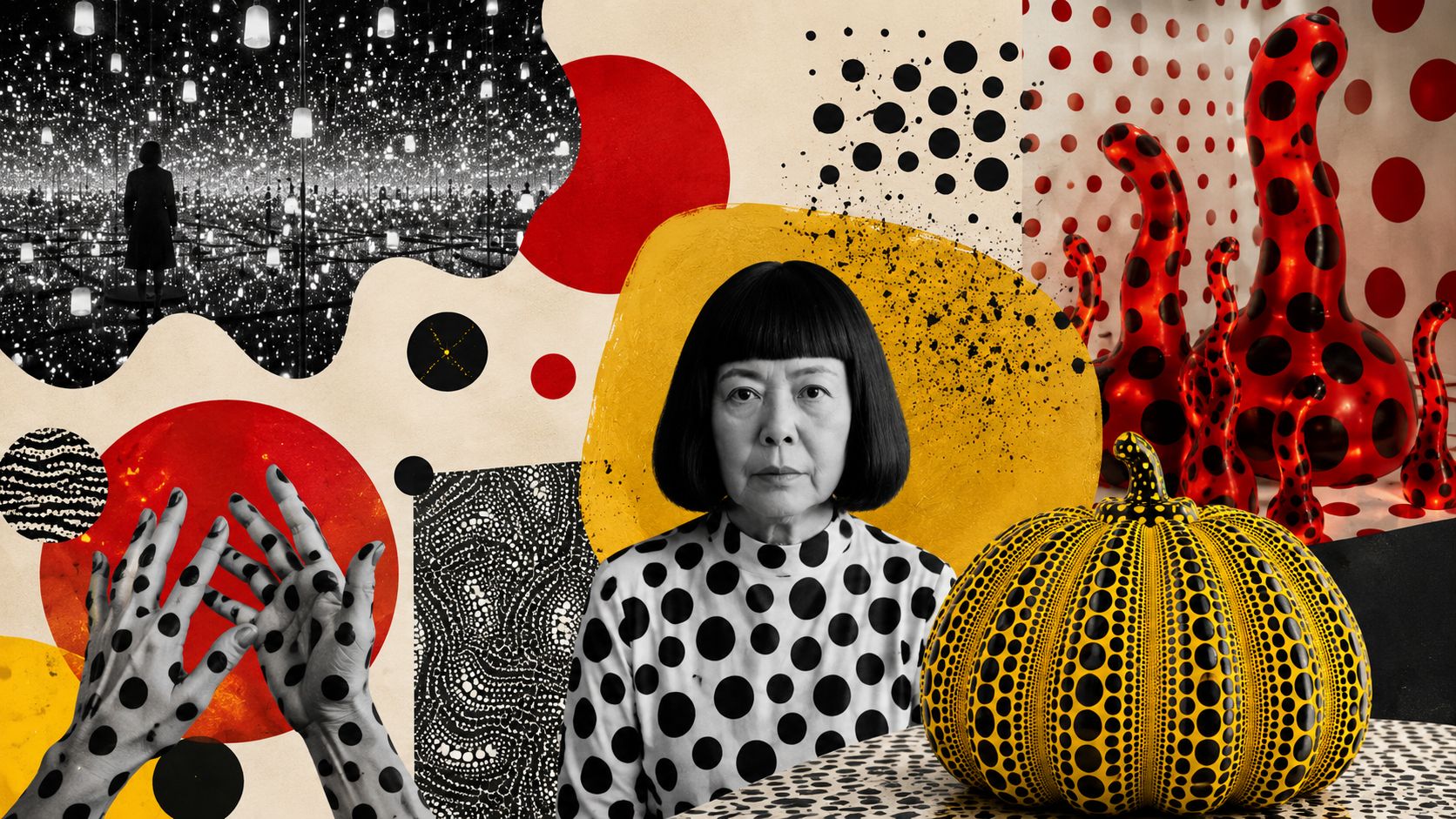
After returning to Japan in 1973, Kusama’s life entered another period. Because of ongoing psychological difficulties, she began living at a psychiatric hospital in Tokyo. This did not mark the end of her artistic life. While continuing to live at the hospital, she kept working in her nearby studio, painting, writing and producing new work.
It would be misleading to describe this period of Kusama’s life only as a story of illness. Her psychological experiences undoubtedly influenced the formation of her art, but to see her work merely as their product would overlook her agency and intellectual labour as an artist. Rather than simply translating her experiences directly into artworks, Kusama continually reworked them through repetition, multiplication, the body and infinity.
Perhaps the greatest strength of her art lies precisely here: she did not leave the personal as something belonging only to herself.
Kusama’s late international recognition is significant for the same reason. An artist who had once remained insufficiently visible at the centre of the art world eventually became one of the best-known figures in contemporary art. Her mirror rooms, in particular, reached millions of people through major exhibitions and museums around the world. Forms of production that might once have been regarded as experimental or marginal are now among the most widely experienced forms of contemporary art.
This transformation also shows why Kusama’s art should not be judged solely through popularity. Her achievement lies less in creating recognisable images than in maintaining and deepening her own artistic language over decades. Dots, nets, mirrors and pumpkins are not disconnected symbols; they are different expressions of the same underlying conceptual world.
With Yayoi Kusama’s death at the age of 97 in 2026, a long artistic life came to an end. She left behind not only a recognisable visual world of dots, mirrors and pumpkins, but an original artistic language bringing together painting, sculpture, performance and installation. By transforming personal experiences through repetition, the body, selfhood and infinity, Kusama also carved out her own place within a male-dominated art world. Her legacy lives on not only in the iconic images she left behind, but in her insistence on transforming personal experience into a universal artistic language and on sustaining her art on her own terms.
The Zamansız app


Zamansız Editör Kolektifi more from this author
Arts & Culture
IOANNA KUCURADI:A LIFE DEVOTED TO PHILOSOPHY
5 October 2026
Arts
BREAKING FROM WITHIN: AN INTERVIEW WITH OMER EKEN
19 September 2026
Arts
FROM WITHIN THE INVISIBLE : AN INTERVIEW WITH DELAL TEKIN
7 September 2026
Latest
Arts
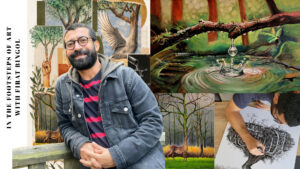
IN THE FOOTSTEPS OF ART: MEMORY, NATURE, ROOTS AND TRANSFORMATION AN INTERVIEW WITH FIRAT BINGOL
1 October 2026
Art Review
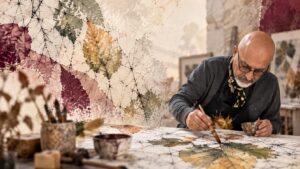
Batik Aesthetics and the Intersections of Contemporary Art in Erhan Şanal’s Portraits
15 September 2026
Arts
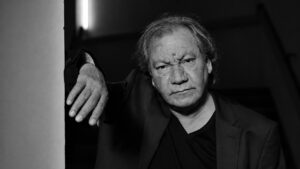
TONY GATLIF: A CINEMA BEYOND BORDERS
5 September 2026