
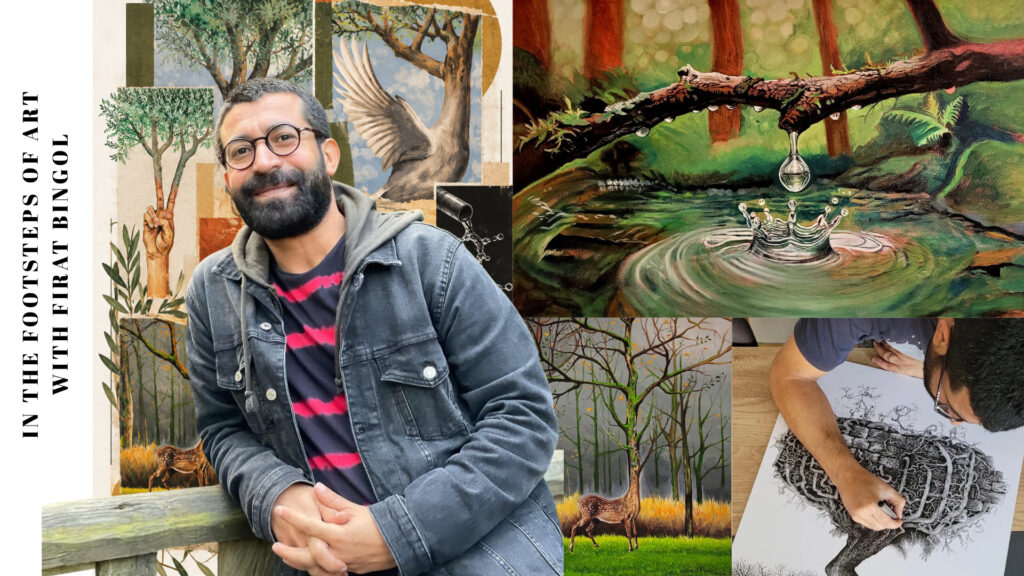
1. First of all, for our readers who are not yet familiar with you or your artistic practice, who is Firat Bingol? Looking back at the journey from the beginning of your relationship with art to the present day, what is the fundamental concern that drives you to create?
I graduated from the Painting and Art Education Department at Dicle University in 2004. However, my relationship with art education had already begun during my university years, in 2001, through the work I carried out with children working on the streets of Diyarbakır. Meeting the Association for the Development of Social and Cultural Life (SKYGD) at that time became an important turning point in my life. I received training from Sonja Bohländer Tanrısever, Zafer Kırac, Serra Müderrisoğlu, Serpil Deniz, Gokhan Deniz, Gazi Selcuk, Sadan Selvi, Cengiz Çiftçi and Abdullah Katay in children’s rights, community-based social work, pedagogy, art education and the Reggio Emilia approach. We received various forms of training at SKYGD for approximately two years. Following this process, in 2003, we founded the Association for Children Under One Roof. In this way, we established a local organisation and began extending our work with children beyond Diyarbakir to different cities in the region. During those years, I also began to experience art as not merely something that is produced, but as a powerful language through which people can express themselves and establish relationships with others.
I have been working in art education with children and young people for approximately 25 years. I have carried out projects with children who have experienced social exclusion and forced migration, as well as with children living in refugee camps, in different cities across Turkey. Between 2007 and 2026, I continued my work in art education at various private schools. In addition, I conducted workshops with people of different ages and from different social groups through non-governmental organisations, museums, art institutions, a psychiatric hospital and a prison. Over time, I also worked in different areas such as content development and curating.
As an artist, I move between different forms of expression, including painting, video, photography, objects and installation. Memory, nature, belonging, migration, the body and transformation have long been at the centre of my work. For me, what matters more than the material I use is the question I pursue; over time, that question finds its own language and medium.
I do not see my artistic practice and my work in art education as separate from one another. Both are about being curious, observing, asking questions, encountering others and being able to look at the world differently. I would describe myself, in the simplest terms, as an artist and art educator who thinks, creates and continues to learn through art.
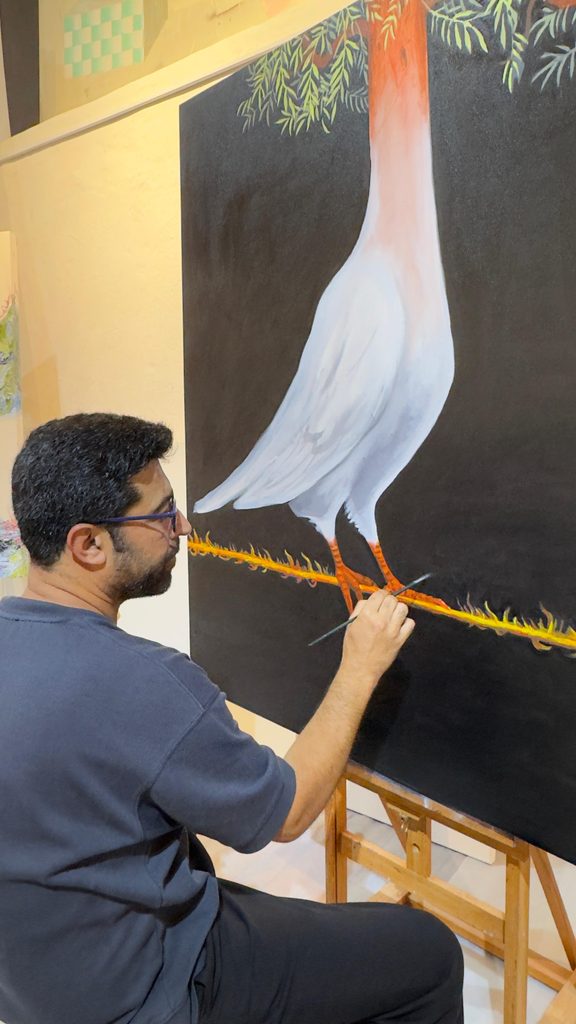
” From the Artist’s Photographic Archive ”
2. Your practice moves between video, photography, painting and participatory forms of production at different periods, creating a field of research that is not bound to a single medium. How is the relationship between thought and form established in your art? What determines the process through which an idea becomes a visual language?
For me, the process of making often begins with a question. I do not define myself solely as a painter, video artist or photographer. First there is a thought, a feeling or an issue; then that issue finds its own form of expression.
My relationship with video began in my second year at university. While studying art history, I encountered video art, and I was particularly interested in the work of Nam June Paik. At the time, my friend Endam Acar and I were making and editing videos and experimenting with different approaches. Sener Ozmen also made an important contribution during that period. He would watch our work and share his criticisms with us. These encounters encouraged us to focus more closely on what we wanted to say. I gradually began searching for ways to tell my own story.
I presented one of my first video works to the public at Diyarbakir Sanat Merkezi in 2003. In 2007, I participated in the 10th Istanbul Biennial with a video work. At that time, I was known primarily for my video works.
But painting had been part of my life much earlier. I remember drawing with pastel crayons on top of the stove when I was around four years old. The paint would melt and disappear; I would draw again, and it would disappear again. It was a magical moment for me.
Perhaps for this reason, I do not see video, painting and photography as completely separate fields. Sometimes a thought needs video, sometimes photography, and sometimes painting. Rather than choosing a technique, I follow a question; over time, that question finds its own medium.
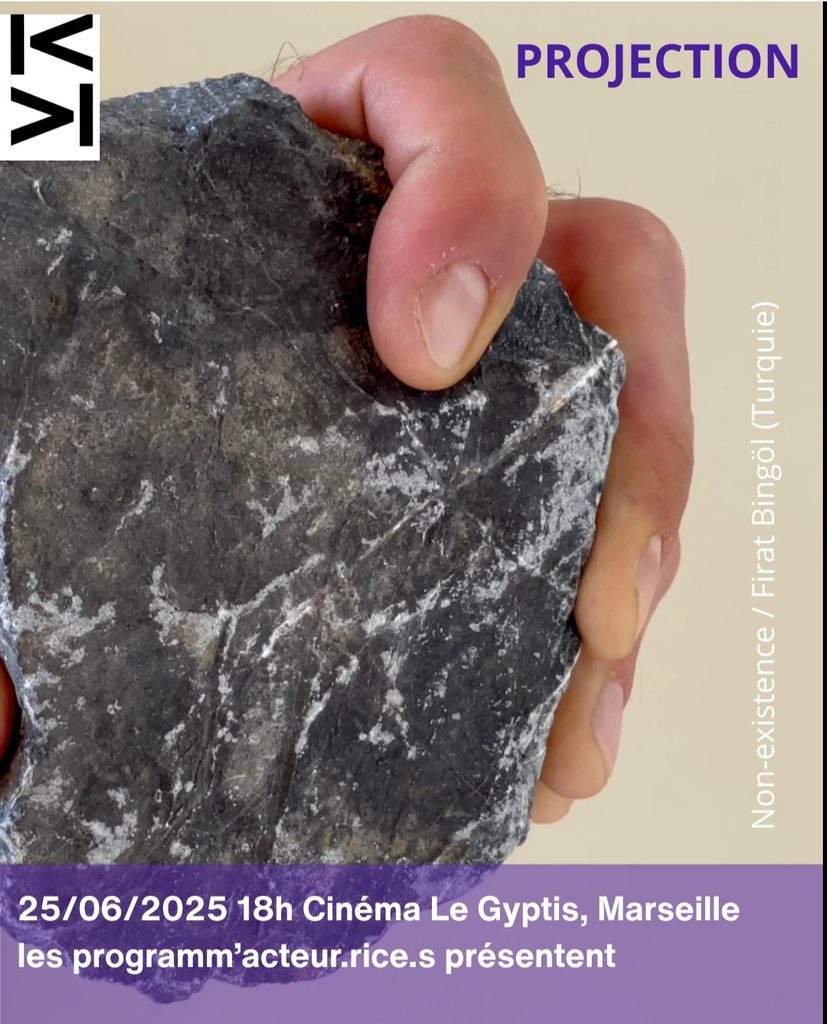
” Nonexistence ” Video Art Performance
3. The Istanbul Biennial, Sinopale, Mardin Biennial and various international art platforms correspond to different periods of your artistic practice. When you consider these encounters not simply as exhibition experiences but as thresholds that shaped your thinking as an artist, what traces did each of them leave on you?
Participating in the Istanbul Biennial in 2007 was an important threshold for me. It was one of the first international art events in which I participated professionally, and it also increased my visibility within the art world. I took part in the project Gece Gezenler with a video work. One of the most striking aspects of the project for me was that the works were taken to 52 different locations in Istanbul where film screenings had not previously been held. In this way, the video encountered not only the biennial audience but also very different people in different neighbourhoods and living environments. This experience made me think more deeply about where and with whom an artwork encounters its audience.
Sinopale was a different kind of experience. There, together with Sonja Bohländer Tanrısever, Esin Tanrısever, Gazi Selcuk and Niyazi Selcuk, we conducted workshops with children over approximately 15 days. We also exhibited the works produced by the children alongside the biennial. What became important for me this time was not exhibiting my own work, but producing together and the social dimension of art.
The Mardin Biennial corresponded to a later period of my practice. My video work Ey Su was exhibited there. It was a period in which my thoughts on water, memory and geography became more pronounced.
Looking back today, I see that each of these encounters left a different trace. The Istanbul Biennial was an important threshold in terms of encountering different audiences and visibility; Sinopale in terms of producing and sharing together; and the Mardin Biennial in terms of confronting the issues that were deepening within my own practice.
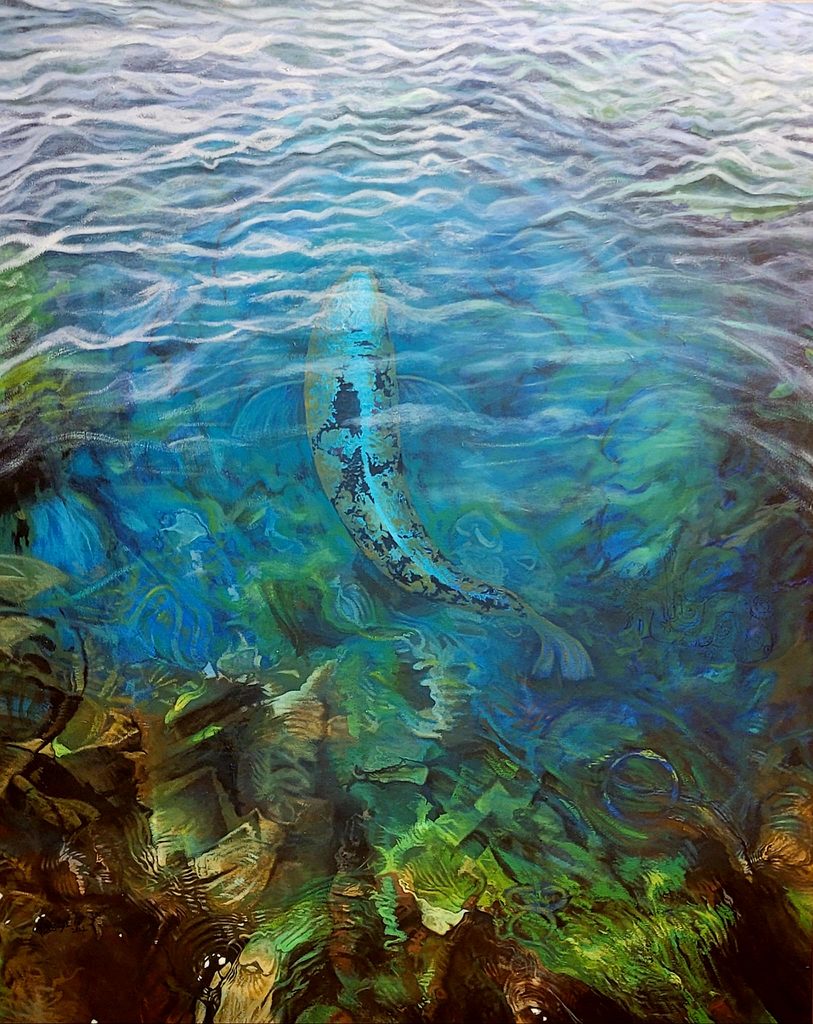
” The Memory of Water ” Oil on Canvas 100×120 cm , Firat Bingol 2022
4. In your recent project Experience Rooms: Play, Memory and Shared Images, realised as part of the Cappadocia Biennial, you worked with children and young people on collective production, the transformation of individual traces into a shared memory, and the establishment of art through experience. How does this approach intersect with the concepts of memory and transformation in your individual artistic practice?
Experience Rooms, which I realised as part of the Cappadocia Biennial, was a three-stage project I developed around experiencing together with young people and discovering art as a language of expression.
In the first room, we gathered in a circle and talked about our individual differences through the idea that “everyone is equal, everyone is different.” In the second room, we worked with basic emotions. I asked participants to express emotions such as love, fear, anger or excitement using only lines, without using pictures, shapes or symbols. The aim was to remove judgements such as “drawing well” or “drawing badly” and to create a space in which everyone could express themselves freely.
The third room focused on sound, music, colour and movement. With their eyes closed, participants listened to different kinds of music and experienced the emotions evoked by the music through colour and movement.
What was important to me about this project was establishing art not merely through the aesthetic object that emerges at the end, but through the experience itself. We still encounter the idea that painting belongs only to “talented” people or that art is a hobby. Yet I see art as one of the fundamental languages through which people can express themselves.
This project also intersects with my own practice here. For me, memory and transformation are not only subjects of the artwork; they are also connected to the trace that the experience of making leaves on a person. In Experience Rooms, what mattered to me was not so much the result that emerged, but how a person moved through the experience and how they emerged from it changed.
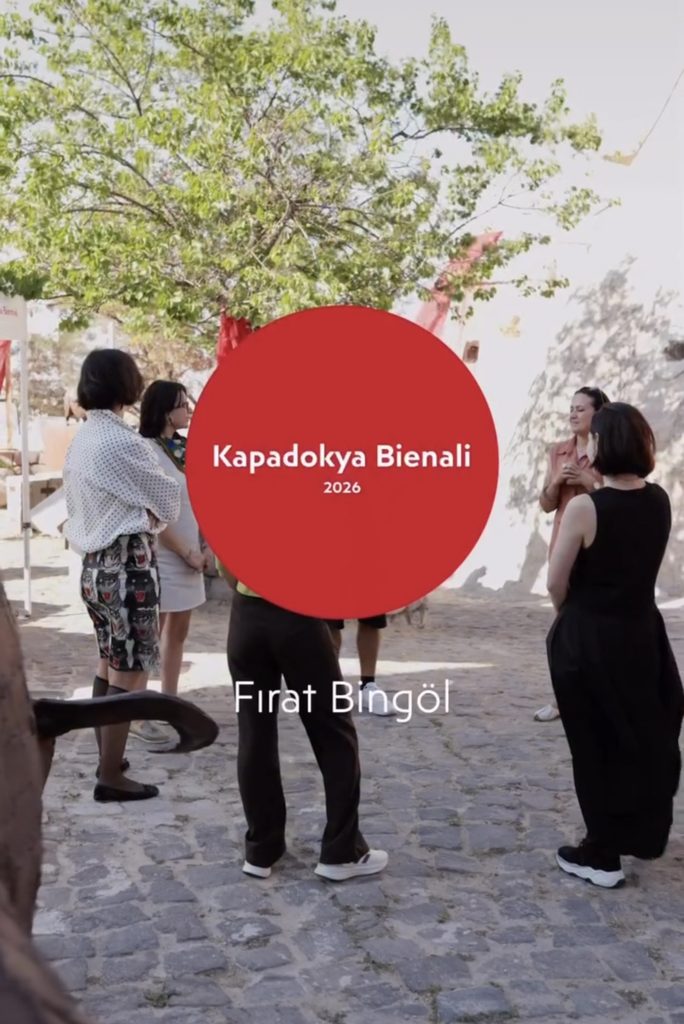
”Cappadocia Biennial . from the Artist’s Photographic Archive ”
5. In your recent works, the boundaries between the human body and natural forms have become increasingly permeable. What kind of artistic thinking lies behind your decision to consider the human being not as a subject separate from nature, but as a transforming part of it?
My relationship with nature goes further back than my recent works. The nature and art camps we organised with children and families in 2015–2016 were an important starting point for me. During that period, I began carrying my notebook with me and drawing trees, and over time these drawings developed into a tree series.
Years later, while I was again in nature, I was lying beneath a tree and watching it. Suddenly, I experienced a state that is difficult to describe. It was as though I was breathing together with the tree; I was inside it, and it was inside me. Perhaps it was a moment when I physically felt something we already know but have forgotten in everyday life: human beings are not separate from nature.
For this reason, I do not think of the human body in my work as a form independent from nature. Nor do I believe there are such definitive boundaries between a tree, water, the human body or another natural form as the boundaries we draw ourselves. Human beings exist within nature, as one of its transforming parts. The intertwining of human bodies and natural forms in my work comes from this idea of placing the human not at the centre of nature, but within it.
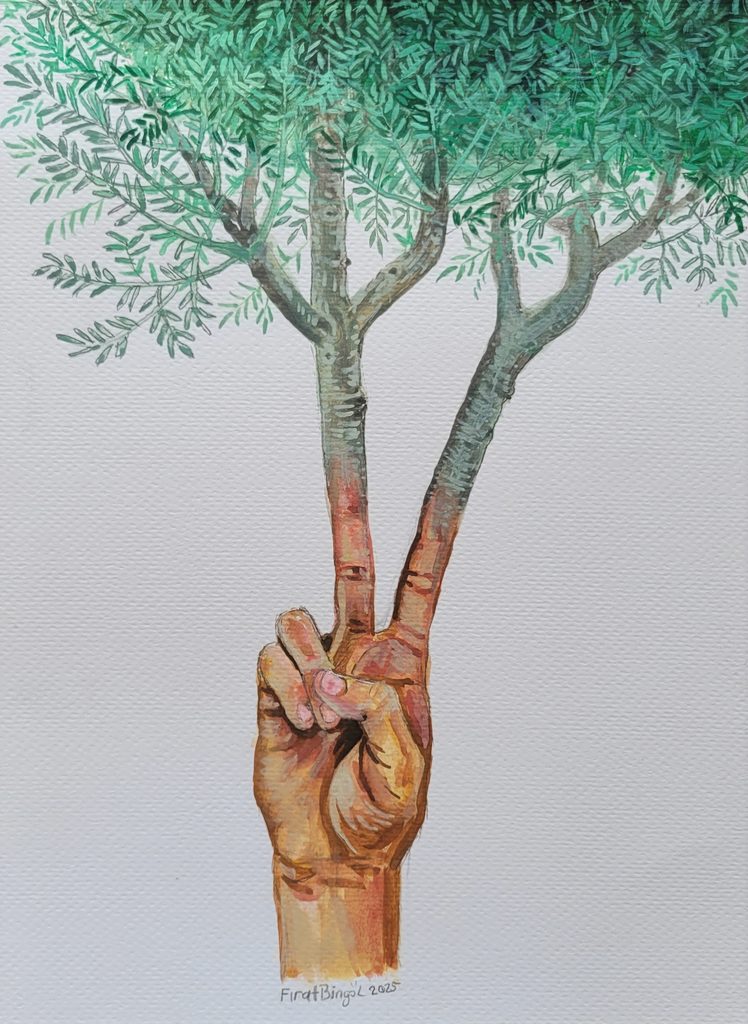
”Double Peace ” watercolor on paper 18×24 cm , Firat Bingol 2025
6. The tree is an important recurring image in works such as Tree Series, Freedom Hope, Double Peace and Self Viator. What does the persistence of an image for such a long period within your artistic practice mean to you? Has the tree become a symbol whose meaning has been fixed over time, or an open field of research that you reconsider in each work?
The long presence of the tree image in my practice is directly connected to my relationship with nature. The process that began with Tree Series gradually transformed into different forms and spread into other works.
In works such as Freedom Hope, Double Peace and Self Viator, I bring different symbols together. For example, a hand making a victory sign transforming into an olive tree, or a dove becoming integrated with an olive tree. There is a state of becoming one between two separate forms, as well as an intention. Concepts such as freedom, hope and peace reinforce one another within a single image.
The reason the tree has remained in my practice for such a long time is that, for me, it is not a completed symbol with a fixed meaning. In each new work, it can connect with another form or concept; it can establish new relationships with water, the body and other elements of nature. Therefore, rather than repeating the tree, I look at the same image again at different times and through different experiences.
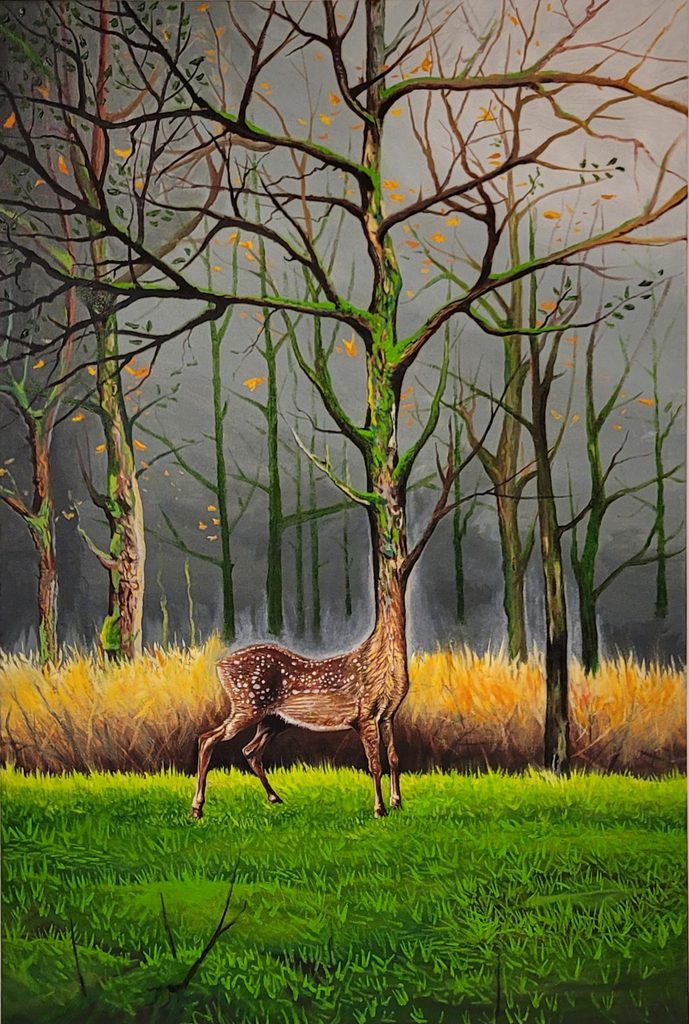
” Integrate with Nature ” Oil on Canvas , Firat Bingol 2025
7. With Self Viator, the concepts of rooting, belonging and movement become more pronounced. When you think about the human desire both to belong to a place and to remain constantly in motion, how do you understand the relationship between belonging and freedom?
In Self Viator, I think about rooting, belonging and movement in direct relation to the human being. Here again, I begin with the tree. As a tree takes root deeper into the soil, its connection with the place where it exists becomes stronger; at the same time, it rises towards the sky. In other words, there is simultaneous growth both inward and outward.
I think something similar is true for human beings. Pursuing the question “Who am I?” and discovering one’s own roots, belongings and depth is also a form of liberation. As a person comes to know themselves and where they come from, their relationship with the world also expands.
For this reason, I do not see belonging and freedom as opposites. For me, taking root does not mean becoming fixed; it means being able to move while knowing one’s roots and remaining open to new encounters.
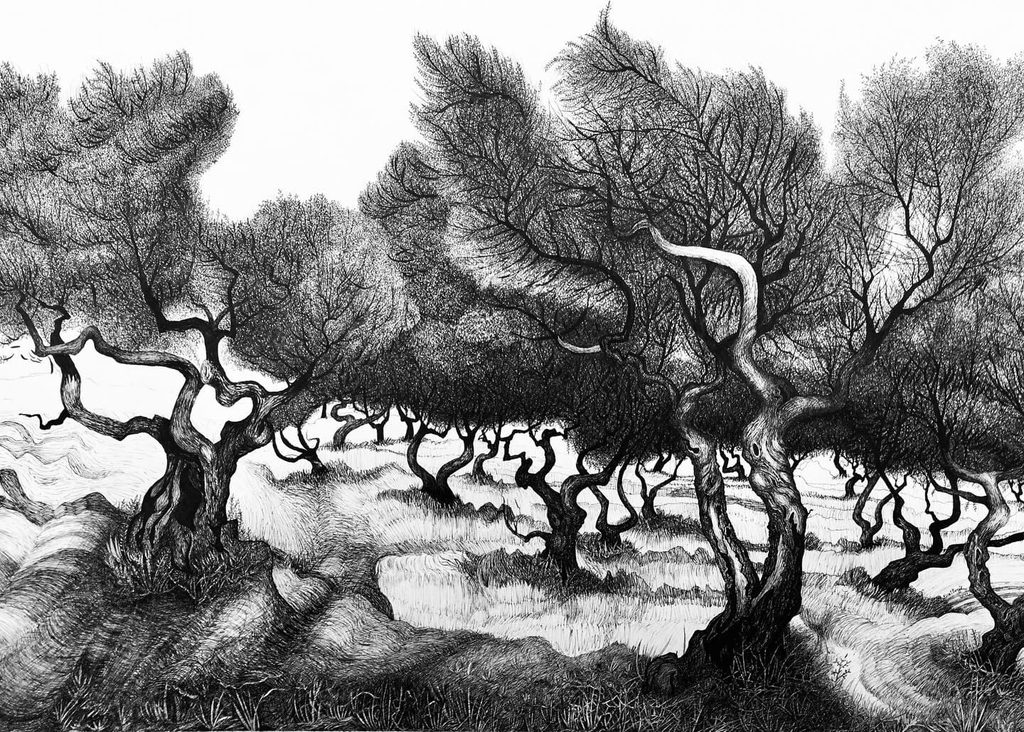
” In the Shadow of the Olive Tree with Vincent van Gogh” Ink pen on paper 55×70 cm , Firat Bingol 2022
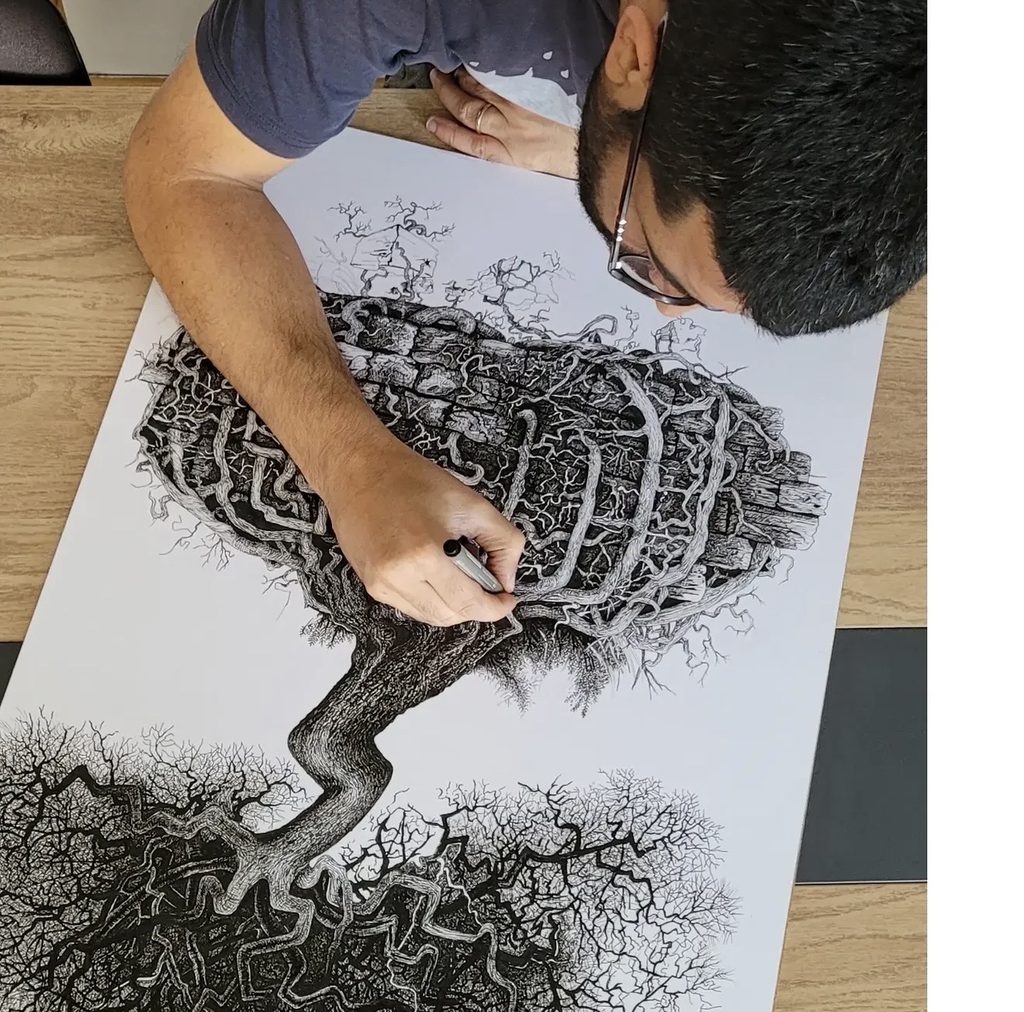
” From the Artist’s Photographic Archive ”
8. In works such as Freedom Hope and Double Peace, you approach concepts with broad social connotations, such as hope, freedom and peace, through images of nature. Why do you construct these concepts through natural forms rather than representing them directly?
Because I believe that the hope, freedom and peace that are valid for human beings are also valid for nature. I do not see these concepts as belonging only to humanity.
In works such as Freedom Hope and Double Peace, nature is not a background that I use to describe these concepts; it is directly part of the issue itself. Just as human beings need freedom, nature also needs a space in which it can sustain its own existence and cycles.
Therefore, when we ask for hope, freedom and peace for human beings, we cannot think of these things independently of nature. Human freedom and the freedom of nature are not separate from one another.
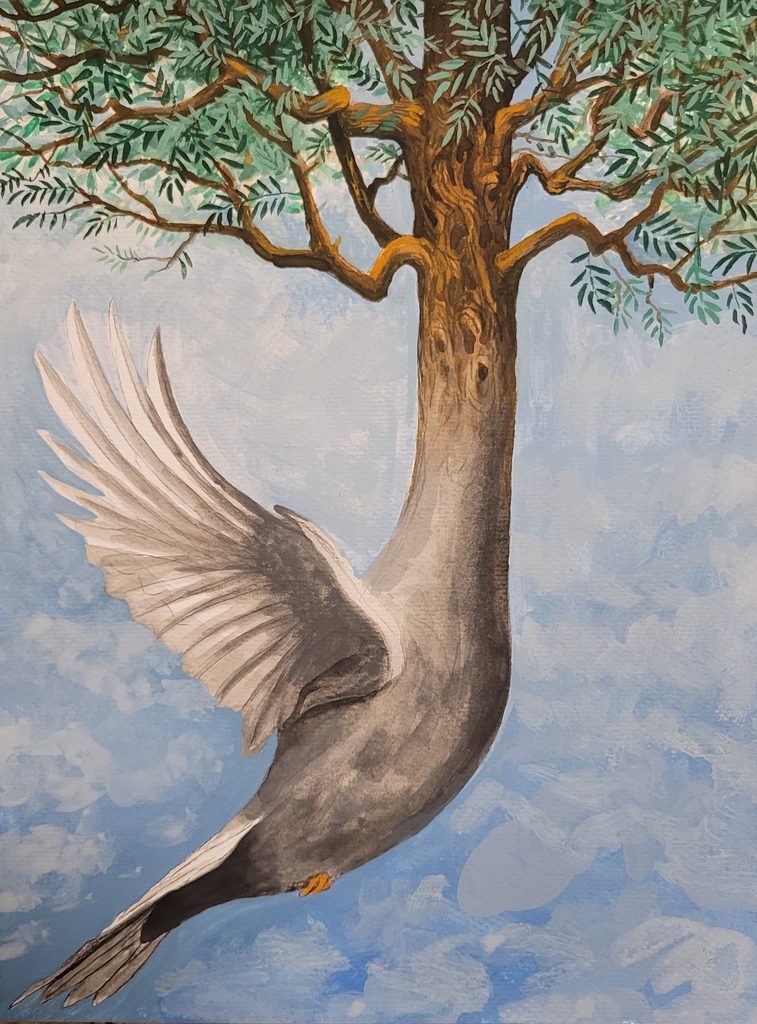
”Freedom Hope ” watercolor on paper 18×24 cm , Firat Bingol 2025
9. In the idea of The Memory of Water, you associate water with concepts of flow, trace, time and change. From what intellectual space did the idea of the memory of water emerge for you, and how has this concept found a place within your artistic practice over time?
The idea of The Memory of Water first emerged for me around 2016–2017. Initially, I encountered a story concerning the relationship between the Kurdish poet Fakî-yi Teyran, who lived in the 15th century, and the Tigris River. It was said that he would enter the Tigris at certain times of the day and recite poems to the river. The idea of a person speaking their words, their poetry, to water, and the water carrying those words elsewhere, affected me deeply.
This thought later developed into a nine-minute video work titled Ey Su. I made the work approximately fifteen days before Hasankeyf was submerged. In the video, I constructed a narrative around a person’s encounter with water, confronting their own reflection, expressing intentions to the water and releasing words into the flow of the water. In this way, water gradually ceased to be merely an element of nature for me and began to become a presence carrying the memory of people, geography and time.
Afterwards, my curiosity gradually deepened. An area of research emerged that extended from the scientific structure of water to the meanings it carries in different cultures and in Sufism, from its relationship with life to its microscopic world. Over time, these ideas also entered the visual world of my work. I sometimes think about water through the movement of a drop, sometimes through structures that evoke subatomic particles and DNA forms, and sometimes through forms of life emerging in the depths of the sea.
I am currently working on a solo exhibition centred on water. This process, in which I bring together video, painting and new works, is somewhat like a laboratory for me. Rather than reaching a definite answer, I am following the new questions opened up by water.
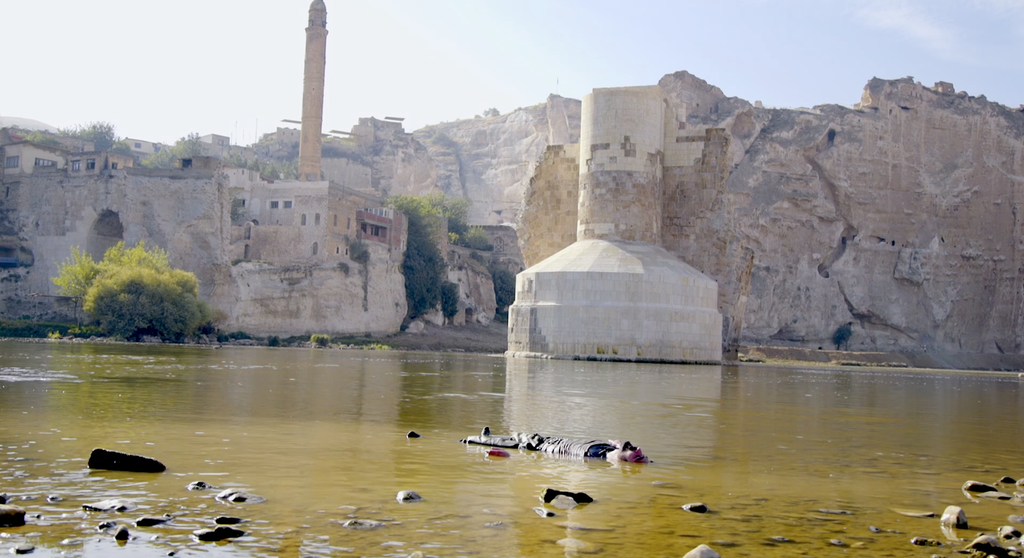
” Ey Su ” , O Water , Video Performance – Firat Bingol
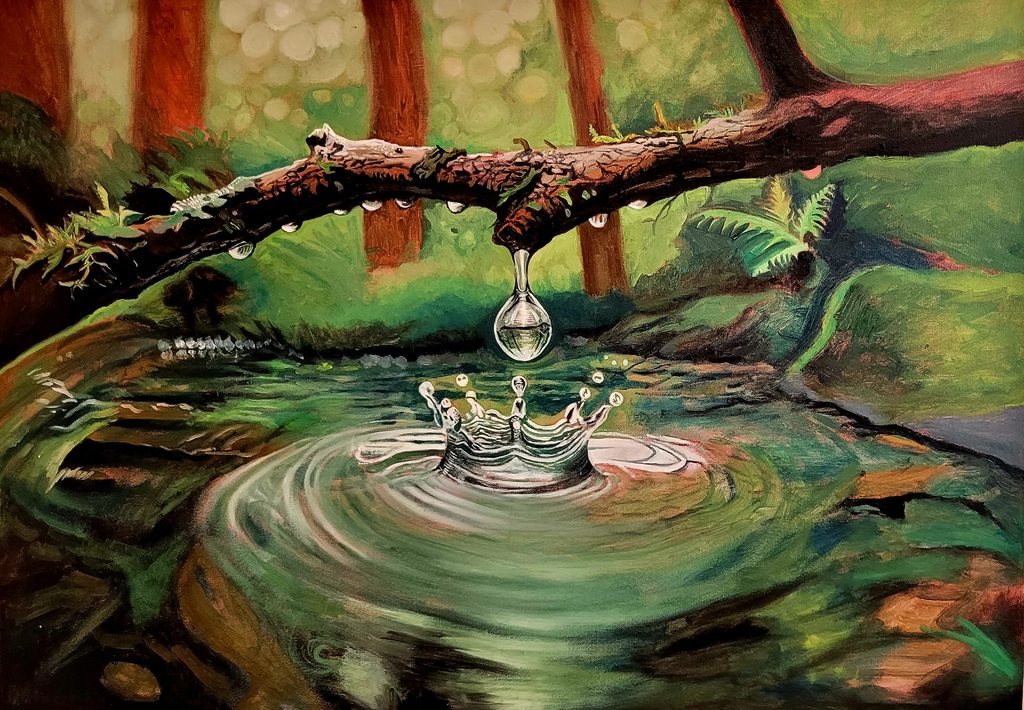
“A Moment Before” Oil on canvas 50 × 70 cm , 2026
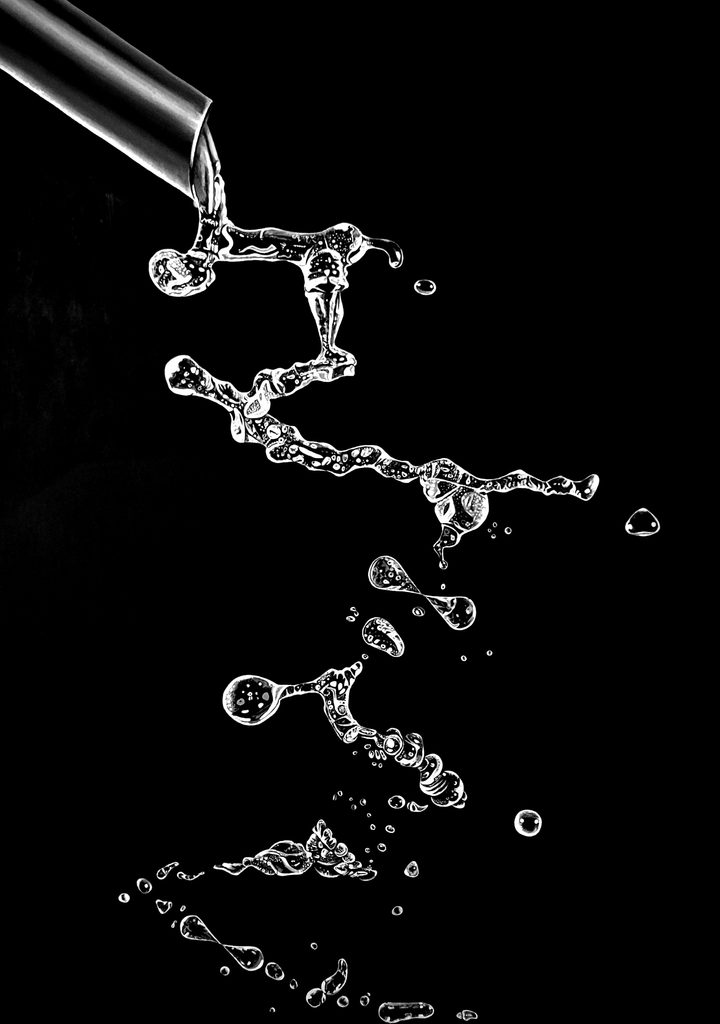
” States of Water ” – 2 , 55×38 cm , Graphite on Paper 2022 , Firat Bingol
10. Your long-term work with children and young people demonstrates that art education in your practice is not merely a pedagogical field. How have children’s and young people’s ways of looking, questioning and constructing images influenced your way of seeing and creating as an artist?
I can say that my many years of work with children and young people have contributed a great deal to me. Working particularly with the 0–5 age group during early childhood was very instructive for me and allowed me to recognise many things about my own way of seeing.
Children look at the world from a much more direct place. They often say what they want to say without going around it, and they express their emotions and curiosity more openly. They have a field of expression that has not yet been heavily shaped by judgements such as “Is it right or wrong? Is it beautiful or ugly?” They can give completely different meanings to a line, a colour, an object or something we might consider ordinary. Seeing this has influenced the way I look as an artist as well.
I think one of the most important things working with children has given me is the reminder of how valuable it is to preserve a sense of curiosity and the ability to look directly. I have been teaching children and young people for many years, but particularly my experiences in early childhood have shown me something: in fact, there is also a great deal that we can learn from children.
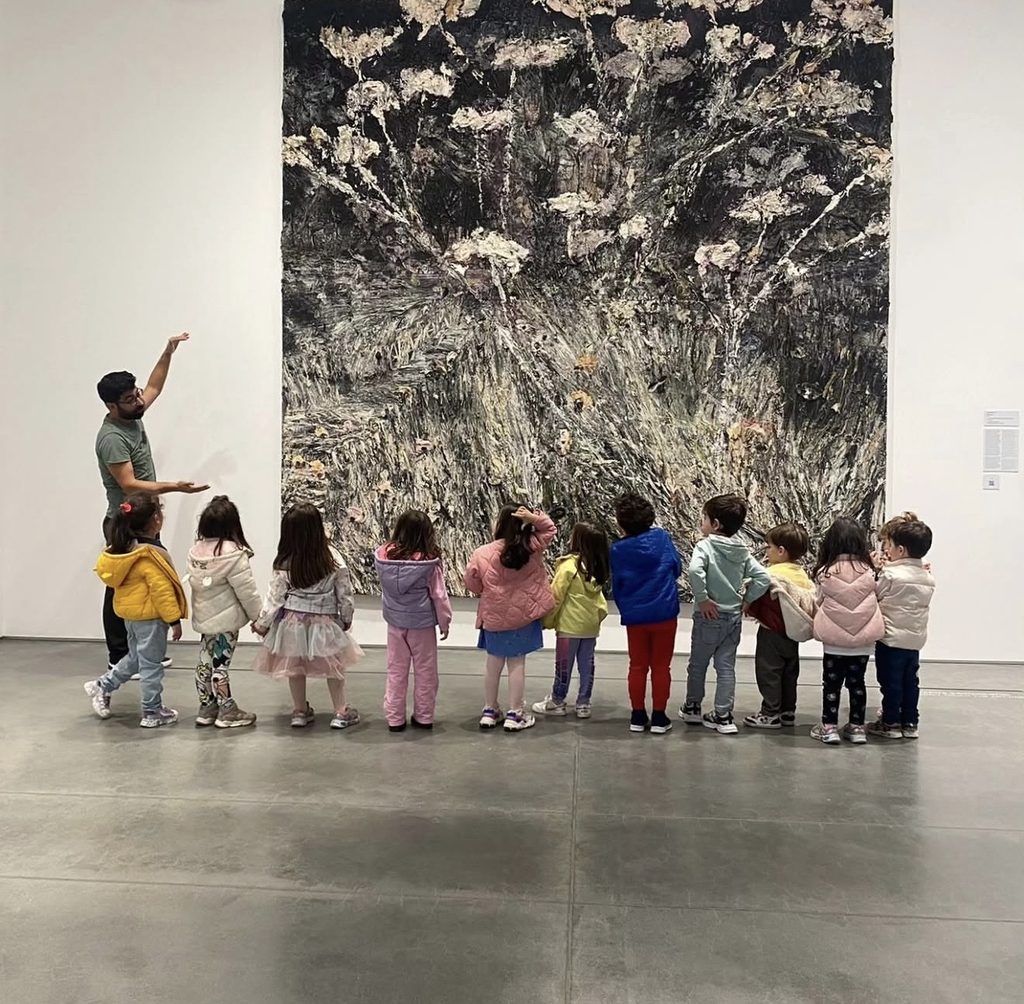
” From the Artist’s Photographic Archive ”
11. From your curatorial experience at the 2018 Istanbul Children’s and Young People’s Art Biennial to your work today, your identities as an artist, educator and curator have created different but interconnected fields of production. When you think about these three areas together today, where do you think art truly begins for you: in the artwork itself, in the process of making, or in the relationships it establishes between people?
My curatorial experience at the 2018 Istanbul Children’s and Young People’s Art Biennial was a process that came together with the experience I had gained through my many years of working with children. We were engaged in a more collective form of working there. Bringing different forms of production, people and ideas together was important to me.
Today, I do not see my identities as an artist, educator and curator as separate fields. Producing, learning, sharing and establishing relationships with others are complementary processes.
For this reason, I do not think that art begins or ends only with the artwork that emerges. The artwork is of course important, but the production process leading up to it, the discoveries and encounters that take place during that process are also part of the work. Then comes the moment when the artwork encounters other people and establishes new relationships there.
For me, the artwork, the process and the encounter are not separate from one another. Art emerges precisely at the intersection of these.
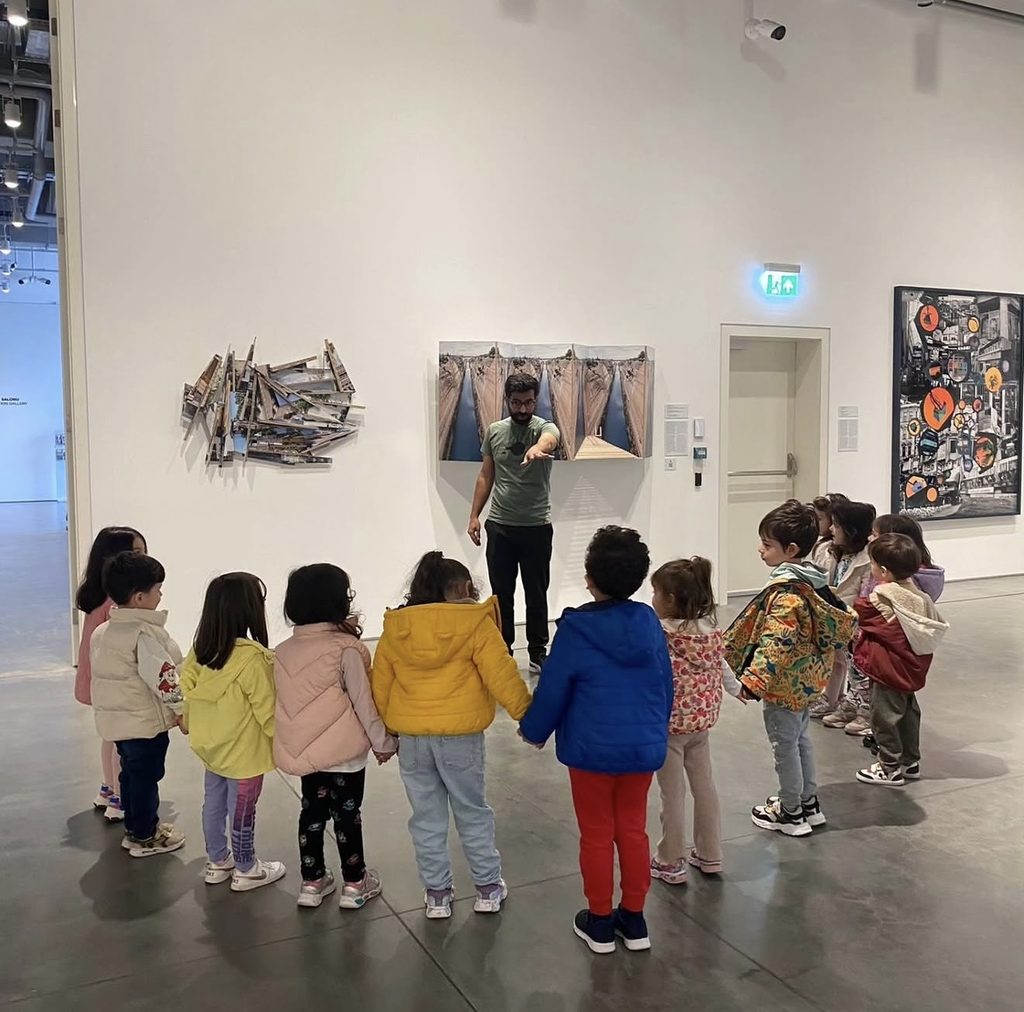
” From the Artist’s Photographic Archive ”
12. Throughout your practice from the early 2000s to the present, memory, nature, the body, movement, belonging and transformation have been connected in different ways. Beyond all these concepts, what is the fundamental question you are still searching for an answer to today, and where is this question taking you in your future work?
I am not entirely sure whether there is still one fundamental question for which I am searching for an answer. Perhaps, for me, the real issue is not the question itself but the continuation of curiosity.
My relationship with art is about love, passion and truly connecting with what you do. As people live, they change. We are not separate from nature either; we are constantly changing together with it. As we change, our way of looking at the world, the questions we ask and the areas we are curious about also change.
Sometimes, years later, I find myself moving around the same concepts. Memory, nature, belonging, the body and transformation are not subjects that can easily be completed and left behind for me. Perhaps the questions remain the same, but because I change, the place from which I look at them and the way I express them also change.
I think I can describe my relationship with art like this: We have something that concerns us, and we search for a language through which we can express that concern. For me, art is a space in which this language is continually rediscovered. As long as I remain curious, continue asking questions and searching for new ways of expressing myself, I believe my production will continue.
I do not want to know in advance where it will take me. Perhaps that uncertainty is precisely why art is still exciting for me.
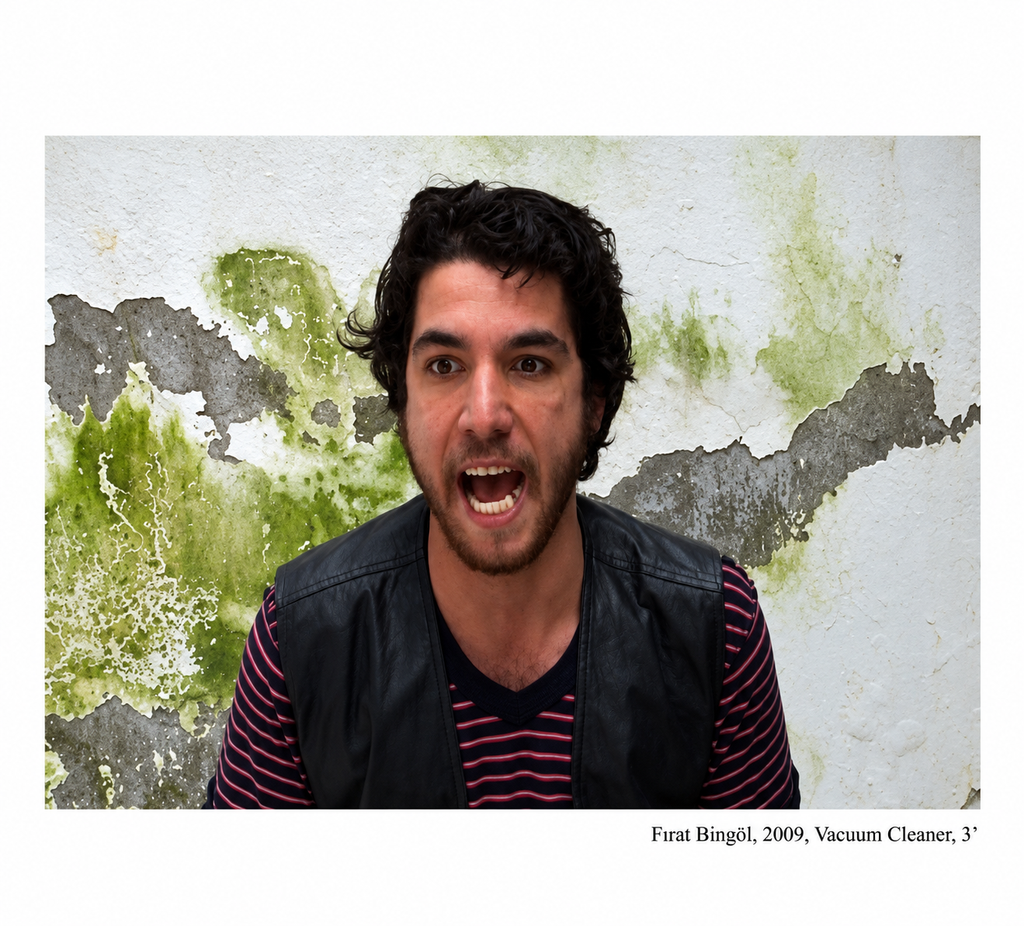
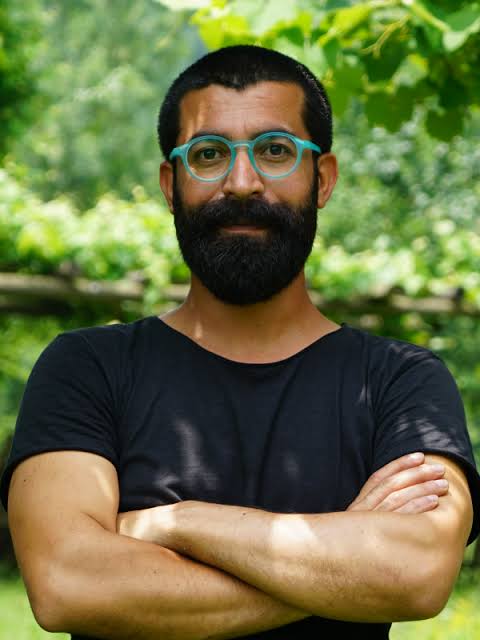
” From the Artist’s Photographic Archive ”
The Zamansız app

Author
Gamze Kartal
Gamze Kartal is a London-based visual artist and a graduate of the Department of Art Education at Dicle University. Working across painting, collage, photography and digital manipulation, her practice explores the relationships between the body, memory, identity and perception. Using the image of the hand…
All articles (10) →Gamze Kartal more from this author
Arts
Edward Hopper,Nighthawks (1942)
18 August 2026
Latest
Arts & Culture
IOANNA KUCURADI:A LIFE DEVOTED TO PHILOSOPHY
5 October 2026
Arts
BREAKING FROM WITHIN: AN INTERVIEW WITH OMER EKEN
19 September 2026
Art Review
Batik Aesthetics and the Intersections of Contemporary Art in Erhan Şanal’s Portraits
15 September 2026