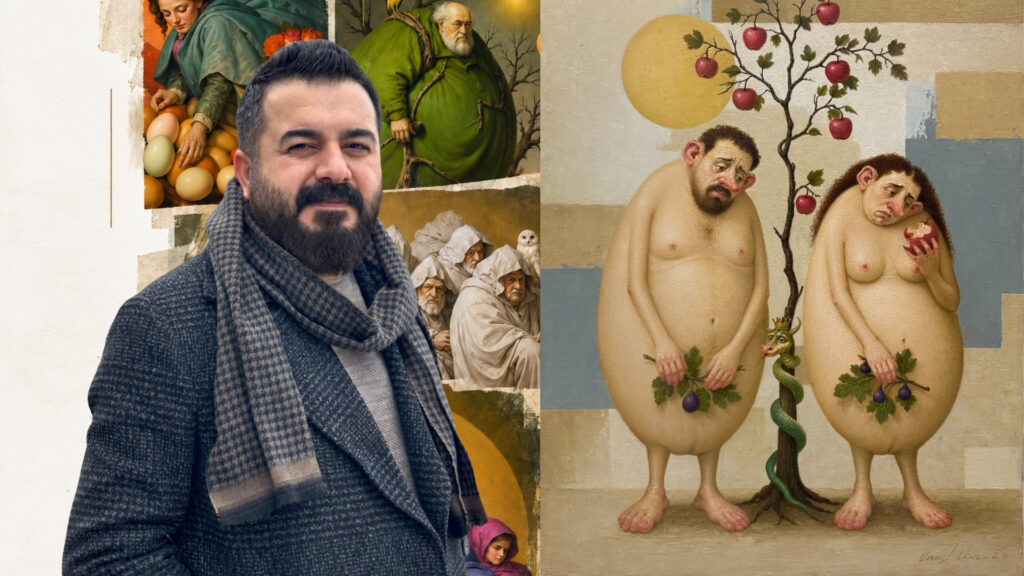
1. Who is Omer Eken, and what defines your artistic practice? There is a journey that begins with your childhood in Silvan, continues through Diyarbakir Fine Arts High School and Mimar Sinan Fine Arts University, and leads to your studio in Diyarbakir today. Looking back on this journey, what have been the most decisive influences of the geographies, places, and experiences you have lived through on your artistic identity and practice?
I am a painter born in Silvan who continues his practice today in his studio in Diyarbakir. I shape my artistic practice around the contradictions I encounter in life, the tension between the individual and society, power relations, humanity’s troubled relationship with nature, and the fractures created by all of these.
My journey began with the toys I made out of mud while living in the village. After I started school, I discovered painting. During primary school, the drawings my uncle made using carbon paper sparked a great curiosity in me. At the time, I did not know that this would become the centre of my life; but painting gradually became my way of understanding and making sense of the world.
Growing up in Silvan gave me more than particular landscapes and images. It also allowed me to observe human relationships, state violence, social pressures, prohibitions, resistance, solidarity, conflict, loss, and a sense of belonging from a very early age.
At Diyarbakir Fine Arts High School, my relationship with painting became more conscious and focused. I then studied Traditional Turkish Handicrafts, followed by Painting, at Mimar Sinan Fine Arts University. Istanbul allowed me to encounter different approaches to art and to look at my own practice from an intellectual distance. Nevertheless, I always had a desire to return to Diyarbakir.
My return was not a retreat, but a conscious choice. I do not believe that an artist can exist only in places regarded as centres. On the contrary, I think being away from the centre can be advantageous for an artist in many ways.
The geography I have lived in has a strong presence in my work; however, I do not want to confine my paintings within a purely regional narrative. I believe that an emotion or experience originating here can reach issues shared by humanity as a whole. For me, the local and the universal are not opposites; they are two fields that open into one another. My studio in Diyarbakir is also a space of thought where I constantly establish connections between my past, my present life, and what is happening in the world.
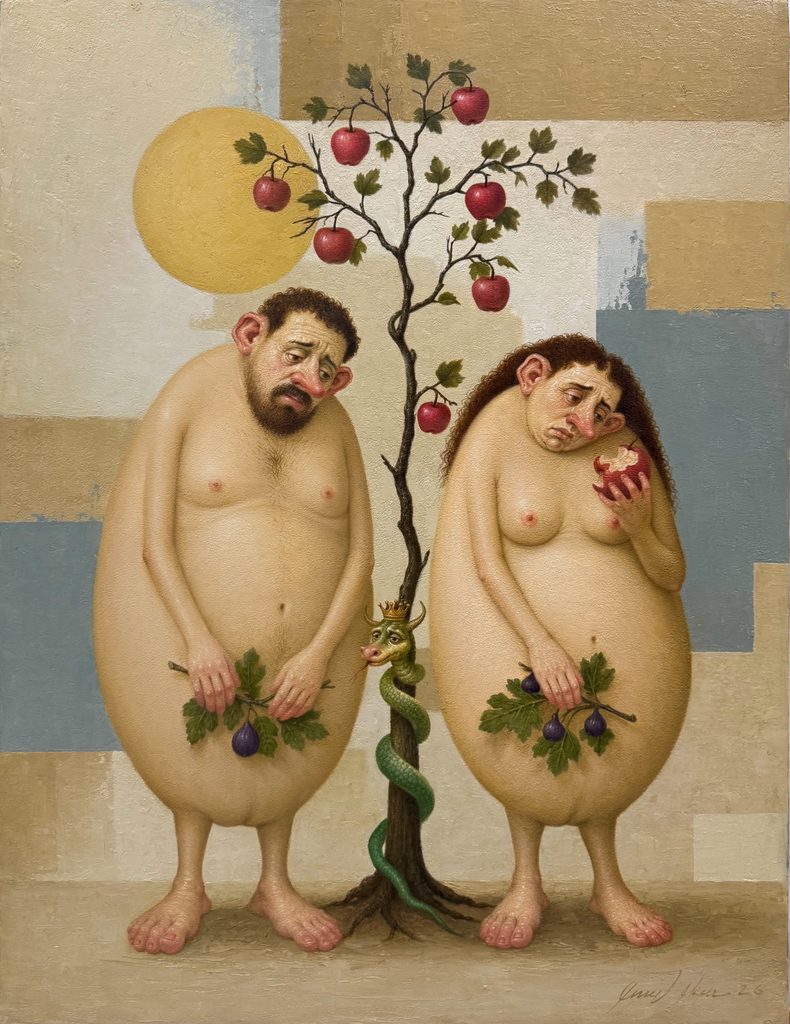
Dürtü 80×60 cm T.U.Y.B 2026
2. Looking at your early works, the exhibitions Arayis and Zamanin Imgeleri, and then your works Aporia and Shadows from 2025, we can see a clear transformation. Do you consider this transformation merely a formal change, or does it also reflect a transformation in the way you look at the world, your conceptual approach, and the questions you ask?
I do not see this transformation merely as a formal change. The change in form is the visible result of a transformation in the way I look at the world and in my relationship with the questions I ask.
During my student years, my works were mostly direct paintings based on the relationship between nature and humanity—simpler and somewhat romantic. During the period in which the works for Arayis and Zamanin Imgeleri were created, intellectual and social issues began to become more prominent.
In works such as Ak ve Kara Diyalektigi, Erk ve Umut, Namus Bekcileri, Orta Dogu Tanricasi, and Adem’in Torunlari, I was dealing more explicitly with issues of opposition, belief, power, gender, birth, and existence through clearer symbols and distinct figures. The allegorical structure of the paintings was more legible, and the encounters between the images were more direct.
Aporia and Shadows marked a period in which this approach moved into a more questioning territory. I am no longer concerned only with showing a social condition, but with understanding how that condition is produced and how it becomes embedded in human thought. Differences in thought and perception, and the contradictions contained within reality itself, have become increasingly important to me.
So my concerns have not completely changed; they have deepened, and my way of expressing them has transformed. Previously, I would ask, “What is the problem?” Today, I am more interested in asking, “How does this problem become embedded within a person, how is it passed from one generation to another, and how does it become a structure that we collectively create?”
The transformation is both formal and conceptual; yet there is continuity rather than a rupture between the past and the present.
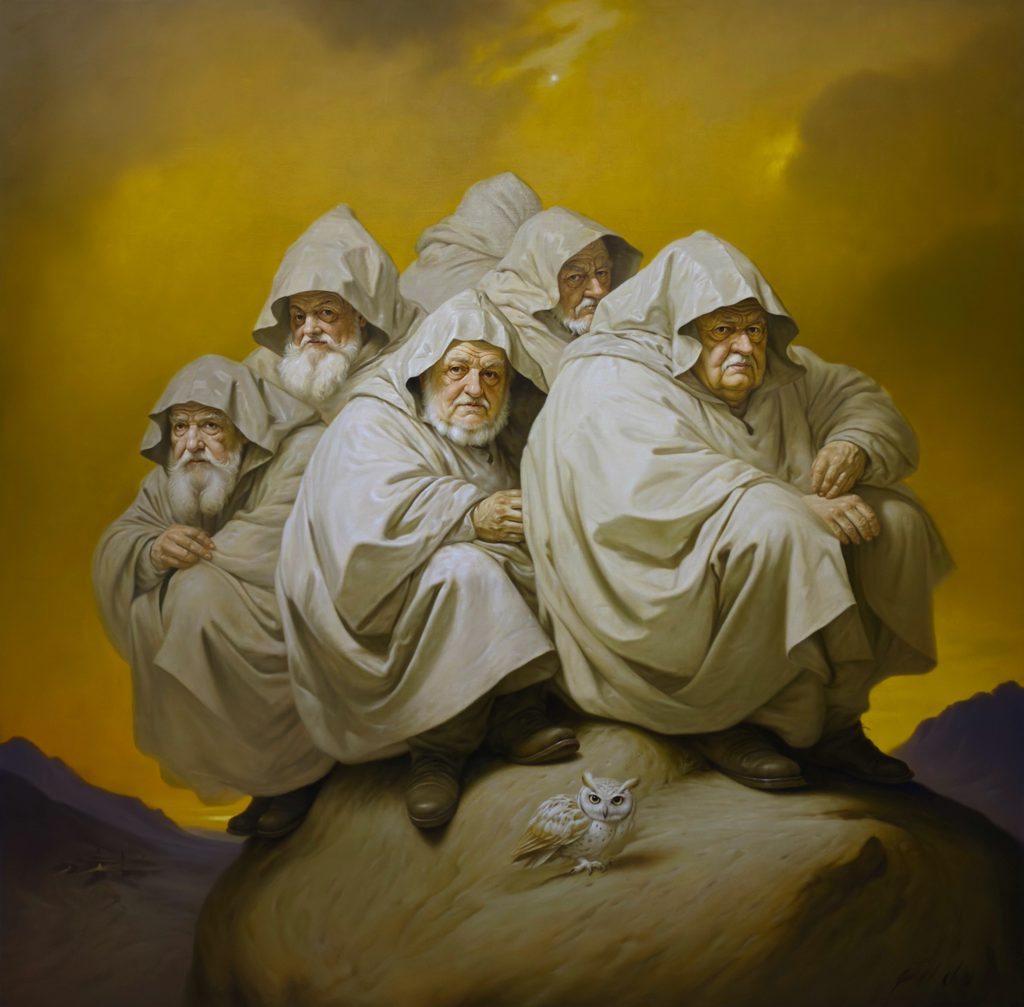
Gölgeler (shadows) 140×140 T.U.Y.B 2025
3. You describe your practice as being built around “the conflict of oppositions in life.” What intellectual function does the concept of opposition serve in your practice? How does the transformation of seemingly opposing elements into structures that eventually produce one another find its way into your paintings?
For me, opposition is not simply about placing two contradictory elements side by side. It is a form of relationship in which things that appear to be opposed gradually produce, nourish, and even transform into one another.
I do not believe there are absolute and unchanging boundaries between good and evil, innocence and violence, hope and despair, birth and death, freedom and power. The idea of peace can become a tool of power; a process that begins in the name of security can produce oppression; an individual who seeks freedom can, once they gain power, restrict someone else’s freedom. At times, even the boundary between victim and perpetrator can shift over time. This does not eliminate responsibility; it demonstrates how easily power can reproduce itself.
In my paintings, oppositions also make one another visible. A disturbing event may exist within vivid and attractive colours. An image that appears childlike or innocent may occupy the same surface as weapons or destruction. While an egg represents the beginning of life, once broken it can become a sign of wasted potential and loss. A rose may carry beauty and love, while also containing danger and vulnerability through its thorns.
For this reason, opposition is not an outcome for me, but a method that sets thought in motion. When I consider a concept together with its opposite, another reality hidden within it emerges. The meaning of the painting does not appear where we choose one of the two extremes, but in the tension between them.
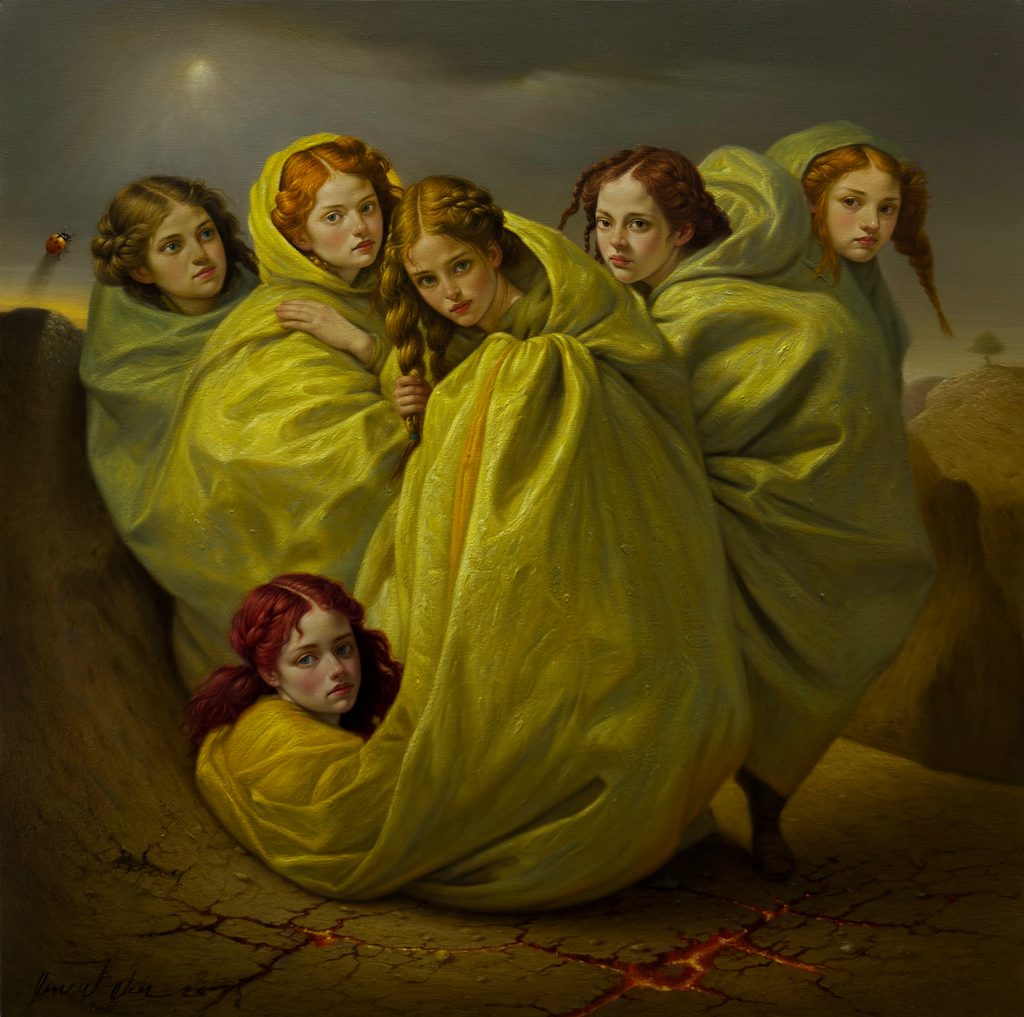
Soylenemeyenin Bicimi 60×60 cm T.U.Y.B 2026
4. In your paintings, there are moments where the absurd and the tragic, the everyday and the uncanny meet on the same surface. Do you think painting reconstructs reality, or does it reveal contradictions that already exist within everyday life but have become invisible?
I think painting does both. While revealing contradictions that already exist within the reality we inhabit but that we have become unable to see through familiarity, it also reconstructs them within a new order.
Everyday life is often no less absurd than the scenes in my paintings. We are constantly confronted with violence, loss, and injustice. After a while, we begin to watch even the most severe events as if they were ordinary news. The tragic becomes part of everyday life; the extraordinary is accepted as normal. This invisibility also emerges from this state of habituation.
I do not try to reproduce reality as it is or create a document of an event that has taken place. I separate fragments I take from reality, transform them, and bring them together within unexpected relationships. In this way, the familiar becomes unfamiliar.
The viewer may initially encounter a scene that appears colourful, fairy-tale-like, or humorous; but when they look a little longer, they begin to notice the unease, violence, or power relations within the painting.
I do not use the absurd to soften tragedy. On the contrary, I use it to show how tragedy becomes normalised. Rather than directly explaining what is invisible, painting offers me a space in which I can rearrange what is visible and encourage the viewer to question their own habits of seeing.
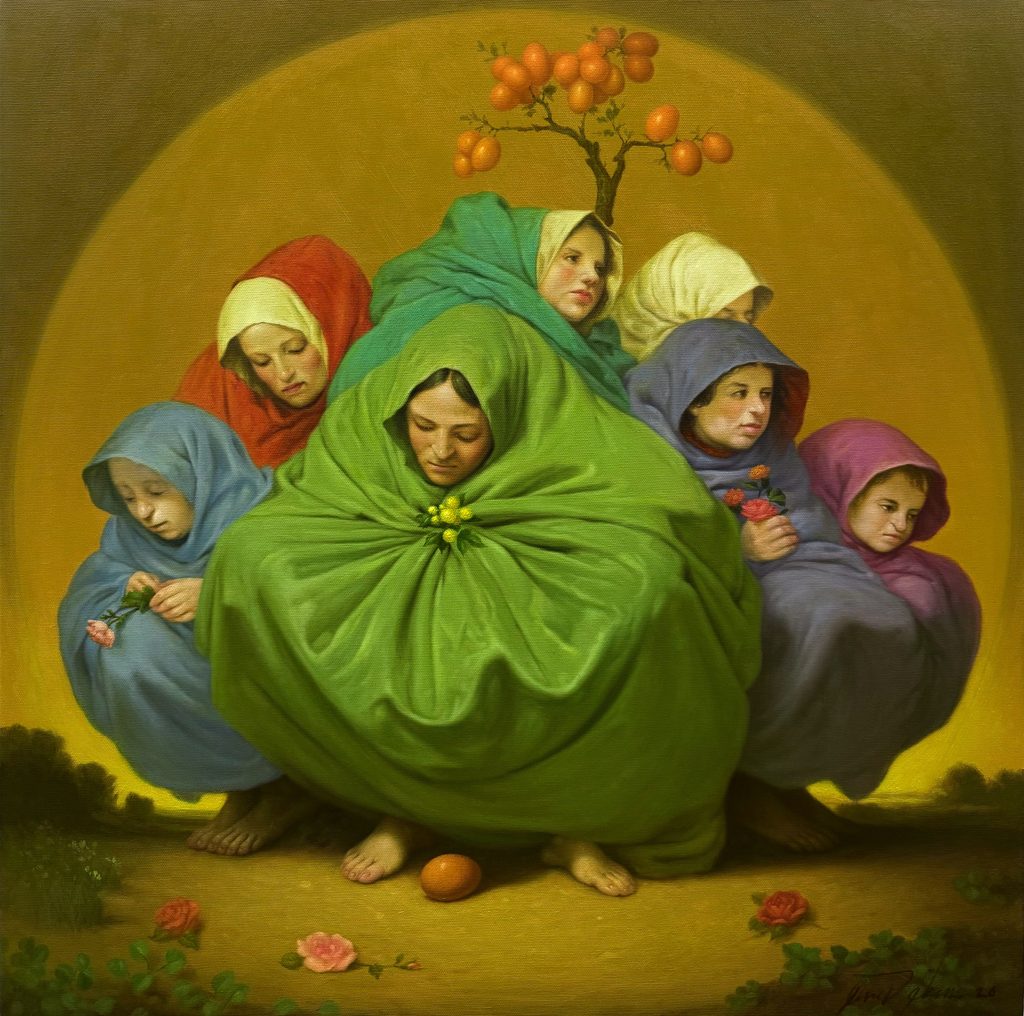
Eşik 60×60 cm T.U.Y.B 2026
5. The conflict between the individual and social norms, power relations, and the transformation of an individual who gains power into an authoritarian figure are important currents within your practice. You approach power not only as a force imposed from outside, but as a mechanism that becomes embedded within the individual and is reproduced over time. Why does this transformation concern you so deeply?
Because power is not only the state, institutions, rulers, or an overt force imposed from outside. It also operates within the family, social roles, traditions, gender relations, everyday language, and the relationship a person establishes with themselves. Over time, it becomes embedded in an individual’s behaviour and way of thinking.
One of the fundamental issues that concerns me is that a person who opposes power can begin to resemble the structure they opposed once they acquire power themselves. A person who has been subjected to oppression can impose the same oppression on someone else. An individual who demands freedom can narrow another person’s space of existence when they make their own ideas absolute. In this way, power ceases to be merely a structure operating from the top down; it is constantly reproduced by people within everyday life.
It seems incomplete to me to portray power only as an external enemy. Without seeing its counterpart within ourselves, we cannot truly confront it. My paintings, in a way, place the viewer before this uncomfortable possibility: we may also be sustaining, through our own behaviour, a small part of the structure we criticise.
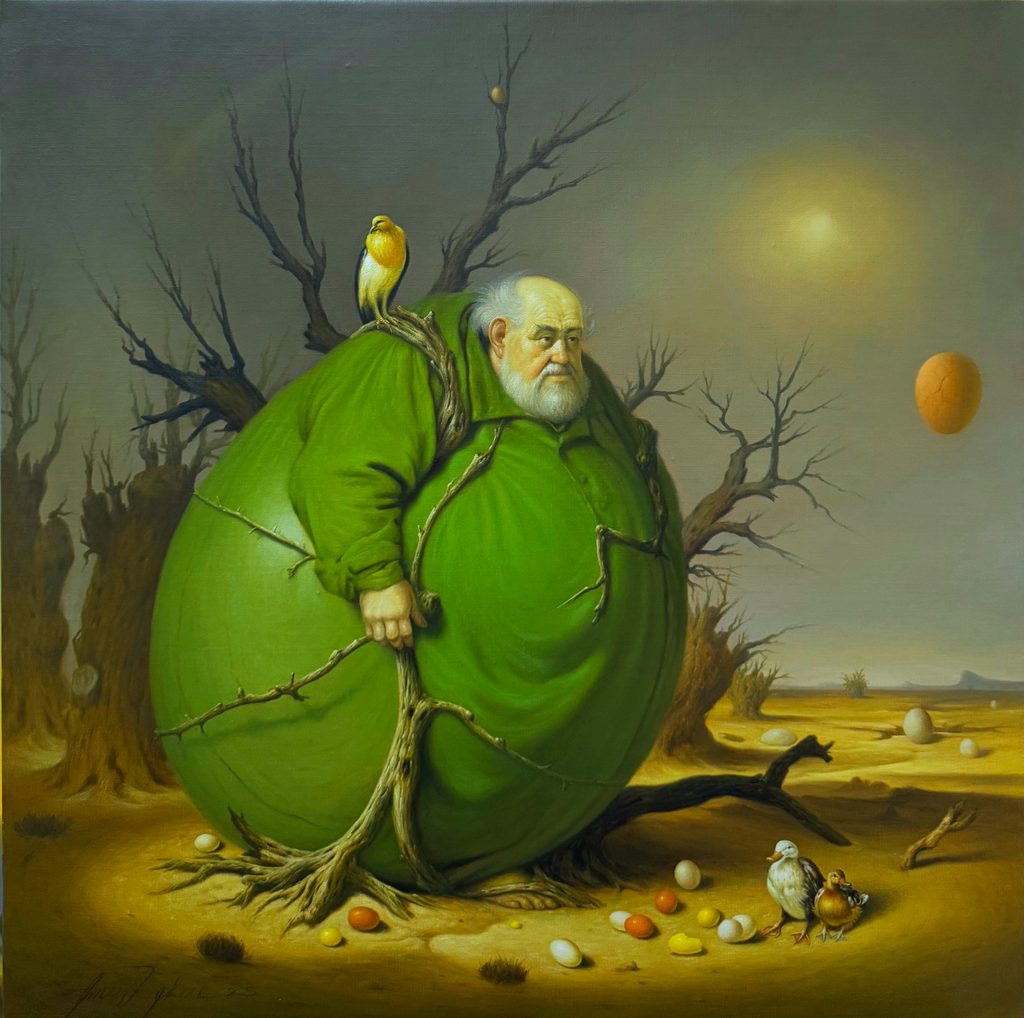
Bekleyenler 60×60 cm T.U.Y.B 2025
6. You also speak of power as creating a form of perception. How do these invisible mechanisms, which operate upon what we see, what we do not see, and what we accept as real, become visible within your paintings?
Power shapes not only our behaviour but also our way of looking. It determines what we see as normal, what we see as dangerous, whom we see as a hero and whom we see as an enemy. It does not always do this through an explicit command; it operates through images, repetition, fears, assumptions, and everyday language. After a while, we can begin to mistake the way of seeing we have been taught for our own thinking.
Rather than presenting a single authoritarian figure that directly represents this mechanism, I try to make its consequences visible in my paintings. Figures looking in the same direction, gathering around a particular idea, resembling one another, or becoming a single social body are all parts of this structure. Repetition, directed gazes, differences in scale, and the disappearance of certain figures within a crowd also point to the way perception is constructed.
Empty spaces and shadows are important in this respect as well. What is not shown can sometimes be more decisive than what is shown. I think of the shadow not merely as the physical consequence of light, but as a counterpart to what is suppressed, fear, invisible violence, and the authority growing within the individual.
In a painting, I first draw the viewer’s gaze towards a particular point, and then I want them to question that initial gaze. Because the first step towards confronting the perception constructed by power is to recognise that the reality presented to us is not the only or immutable reality.
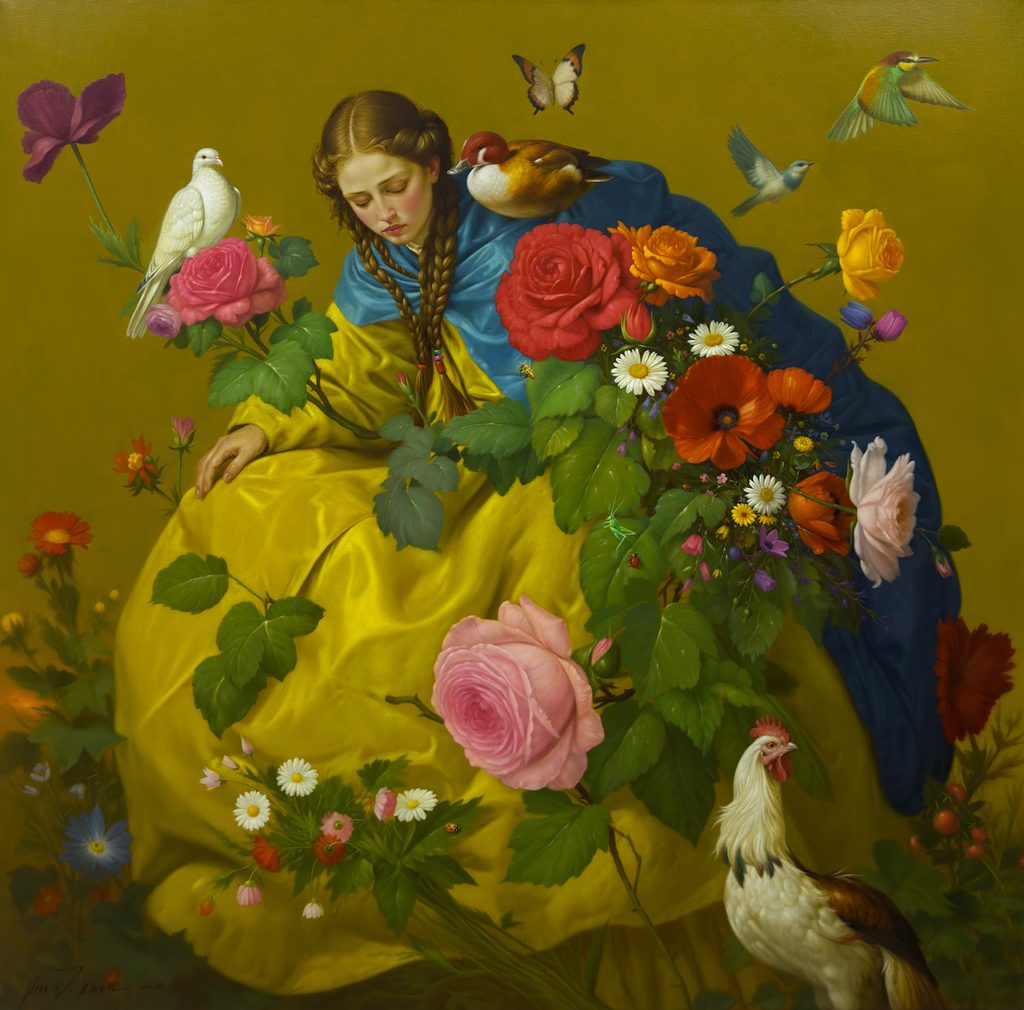
Hilgir/Taşiyici 100×100 cm T.U.Y.B 2026
7. You address the domination of women and nature under the patriarchal order within the same intellectual framework. What connection do you establish between the objectification of women and nature? Is it possible to read the rupture in the human–nature relationship not only as an ecological crisis, but also as humanity’s estrangement from its own roots and from itself?
Patriarchal thinking approaches both women and nature as entities over which rights can be claimed, which can be controlled, and which can be used according to need. The structure that seeks to exercise authority over women’s bodies, labour, and lives draws from the same language of domination as the understanding of nature as an unlimited resource.
Here, I am not establishing an essentialist or biological identification between women and nature. Equating women with nature can itself become another form of categorisation. What interests me is that both are objectified by a similar logic of power. This logic transforms life from something that has value in itself into a field to be possessed, controlled, and exploited for benefit.
As humanity moves away from nature, it does not only create an ecological crisis; it also loses the forms of relationship upon which its own existence depends. As people sever their connections with the soil, animals, seasons, and other living beings, they increasingly place themselves at the centre of all life. As a result, they become alienated both from nature and from themselves.
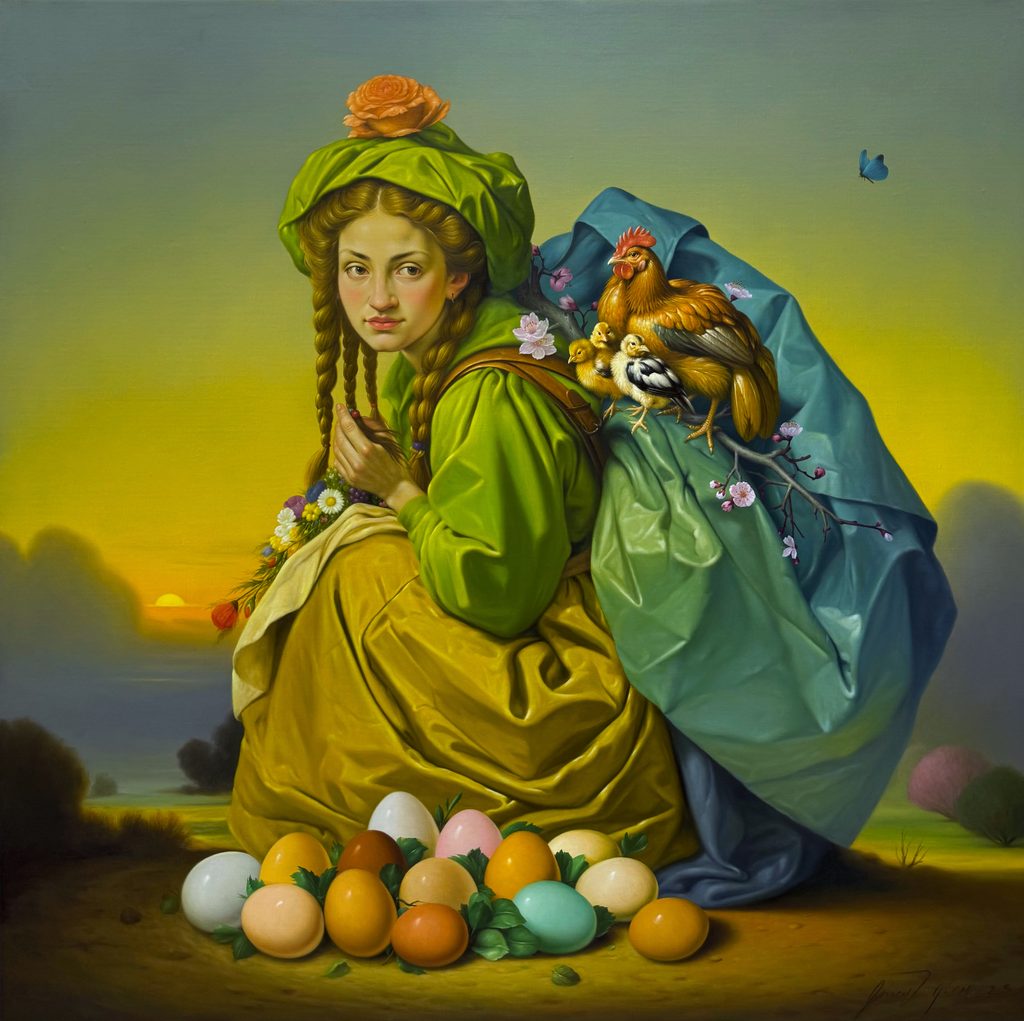
Yolculuk serisi – mola 100×100 cm T.U.Y.B 2025
8. Images such as the egg, broken egg, rose, bird, mouse, dead tree, desert, dry earth, and the empty space of the sky repeatedly appear in your practice. Do these images carry fixed meanings for you as part of a symbolic system, or are they living elements that acquire new meanings within the context of each work? What transforms an object into an intellectual image within a painting?
These images have fundamental meanings for me; however, I do not see them as a closed and unchanging dictionary of symbols. Each image acquires a new meaning according to the painting in which it exists and the other elements surrounding it.
For me, the egg is the essence of life, birth, potential, and a new beginning. Yet it is also extremely fragile. In Aporia, the egg becomes an uncertain possibility that is being protected in the midst of impasse and exhaustion. The broken egg does not simply signify death; it also carries the meaning of an unrealised possibility, hope that has come to nothing, and lost wholeness.
Similarly, the rose contains both beauty and love, as well as vulnerability. A fallen rose petal evokes the passage of time and fading memory. A bird can represent freedom, while depending on its context, it can also become a witness to an approaching danger. Mice can make our suppressed and unwanted sides visible, while at the same time being read as resilient beings that continue to live within destruction.
What transforms an object into an intellectual image is not the object itself alone. Its position within the painting, its scale, its relationship with other images, the way it is repeated, and the associations it awakens in the viewer’s memory all create this transformation.
I give my images an initial meaning; however, I believe they need to remain open to new relationships and different interpretations in order to remain alive within the painting.
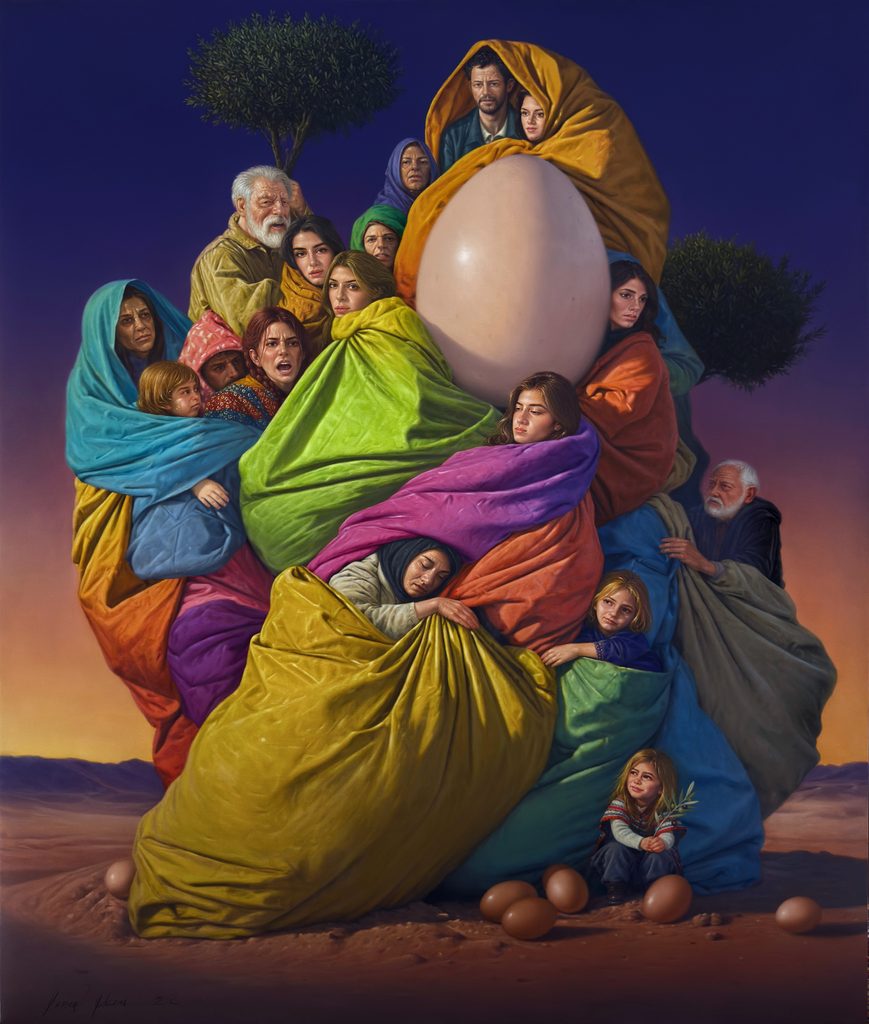
Yeniden insan 120×100 cm T.U.Y.B 2026
9. The concept of Aporia evokes impasse, irresolution, and the moment when thought encounters its own limits. When you look through cracks, empty spaces, and ruins, is rupture an ending for you, or a threshold from which a new meaning can emerge?
For me, rupture contains both loss and a new possibility. I do not think every rupture is inherently healing or transformative. Some ruptures lead to irreversible losses. For this reason, I do not want to romanticise pain. Yet rupture can make a concealed truth visible and reveal how fragile the established order actually is.
For me, the concept of Aporia expresses the moment when thought cannot find a way out and encounters its own limits. The figures in the painting hold on to one another, while at the same time carrying each other’s weight. The egg at the centre is not a definite promise of salvation; it is a fragile possibility that has not yet been realised and needs to be protected. The presence of hope within an impasse does not mean that the impasse has disappeared.
Cracks, empty spaces, and ruins function in a similar way. A crack shows that wholeness has been disrupted, while it can also reveal another layer that had remained hidden within. An empty space is not merely an absence; it can also be a space where a new meaning may take root. A ruin carries traces of what happened in the past while making us question what the future will be built upon.
Therefore, I see rupture neither simply as an ending nor as an easy rebirth. For me, rupture is a threshold where confrontation begins. Whether a new meaning emerges depends on what we do with that confrontation.
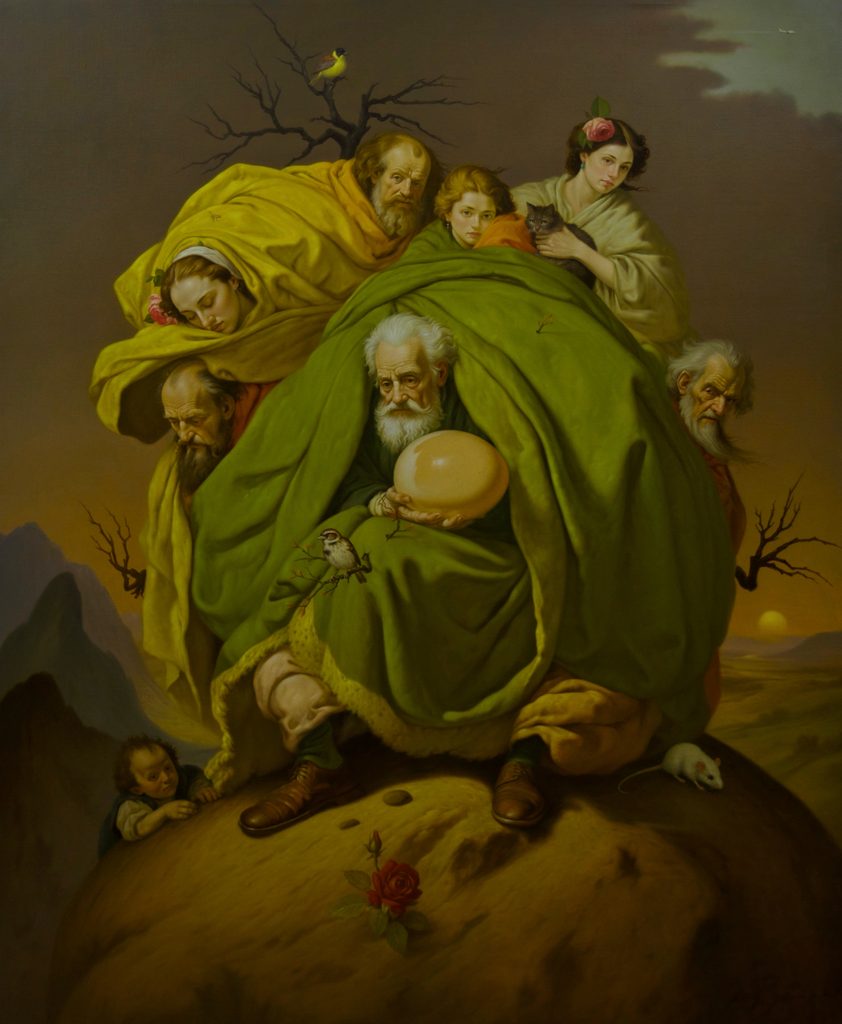
Aporia 170×140 cm T.U.Y.B 2025
10. Are there artists, thinkers, writers, or fields outside art that nourish your practice? When speaking about the names that have inspired you, can we say that it is not only their aesthetic languages but also their ways of thinking that have touched your work? What most often sets you on the path towards a new painting today: an image, an idea, or a question?
Of course, there are artists, writers, and thinkers who nourish me. However, I do not see the question of influence simply as a list of names. Sometimes, rather than relating to an artist’s formal language, I connect with their way of looking at the world. Before how a work is made, I am more interested in why it was made and which question it leaves open.
The long relationship between art history and the use of the figure, light, allegory, and symbolism nourishes my practice. Mythological and religious narratives are not sources that offer ready-made answers for me; rather, they are fields of collective memory through which humanity’s relationship with power, guilt, belief, fear, birth, and death can be read again and again.
I also think that my education in Traditional Turkish Handicrafts has left traces in my relationship with detail, surface, motif, and patience.
Literature, philosophy, history, social events, nature, and ordinary objects I encounter in everyday life are also part of my practice. Sometimes it is a piece of news, sometimes an image from childhood, and sometimes a dry tree standing alone in the desert that can remain in my mind for a long time.
A new painting often begins with a question. The image then develops around that question. At other times, however, an image I encounter can give rise to a question I have not yet been able to name. So there is no one-way relationship between idea and image.
What matters to me is that the question at the beginning is not completely answered when the painting is finished; instead, it remains capable of opening onto other questions.
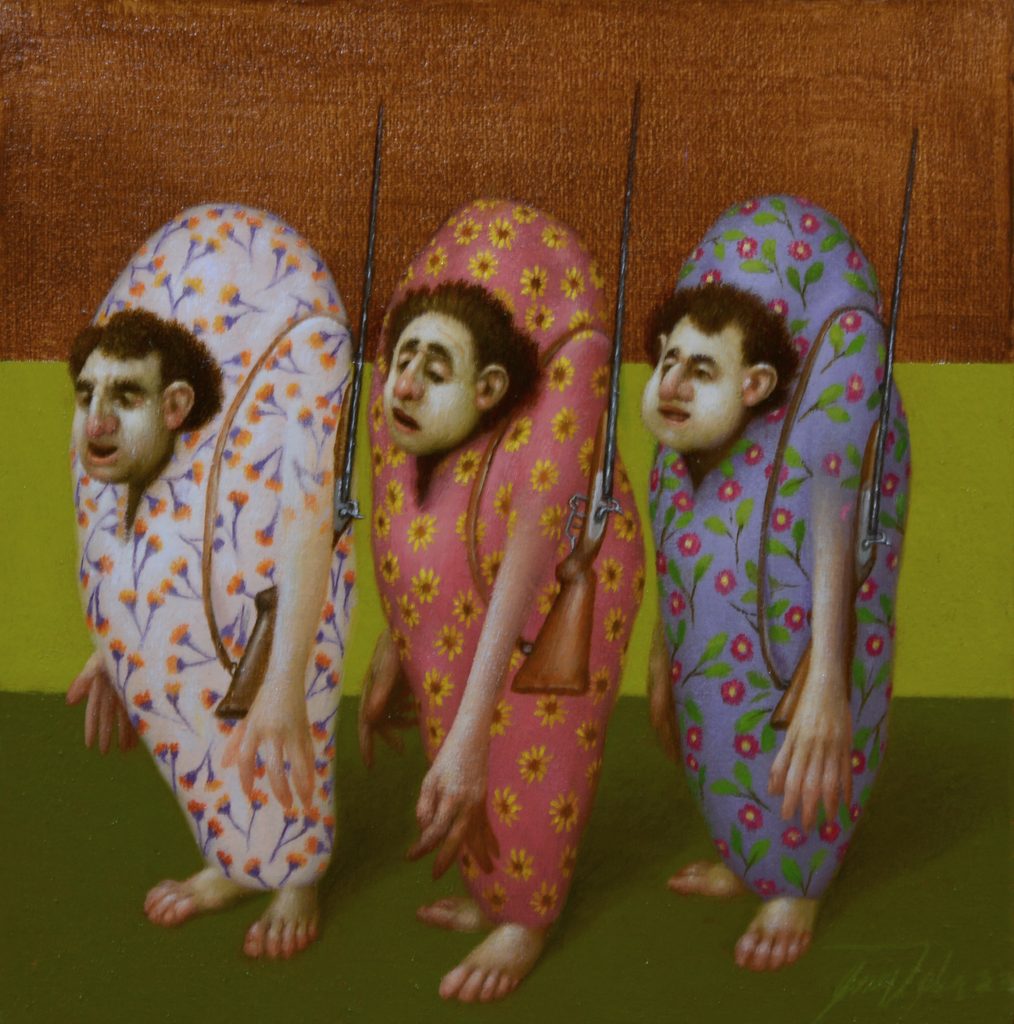
Piyonlar 20×20 cm T.U.Y.B 2023
11. There is a strong transition between individual and collective memory in your works. How do you think a personal experience becomes a shared image that can resonate within the memories of other people? Does the viewer finding their own experience within the work mean that the work has been completed for you?
Personal memory is never entirely ours alone. What we remember becomes intertwined with our families, the geography we live in, social events, and the stories of others. Therefore, personal experience often contains traces of collective memory.
I do not try to paint an event I have experienced or witnessed exactly as it happened. I carry it in my mind over time, distance it from certain details, and bring it into relation with other images. In this way, an experience belonging to a particular person or event transforms into a more open structure with which others can connect through their own memories.
An image belonging to Silvan or Diyarbakir may be part of a very personal memory for me. Yet the dry earth, a waiting figure, a broken egg, or a distant sky in a painting may evoke an entirely different loss, migration, or state of waiting in another viewer.
The image becoming shared does not mean that it loses its origin. On the contrary, it gains a reality capable of reaching others precisely because it emerges from a specific place and experience.
For me, the viewer finding their own experience within the work is an important stage in its life. The moment a painting leaves the studio, it moves away from being mine alone. However, the viewer’s interpretation does not transform the work into an unlimited and entirely random field either.
The relationships established by the painting, its colours, figures, and symbols create a direction; the viewer, with their own memory, opens a new path within that direction. In a sense, the work continues to live through this encounter.
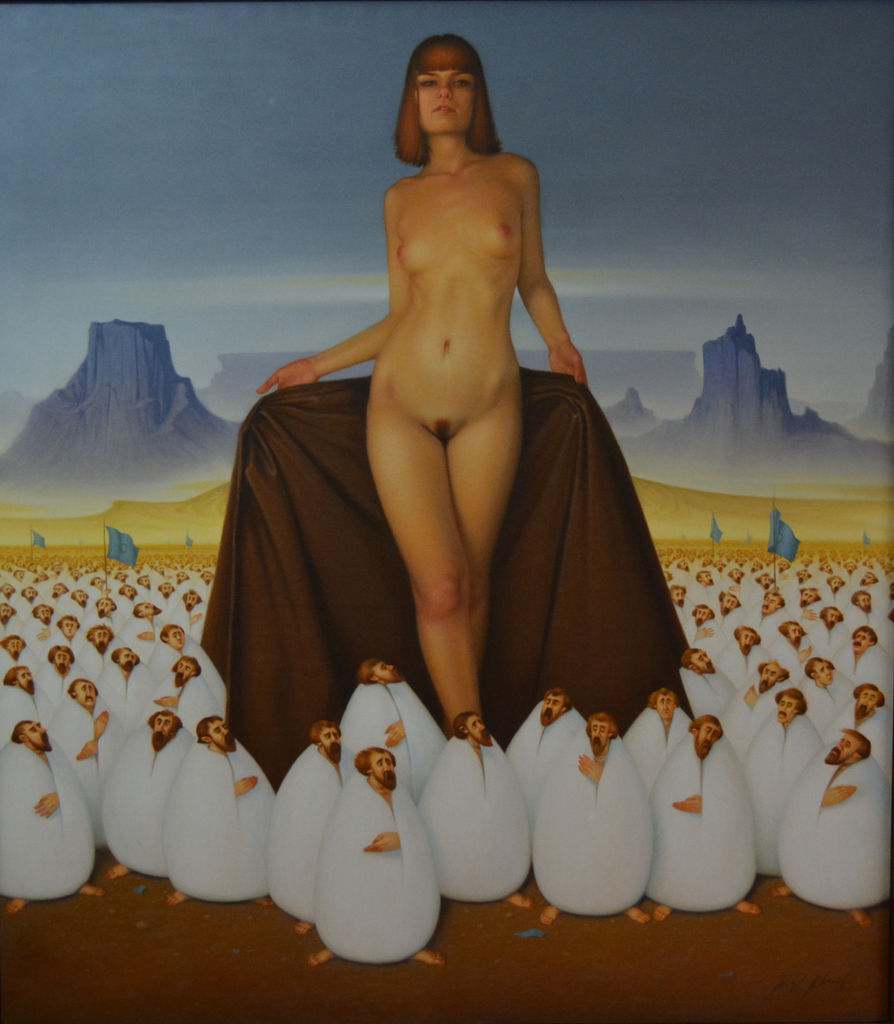
Sirat’a Dogru 170×150 cm T.U.Y.B 2017
12. When you look at your current practice through works such as Aporia and Shadows, what is the issue you have carried from the past into the present but still cannot answer? Is the unresolved question that keeps you painting still in the same place, or does it transform into another question as you continue to create?
The issue I have been thinking about since childhood and still cannot answer is humanity’s desire to dominate other people and other living beings. Why does a being capable of understanding the consequences of its actions still want to restrict another person’s freedom and subject them to its own will?
Moreover, we see that a person who has been subjected to domination can reproduce the same system when they gain power. Humanity’s domination over animals is another form of this. The answers given to this question still do not satisfy me.
Perhaps this is the question that keeps me painting: Why, despite our awareness, can humanity not give up the desire to dominate?
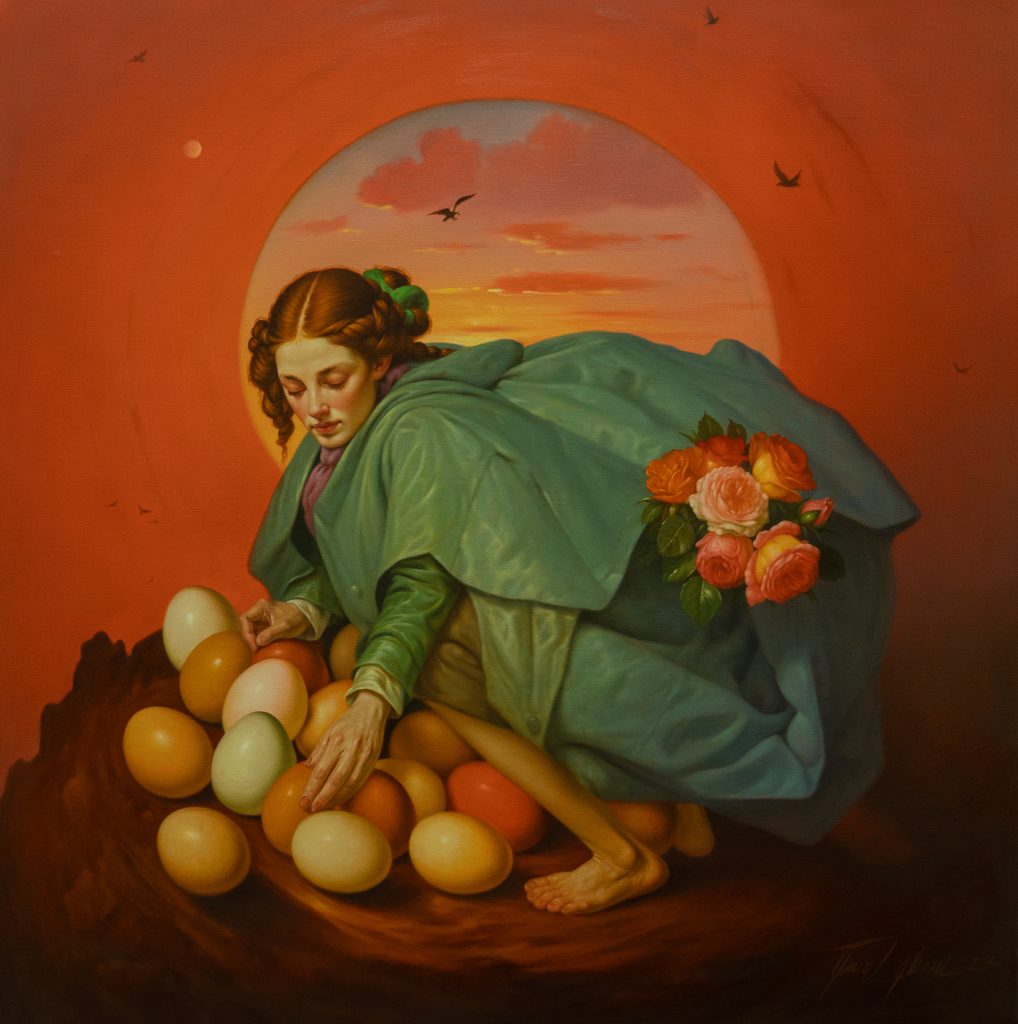
Ruzgarin Buyumedigi Yer 80×80 cm T.U.Y.B 2025
13. When we consider your entire body of work along a single intellectual line, a world emerges that extends from oppositions to power, from nature to ecology, from symbols to memory, and from rupture to rebirth. What is Omer Eken actually pursuing today? If you had to define your artistic practice not with a single concept, but with a single question, what would that question be?
Today, I am pursuing the possibility of a different way for humanity to relate to itself, to other people, and to nature. The oppositions, power, memory, ecological destruction, and images of rebirth within my practice are different faces of this search.
If I had to define my artistic practice through a single question, I would ask:
“Can humanity create another way of existing alongside other forms of life—animals and nature—by establishing a genuinely egalitarian and just order, both within itself and in its relationship with the world, without oppressing, destroying, or dominating?”
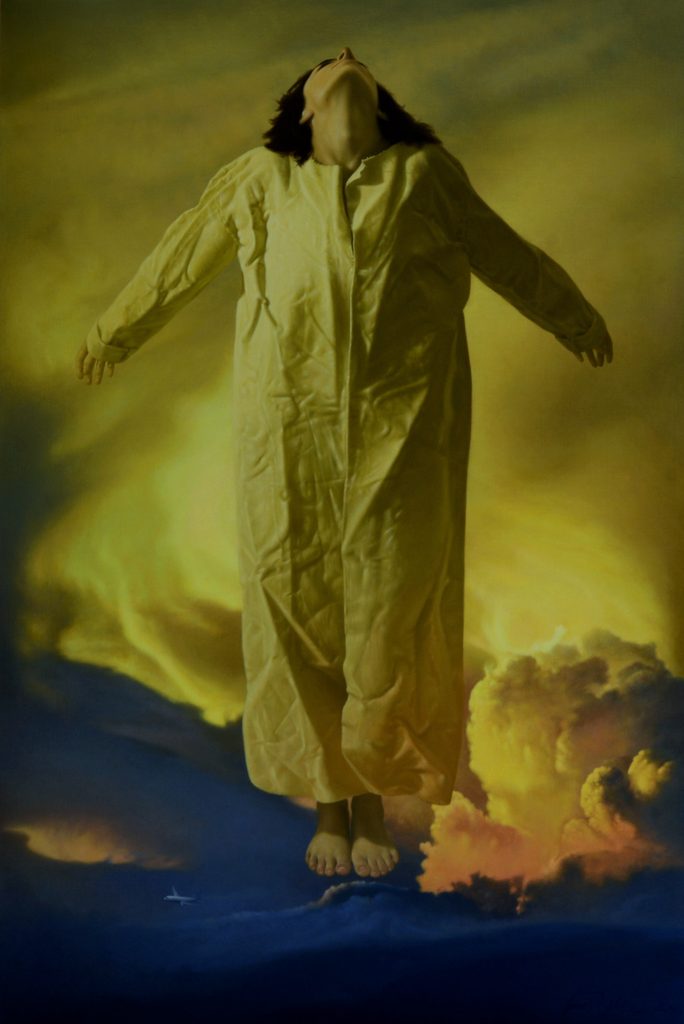
Vecd 150×100 cm T.U.Y.B 2024
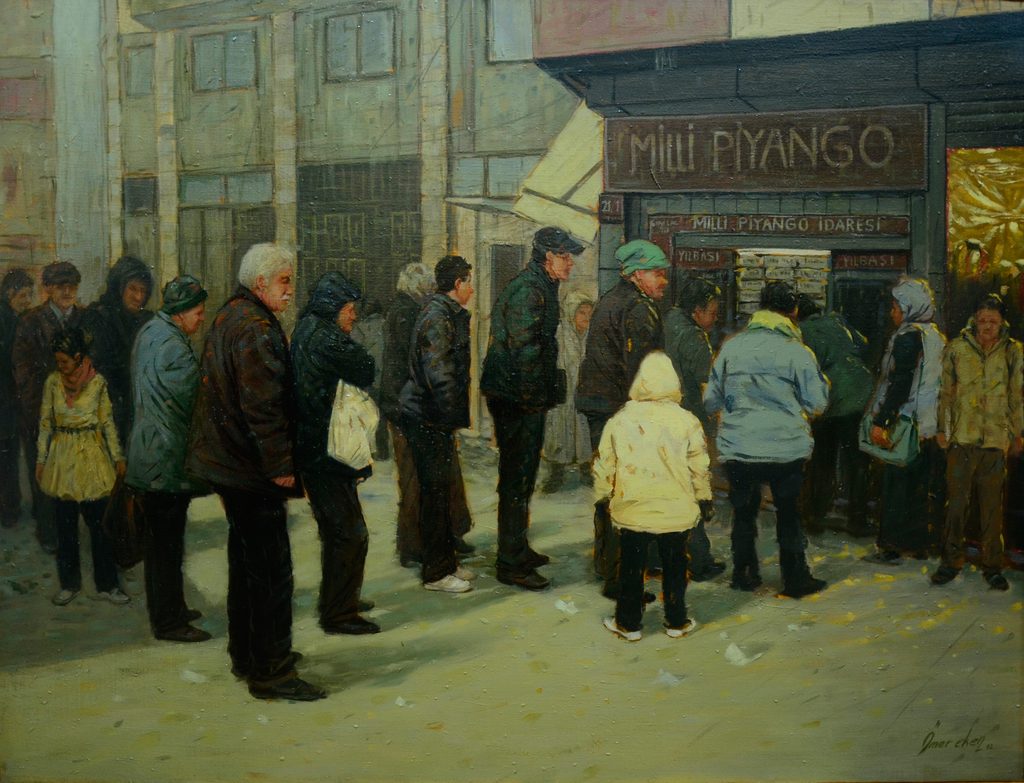
Umut 100×120 cm T.U.Y.B 2012
Zamansız Editör Kolektifi more from this author
Arts
FROM WITHIN THE INVISIBLE : AN INTERVIEW WITH DELAL TEKIN
7 September 2026
Arts
TONY GATLIF: A CINEMA BEYOND BORDERS
5 September 2026
Arts
YAYOI KUSAMA:<div>A Trace Left Within Infinity</div>
28 August 2026
Latest
Art Review
Batik Aesthetics and the Intersections of Contemporary Art in Erhan Şanal’s Portraits
15 September 2026
Essays
Mental Essays–4: The Empire of Algorithms
4 September 2026
Arts
THE MEANING OF DESPAIR ACCORDING TO INGMAR BERGMAN
4 September 2026