
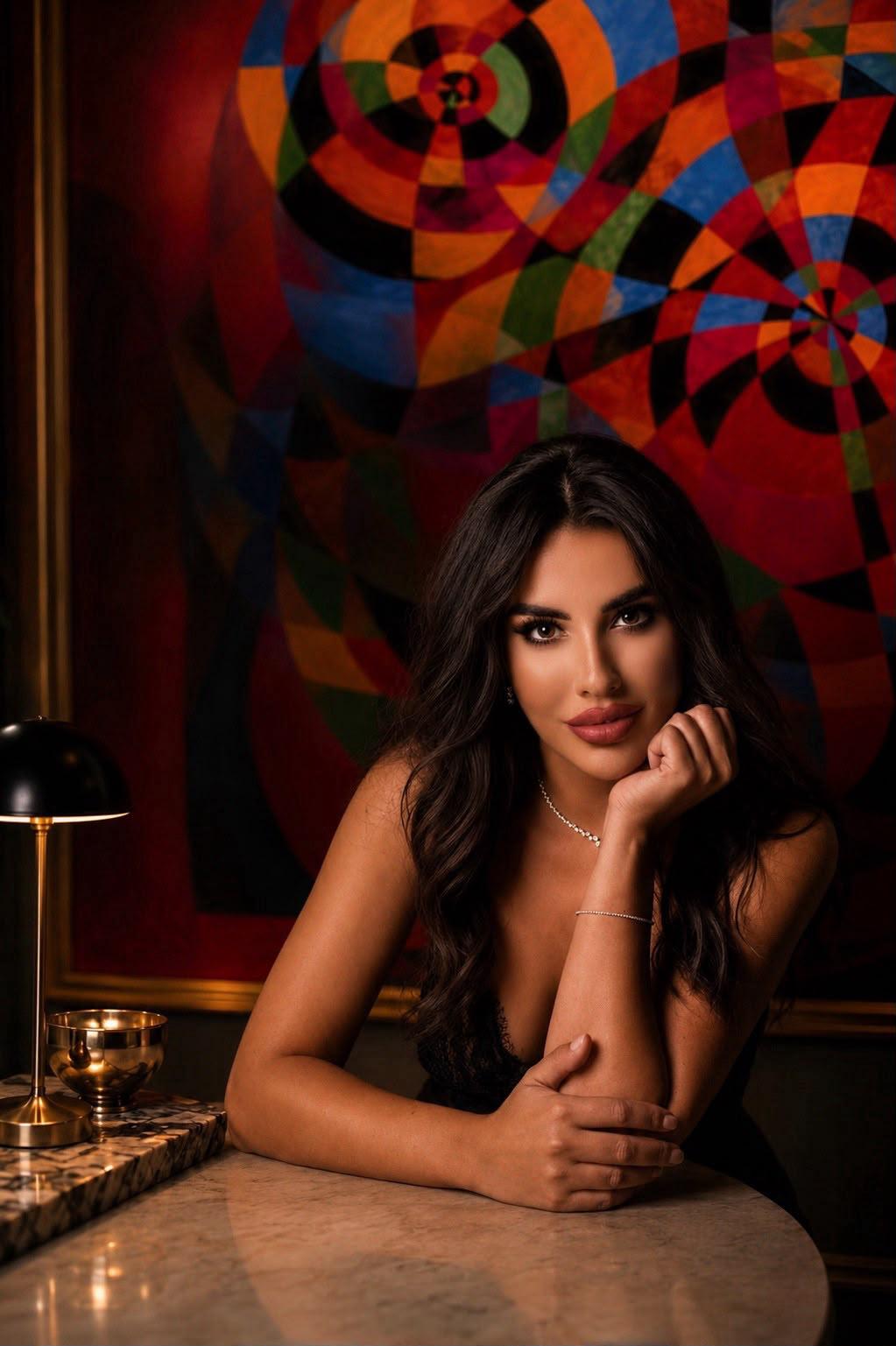
1. Let’s begin by getting to know you. We met at the 6th Mardin Biennial, but I would like to hear you describe yourself in your own words. Looking back from your childhood to today, what was at the beginning of your relationship with art? What was the first turning point that led Alaz Sağlam toward becoming a painter?
For me, art has never been only about making paintings; it has been more about the way I perceive the world and position myself within it. Since childhood, I have been someone who observes, notices details, and experiences emotions intensely. But my path toward painting was not rooted in a single dramatic moment; it grew out of an inner need that accumulated over the years.
At different stages of my life, writing, color, and form opened different spaces of expression for me. At some point, I became aware of the boundary between what words can express and what they cannot. Painting began precisely beyond that boundary. When I realized that I could construct through color, rhythm, and form what I could not describe in words, painting ceased to be simply an activity and became a language for me.
Looking back today, I think the real turning point that led me to become a painter was not so much the need to express myself as the need to transform myself. For me, creating does not mean reproducing what I have lived exactly as it was; it means transforming it into another form. Perhaps that is why my work constantly contains movement, transformation, the search for a center, and the idea of rebirth.
2. When I look at your paintings, I see circles, centers, intersecting geometric planes, and powerful colors. At times they remind me of artists such as Robert Delaunay, František Kupka, and Victor Vasarely—especially in terms of Delaunay’s rhythm of color, Kupka’s circular movement, and Vasarely’s geometric depth. Do you feel a connection between yourself and these artists, or with similar traditions of abstraction? Which painters have influenced you?
I find it very natural for people to see visual affinities between my work and the tradition of geometric abstraction in art history. Delaunay’s rhythm of color, Kupka’s sense of movement, and Vasarely’s geometric depth are all highly significant approaches that expanded the language of abstract art. However, when I work, I do not consciously position myself as someone following the aesthetic systems of these artists.
My starting point is usually an inner state rather than an optical investigation. For me, the circle, the center, intersections, and layers are not merely formal decisions; they are visual counterparts of time, human relationships, ruptures, repetitions, and transformation. So even if we may use a similar geometric vocabulary, the stories we tell within that vocabulary are different.
Of course, I draw from art history, architecture, music, cities, and artists from different periods. But it is difficult for me to point to the influence of a single painter. What affects me most is an artist’s ability to build a distinctive and recognizable language of their own. That is also my central pursuit: to create a visual language so identifiable that, even without seeing the signature, one can sense that a work belongs to Alaz Sağlam.
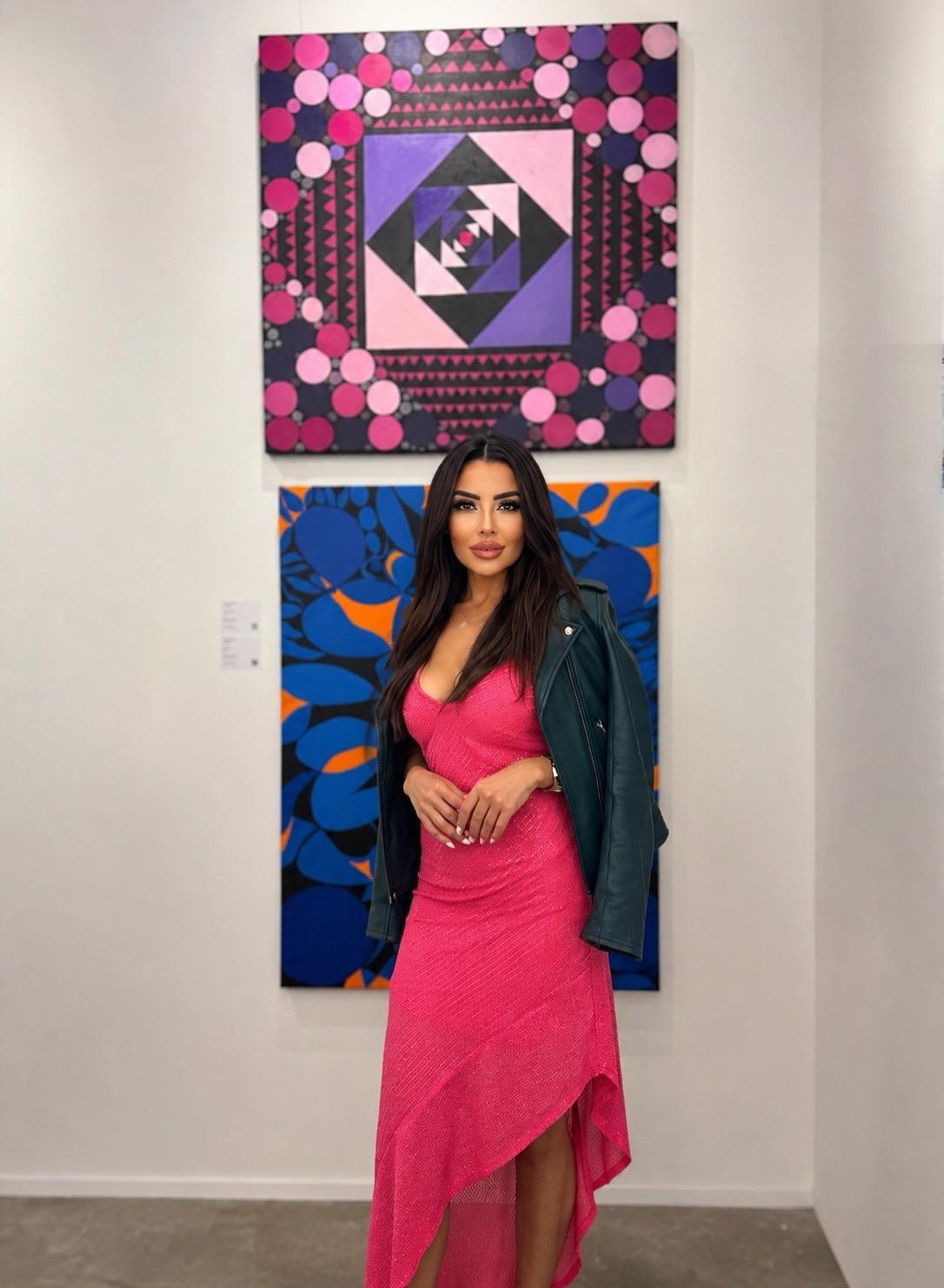
3. Geometry is very prominent in your paintings. Yet it does not create a mathematical coldness; on the contrary, it produces a highly emotional atmosphere. How do you establish this relationship between geometry and emotion? When you begin a painting, what comes first: form or feeling?
For me, feeling comes first. But that feeling is not transferred directly and uncontrollably onto the canvas; geometry gives it structure.
I see geometry not as a system that limits emotion, but as one that gives it form. Our inner world is often disordered: we can experience longing, anger, desire, fear, hope, or calm all at the same time. The lines, circles, intersections, and centers on the canvas organize this complexity. In a sense, the chaos comes from emotion and the order comes from geometry.
But as the painting develops, these two realms begin to merge. A geometric decision I make at the beginning may later turn into an emotional response; one color may alter another form. So the work is never a fully predetermined mathematical problem. There is a constant negotiation between control and intuition.
Perhaps the sense of movement in my paintings is born precisely from this: there is order, but nothing is ever completely static.
4. Another striking element is color. In your paintings, colors do not simply fill the surface; they seem to move, push and pull against one another, animating the painting from within. Is color an aesthetic choice for you, or a language of expression in its own right? When you choose a color, does it correspond to a particular emotion or memory for you?
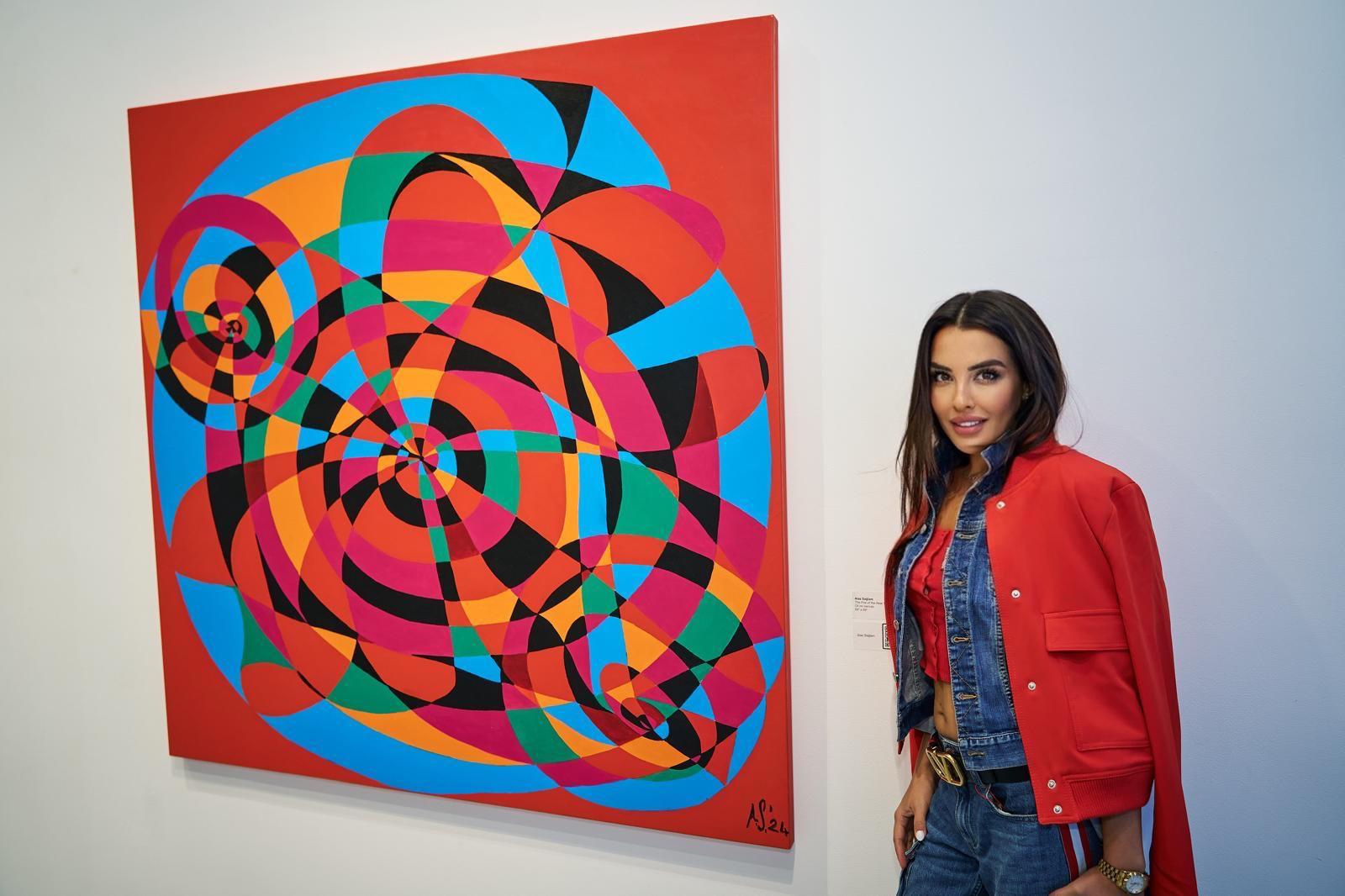
Color is definitely not a decorative choice for me; it is one of the primary means of expression in a painting. In fact, sometimes color speaks before form does.
I do not like confining colors to fixed meanings. Red does not always mean passion, and blue does not always mean calm. The same color can carry a completely different emotion in another period, beside another surface, or within a different geometry. I am more interested in the tension between colors: how they elevate one another, how they quiet one another, where they clash, and where they find balance.
When I choose a color, I usually do not think about it for a long time. It begins as an intuitive decision, but afterward a very conscious process of balance comes into play. Because for me, color is not only something that is seen; it is almost a frequency that can be felt.
That is why some paintings speak loudly while others are quieter. Color is one of the elements that determines the volume of a work.
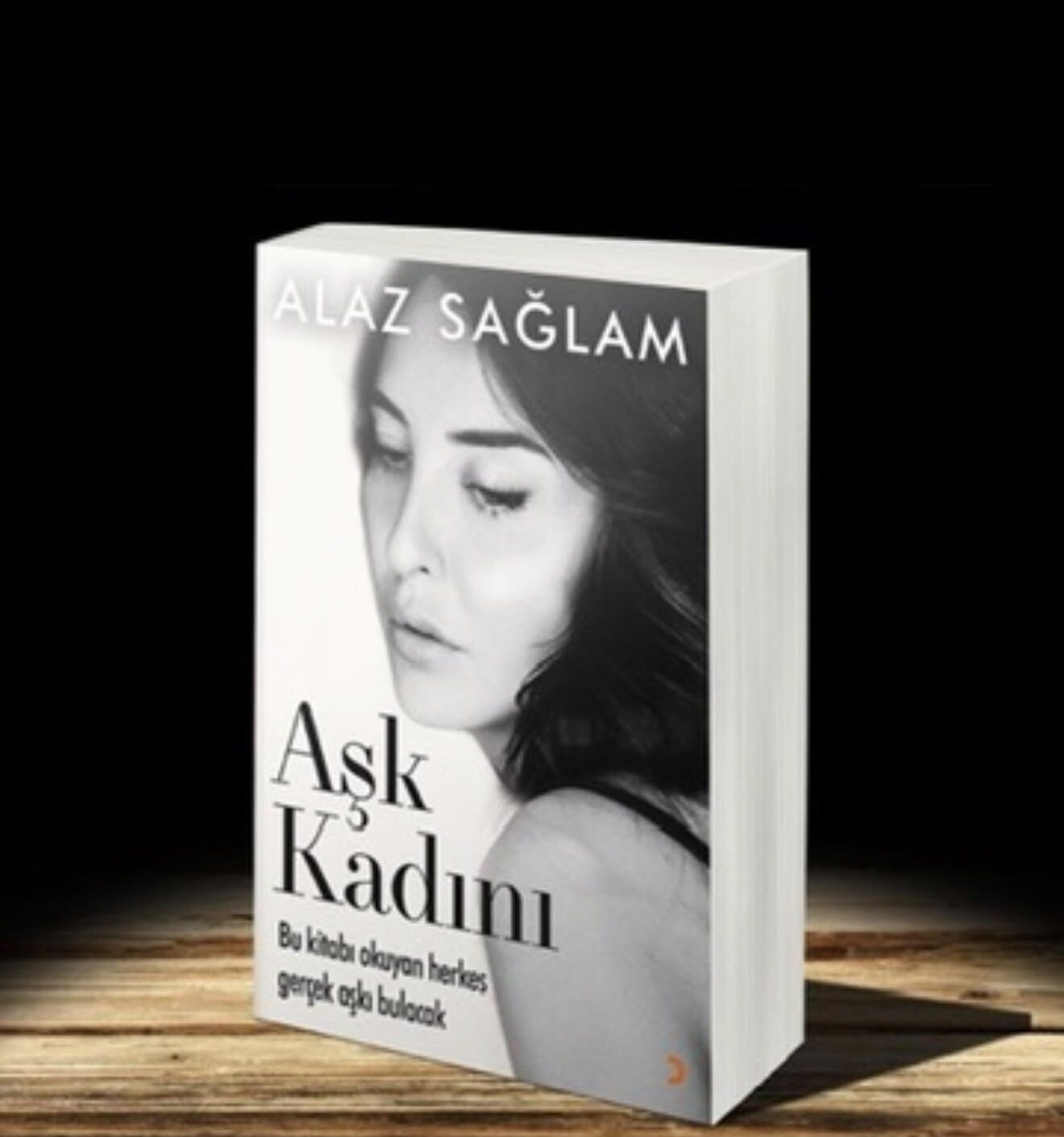
5. I read your book Benden Sonra, although I have not yet read Aşk Kadını. What struck me in Benden Sonra was how simple and direct your language is. In your paintings, by contrast, we encounter an abstract, geometric, and layered language. As an artist, what is the relationship between the world you create with words and the world you create with color and form? Are you telling the same thing in two different languages, or are these two separate, independent versions of Alaz?
I do not think there are two separate Alazs. The source is the same; only the mode of expression changes.
I am more direct when I write because there is an inherent confrontation in language. When you write a sentence, you often have to name the emotion. In painting, I can move around that same emotion without naming it. Instead of explaining it to the viewer, I can make them feel it.
So for me, there is a very simple distinction: when I write, I name the emotion; when I paint, I create a space for it.
Perhaps the difference between the simplicity of my books and the layered structure of my paintings comes from this. In writing, I want to strip away what is unnecessary and arrive at a sentence that is as bare as possible. On the canvas, however, I allow layers, encounters, and contradictions to multiply.
But at the center of both is the human being: love, loss, desire, rupture, beginning again, returning to oneself, and transformation. One speaks through words; the other through color and form.
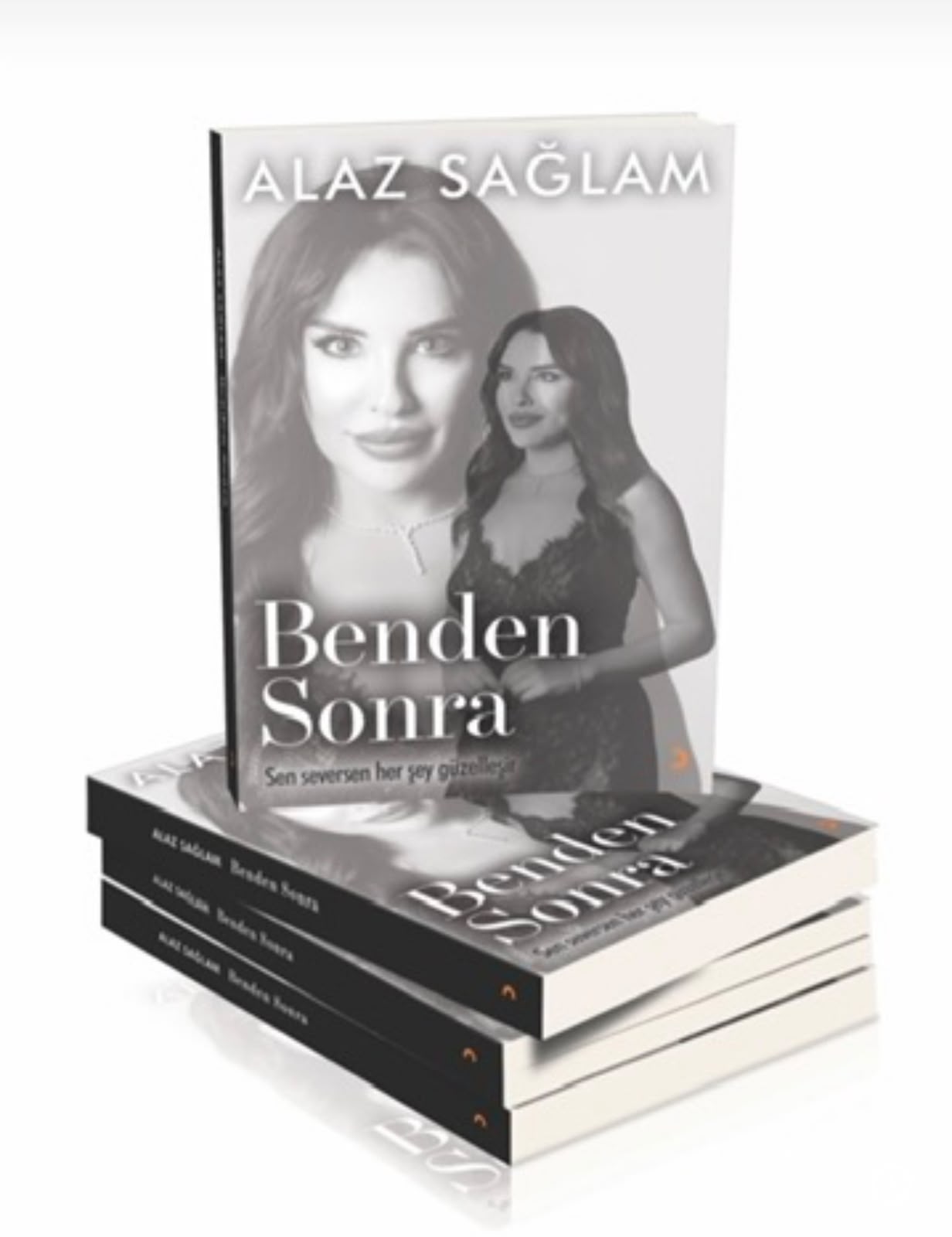
6. Do you think there is an invisible connection between your paintings and your books? For example, can the starting point of a painting sometimes be a sentence, a poem, or an emotion you were unable to express in a book? Or conversely, can an idea that emerges while writing later become a painting?
There is definitely such a connection, but it does not happen as a direct translation. I do not take a poem and turn it into a painting, nor do I later explain a painting through words. It is more that the same emotion returns at different times through different doors.
Sometimes a single sentence that appears while I am writing can stay with me for a long time. Months later, I may recognize not the sentence itself, but the feeling it left behind, in a painting. Sometimes the reverse happens: after a painting is completed, the space it opens within me can turn into a text or a poem.
I think the subconscious is constantly working between these two fields. I am not always aware of the connection at the moment of creation.
For that reason, I do not see my books and my paintings as two independent careers. They are different records of the same inner world. In one, words remain; in the other, colors. But beneath both there is the same memory and the same person.
7. Let’s step outside the art world for a moment. From the outside, you come across as a disciplined, productive artist who is constantly trying something new. What are you like in everyday life? When you wake up in the morning, is art the first thing you think about, or is there also a very ordinary Alaz, entirely separate from the artist identity?
Of course there is a very ordinary Alaz, and thankfully so. I think living constantly through the identity of the artist can trap a person inside their own image.
I am disciplined when it comes to work, and my mind rarely stops. A new work, an idea, a project, or a sentence I want to write can appear at any moment of the day. But I am also someone who loves the sea, travels, sits around long tables with friends, listens to music, laughs, and sometimes simply wants to do nothing.
The ordinariness of daily life is very valuable to me because it is one of the places from which my work draws nourishment. Art does not happen only in the studio. A conversation, a city, the look in someone’s eyes, a journey, or a moment that seems completely ordinary can later enter the work in another form.
So when I wake up in the morning, art is not always the first thing I think about. But I do not think it is possible for me to completely separate the artist in me from the way I look at the world.
I would also add that, alongside my artistic practice, I have recently been working intensively on an international culture and arts platform that I am developing in the United States, particularly in Miami. I think of art not only as an object to be exhibited, but as part of a broader structure that brings together people, different disciplines, cultures, and the business world. Miami will be the first hub of this project, and from there I want to build an international model that can expand into different cities. So today, in my daily life, I think not only about producing art, but also about how to create a lasting ecosystem around it.
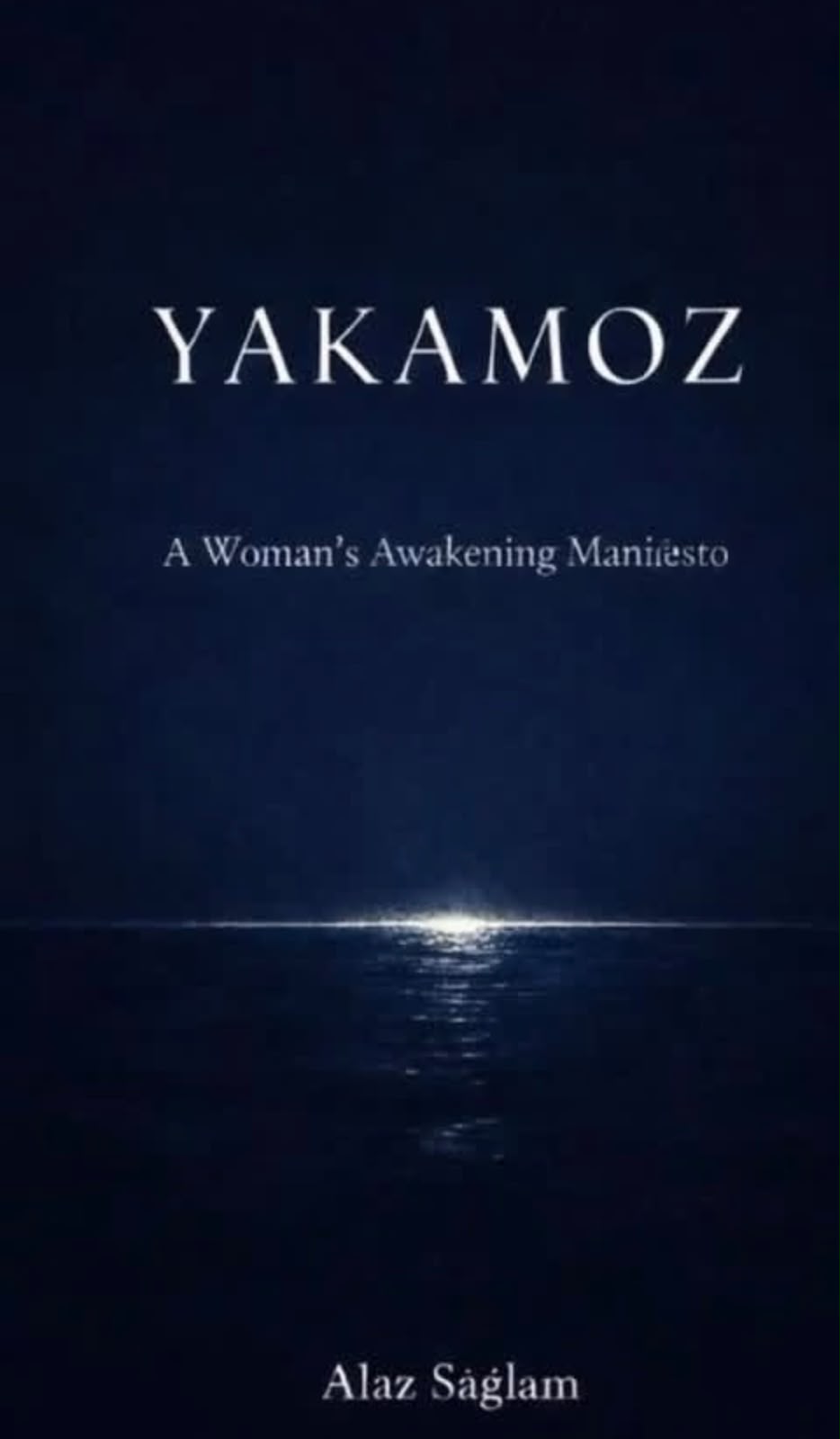
The philosophical foundation of this ecosystem is also explored in my latest book, Yakamoz. Yakamoz is a book with strong philosophical and psychological dimensions, centered on the human capacity to rediscover one’s own light while passing through dark periods, and on inner transformation, awareness, and rebirth. At its core is the idea of not losing the light within us, even when we are tossed around by the storms of life. I describe it as ‘the story of those who do not lose their light, even in the dark.’
8. Let me make the final question a little more personal: Do you believe there is necessarily a connection between an artist’s private life and their work? Could someone who has never met you form an accurate impression of Alaz Sağlam simply by looking at your paintings and reading your books, or do your works actually create a completely different Alaz from the person you are?
I believe there is inevitably some trace of an artist’s life in their work. No matter how abstractly you work, you are still the person making the choices: which colors you place next to each other, where you leave space, what you conceal, and what you make visible—all of that comes from you.
But I also do not believe that art should become merely an explanation of biography. I do not transfer an event from my life onto the canvas exactly as it happened. I transform it. What is personal passes into another language during the creative process, and at that point it no longer belongs only to me.
Someone who has never met me may sense certain things about me through my paintings and books: my intensity, my contradictions, my need for freedom, my relationship with transformation, perhaps my vulnerability and my strength. But I do not think they could fully decipher me.
That is also one of the beautiful things about art. Once a work leaves the artist, it no longer tells only the artist’s story; it also merges with the story of the person standing before it.
So perhaps I can put it this way: through my work, you may be able to feel me, but you cannot fully decipher me. The distance that remains between those two things is part of the mystery of art.
The Zamansız app

Zamansız Editör Kolektifi more from this author
Arts & Culture
IOANNA KUCURADI:A LIFE DEVOTED TO PHILOSOPHY
5 October 2026
Arts
BREAKING FROM WITHIN: AN INTERVIEW WITH OMER EKEN
19 September 2026
Arts
FROM WITHIN THE INVISIBLE : AN INTERVIEW WITH DELAL TEKIN
7 September 2026
Latest
Arts
IN THE FOOTSTEPS OF ART: MEMORY, NATURE, ROOTS AND TRANSFORMATION AN INTERVIEW WITH FIRAT BINGOL
1 October 2026
Art Review
Batik Aesthetics and the Intersections of Contemporary Art in Erhan Şanal’s Portraits
15 September 2026
Arts
TONY GATLIF: A CINEMA BEYOND BORDERS
5 September 2026