

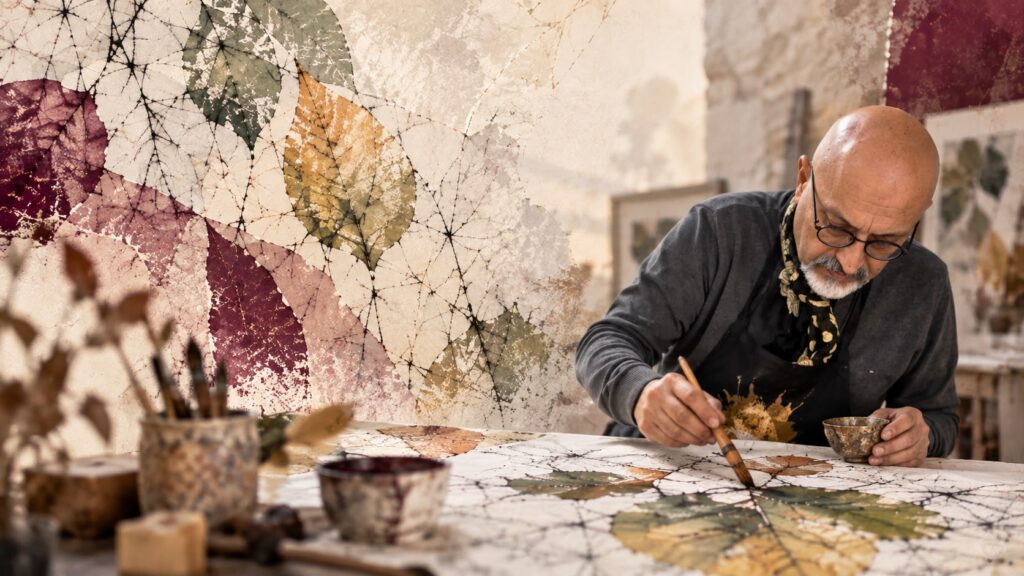
Although batik is often regarded as a traditional technique associated primarily with textile production, throughout the twentieth century it evolved—particularly in Southeast Asia—into an independent field of pictorial expression through the interventions of artists. The use of wax to create boundaries on the surface of fabric, the movement of dye within and around these boundaries, and the layering of different applications transform batik from a merely decorative practice into a distinctive visual language.
In Malaysia, batik painting, pioneered by Chuah Thean Teng, brought everyday life, the human figure, and local culture into the sphere of artistic representation, narrowing the distance between batik and fine art. The recognition of artists such as Chuah Thean Teng, Khalil Ibrahim, Ismail Mat Hussin, Tay Mo Leong, and Yong Cheng Wah as important representatives of batik painting within the collection and exhibition programmes of Bank Negara Malaysia demonstrates that this transformation has also gained recognition within institutional art history.
Within this historical context, Erhan Şanal’s batik practice constitutes a noteworthy example of how a traditional textile technique can be reconsidered within the expressive possibilities of contemporary art in Turkey. Şanal is not merely an artist who employs the wax-batik technique; he is also a practitioner attempting to make visible once again a form of knowledge that is gradually disappearing. In the artist’s own words, one of the central aims of his practice is to revive the wax-batik tradition once used in Turkey and to transmit it to future generations.
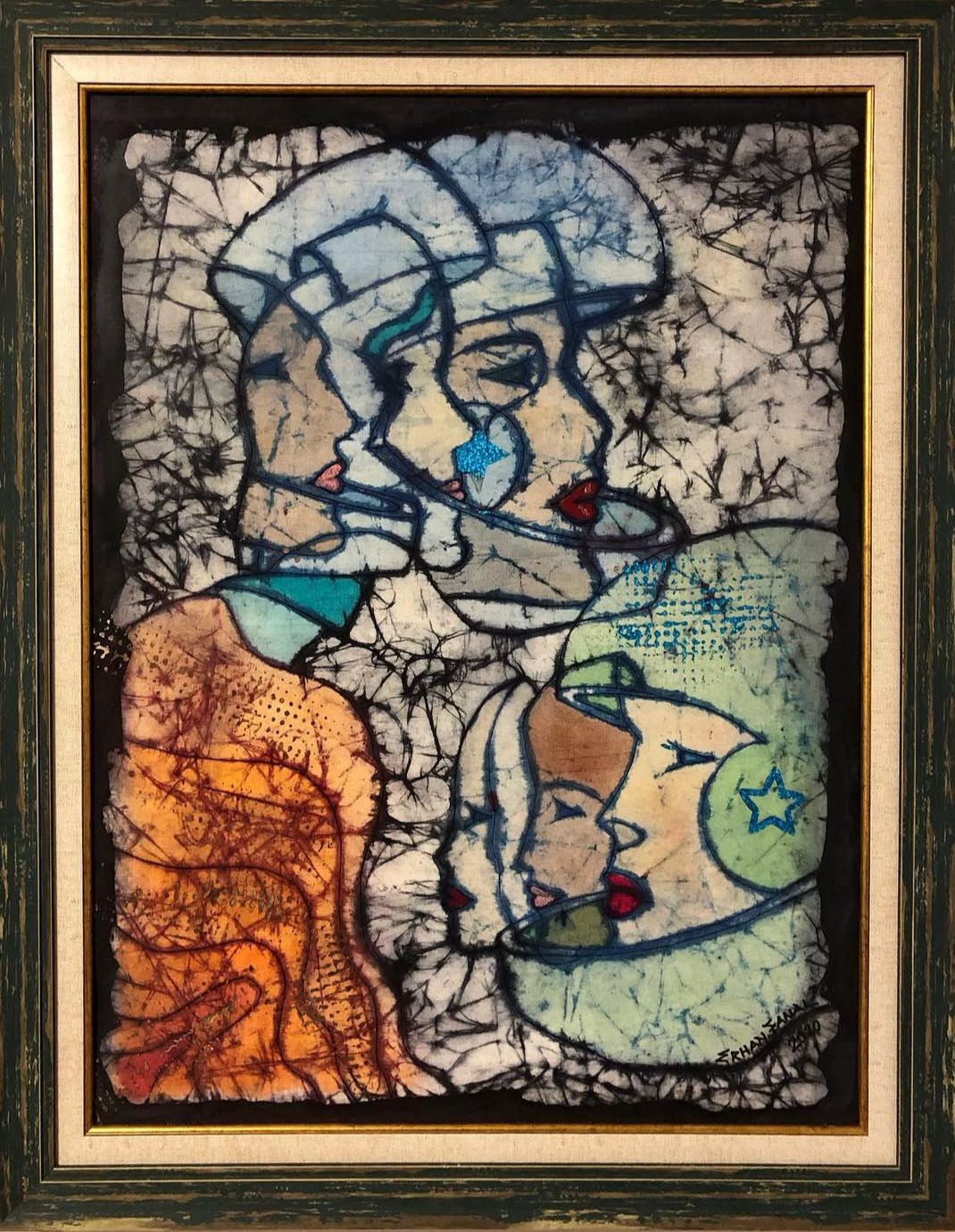
For this reason, understanding Şanal’s work requires looking beyond the formal characteristics of his artworks to consider the position of the technique within cultural memory. The modernisation of batik art has developed differently across different geographies. In Malaysia, while Chuah Thean Teng transformed the batik surface into a field for the representation of everyday life, the human figure, and local culture, Fatimah Chik developed a more abstract and stylised language, reinterpreting elements drawn from flora, fauna, and Nusantara architecture through a contemporary formal vocabulary. According to an assessment by Ilham Gallery, Chik is among the artists who have expanded the boundaries of batik painting by drawing upon traditional craft techniques.
At this point, an important parallel emerges with Şanal’s approach.
In both practices, the traditional technique is not treated as an immutable form belonging to the past. Rather, the technique is transferred into a new visual and conceptual context through the artist’s intervention.
Yet Şanal’s position emerges from a different historical ground. While batik has become an important marker of national and cultural identity in Malaysia and Indonesia, wax batik has occupied a more limited position within artistic circles in Turkey. Şanal’s practice can therefore be read not only as an aesthetic production, but also as an attempt to reposition a fading technique within cultural memory.
In Şanal’s practice, material becomes the carrier of thought.
The movement of wax across the fabric restricts the spread of the dye. Yet this boundary is never absolute. The texture of the fabric, the way the dye is absorbed, and the variations that occur during the process continuously transform the final result.
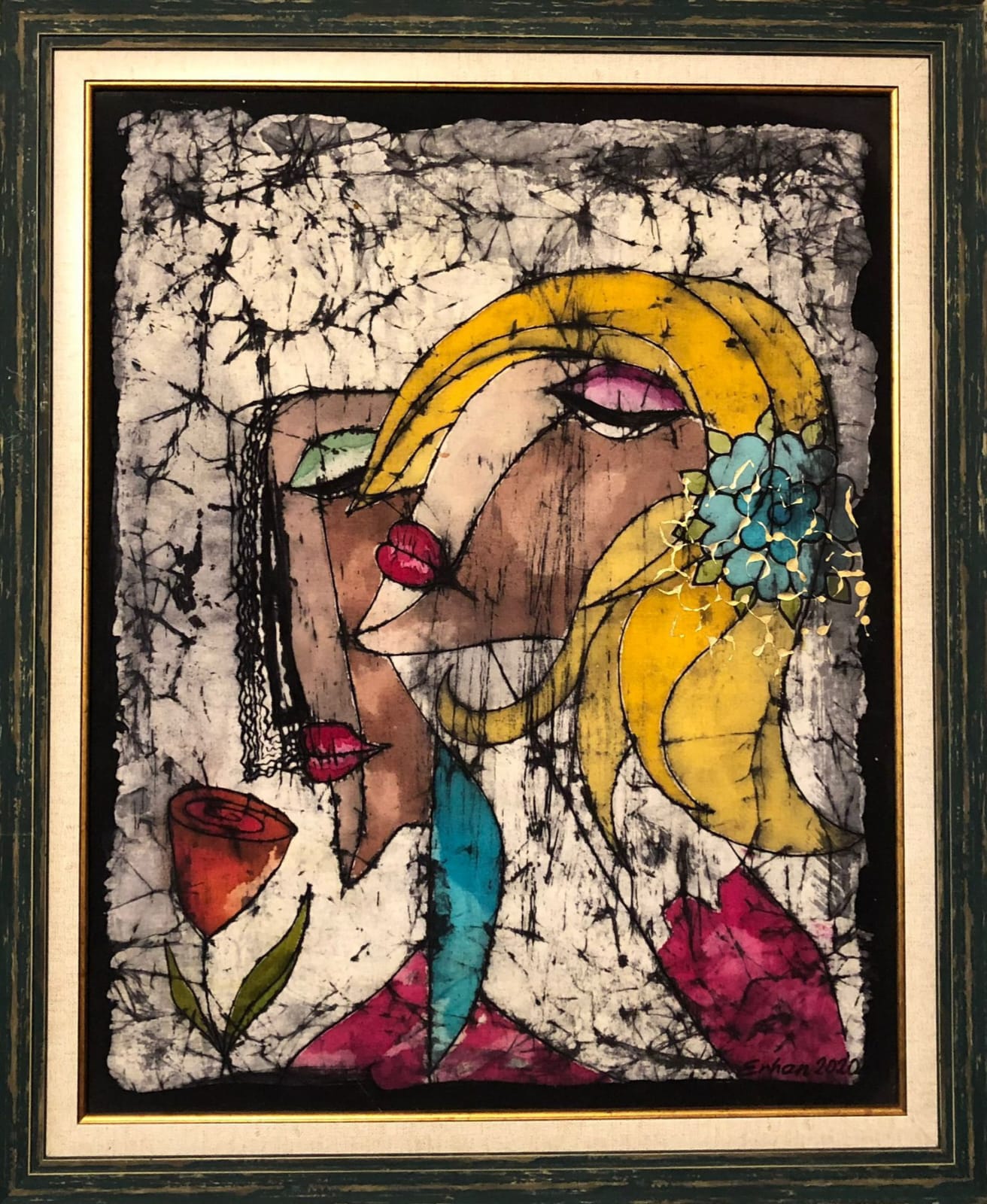
The fundamental tension that emerges here is between control and chance. The artist determines the composition; however, the material does not always submit entirely to the artist’s decisions.
This is one of the most significant characteristics distinguishing batik from conventional painting. While paint applied to a canvas can be controlled to a greater degree, fabric receives the dye according to its own physical properties. A reciprocal negotiation therefore emerges between the artist and the material. In Şanal’s work, this negotiation becomes not merely a technical matter but an aesthetic method.
The artist designs; the material completes.
The resulting work is therefore not simply the execution of a preliminary design conceived in the artist’s mind. The artwork emerges at the point where design intersects with the behaviour of the material.
When positioning Şanal’s practice within the broader history of batik, the Indonesian artist Amri Yahya becomes a particularly significant point of reference. Ilham Gallery identifies Yahya as one of the pioneers of batik painting in Indonesia. He is noted for experimenting with batik from the 1960s onwards and for exhibiting his batik paintings from 1974 onwards.
Yahya’s approach demonstrates that batik can function not merely as part of textile production but as a pictorial form of expression in its own right.
Similarly, Şanal’s practice transforms fabric from a decorative object into a surface for pictorial portraiture.
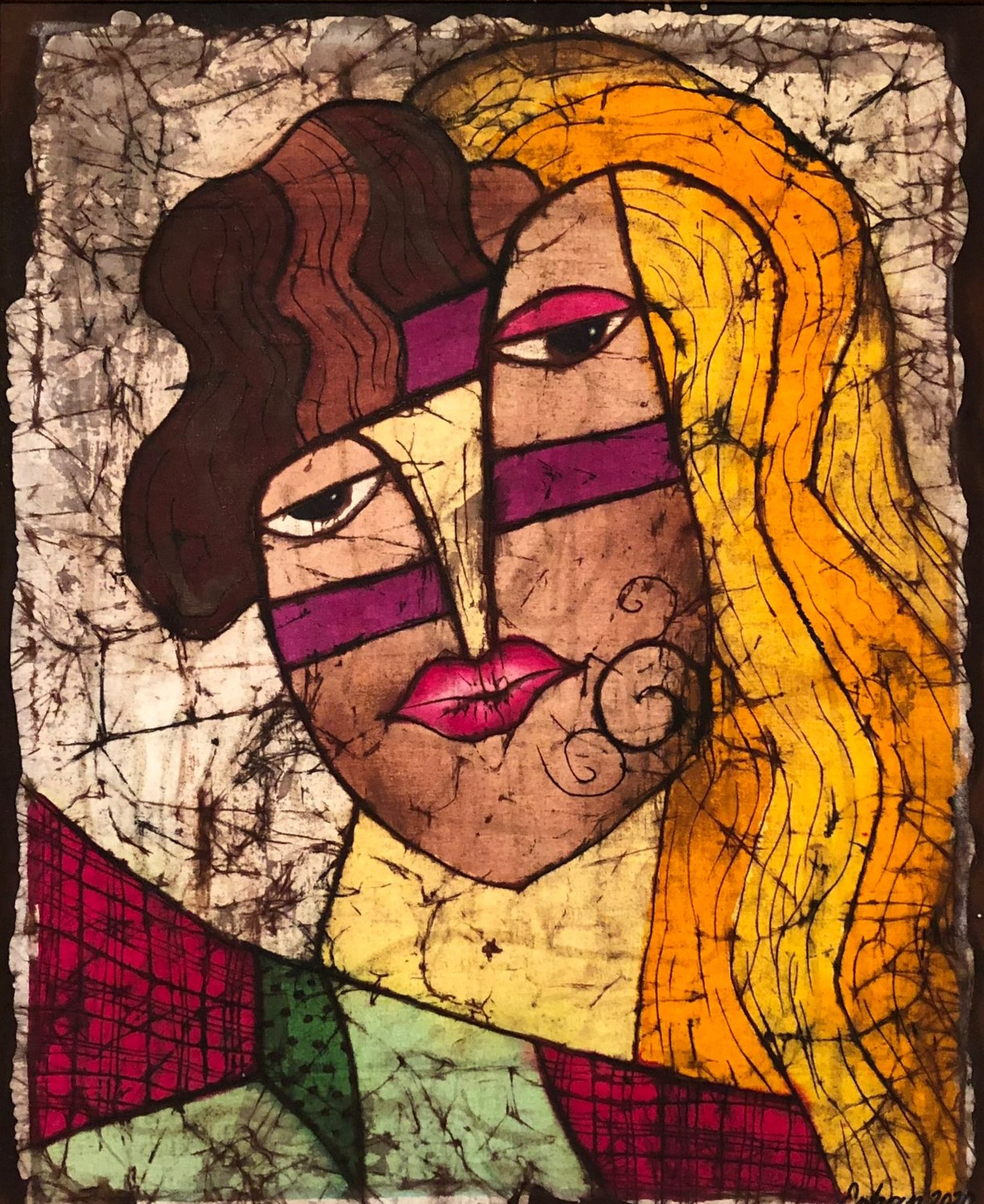
At this point, batik ceases to be simply “pattern on fabric” and becomes a way of thinking through fabric.
Another dimension of the relationship between batik and painting can be observed through the work of Srihadi Soedarsono. Raised in a family of batik producers, Soedarsono developed a practice in which Javanese culture became an important point of reference, establishing a distinctive relationship between traditional culture and modernist painting. Rather than remaining directly bound to the batik technique itself, Soedarsono transformed the visual and intellectual legacy of batik culture through the language of modern painting.
This approach provides an important point of comparison for Şanal.
The influence of a traditional technique on contemporary art is not limited to the direct use of that technique. Tradition can also shape an artist’s understanding of form, perception of surface, sense of rhythm, and relationship with cultural memory.
In this sense, Şanal’s batik practice represents not simply a technical continuity, but the reproduction of traditional knowledge within a contemporary artistic consciousness.
The practices of Agus Ismoyo and Nia Fliam also provide important points of reference for considering Şanal’s work within the context of contemporary batik. At the Brahma Tirta Sari studio in Yogyakarta, traditional Javanese batik methods are explored in conjunction with the possibilities of contemporary art. The National Gallery Singapore notes that one of the artists’ central aims is to expand the boundaries of traditional batik techniques and reach new forms of contemporary expression.
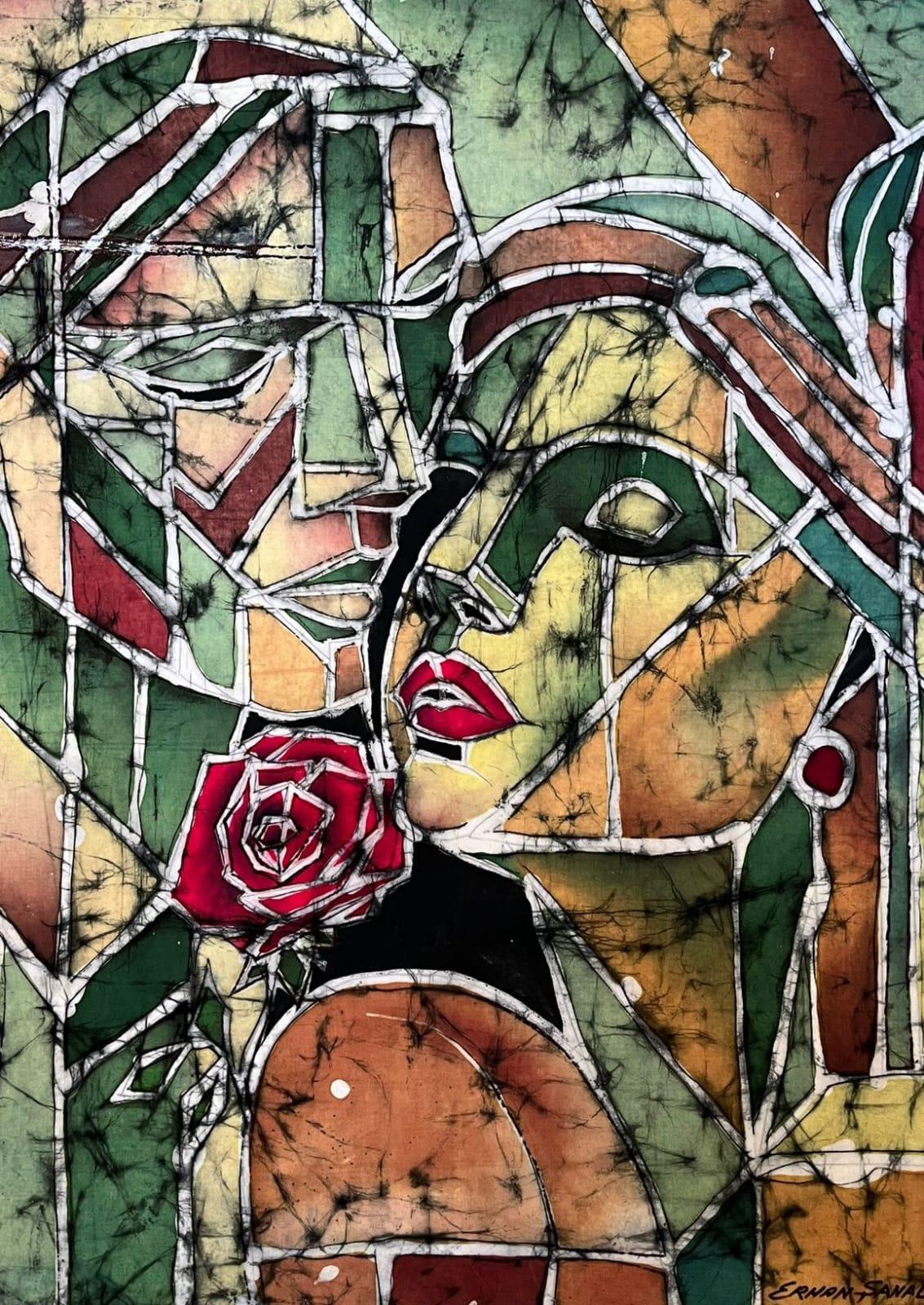
This approach has a direct conceptual affinity with Şanal’s practice: tradition is preserved while simultaneously being transformed.
Consequently, within contemporary batik art, tradition does not mean returning to the past. On the contrary, it means bringing a technique inherited from the past into confrontation with the artistic questions of the present.
Şanal’s position in Turkey can also be understood within this framework. His practice places technique, cultural transmission, and material at the forefront rather than political narrative.
This distinction is important because contemporary batik art does not have to follow a single conceptual direction. Some artists employ batik as a means of social critique; others investigate cultural memory; while others explore the technique’s own formal and material possibilities. Şanal’s practice is concentrated primarily within this third field: the plastic and cultural potential of the technique itself.
Dias Prabu, meanwhile, is one of the contemporary artists who expands the possibilities of batik by bringing the technique into dialogue with painting, drawing, murals, and installation. The artist combines hand-drawn batik with large-scale, site-specific installations.
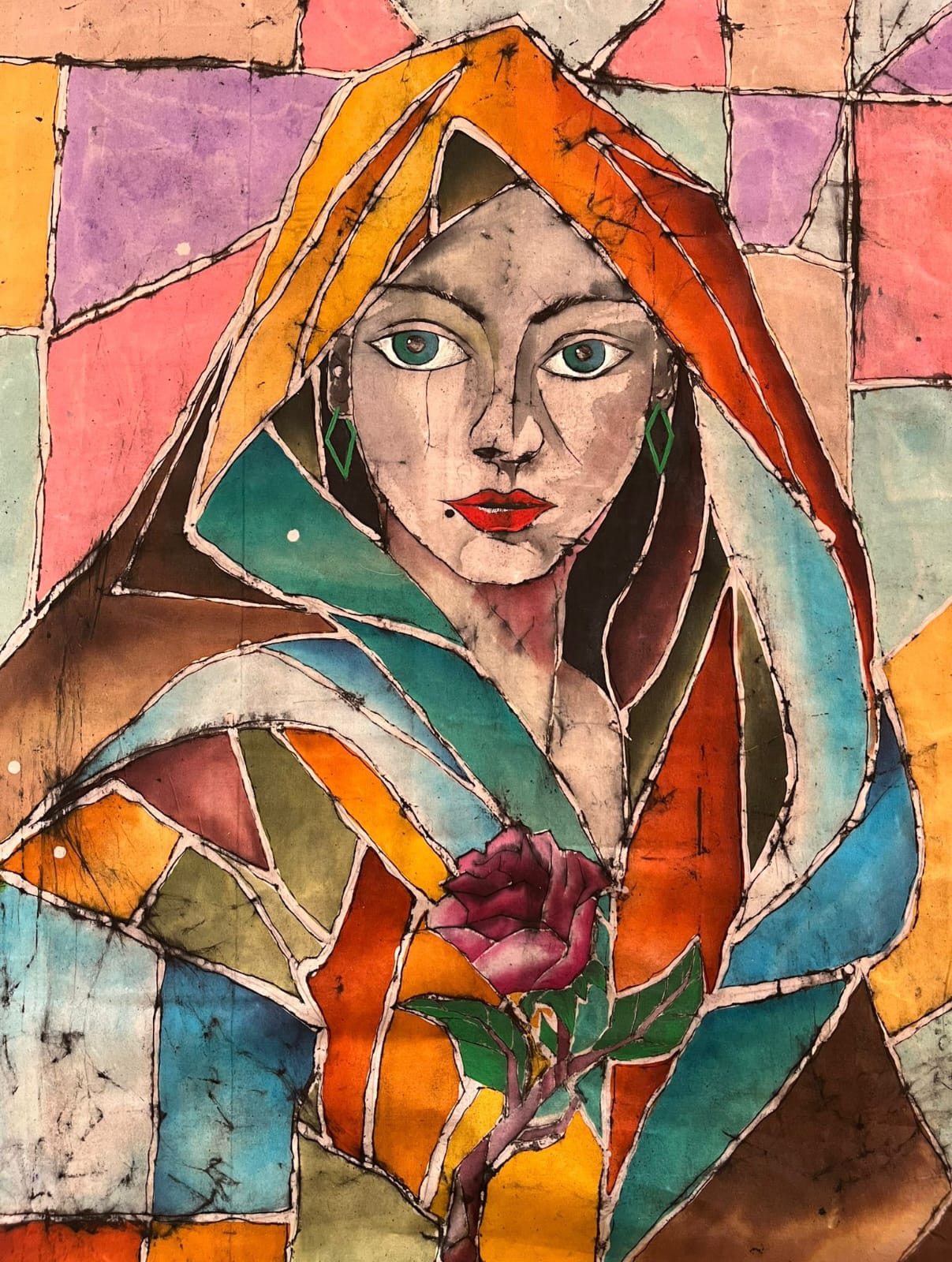
This approach raises an important question concerning the future of batik art:
Does batik necessarily have to exist on fabric?
Prabu’s practice answers no.
Şanal’s work, by contrast, maintains a stronger relationship between the batik technique and fabric itself. Yet what both artists share is a refusal to regard batik merely as a means of producing decorative patterns.
When Şanal’s practice is considered alongside all of these examples, the concept of surface becomes central.
The batik surface is not a passive field upon which an image simply appears. The lines left by the wax, the movement of the dye, the layers, and the marks produced through scraping all make the history of the production process visible.
Fabric can therefore be understood as a kind of surface of memory.
Every mark becomes a trace of the process through which the work came into being.
A direct relationship can thus be established between batik and memory: wax establishes boundaries; dye records time; fabric preserves the process.
In this sense, Şanal’s batiks do not merely produce images; they also make the process of their own production visible.
Another important dimension of Şanal’s practice is the way it questions the historical distinction between craft and art.
Batik has long been regarded primarily as a “handicraft” or “textile craft.” Yet the practices of artists in Malaysia and Indonesia have demonstrated that the technique can also be understood within galleries and museums as an object of contemporary art.
The exhibition Love Me in My Batik in Malaysia historically examined how batik painting became positioned within the field of fine art from the 1950s onwards and how it subsequently entered into dialogue with contemporary art. The exhibition brought together the work of more than seventy artists.
Şanal’s practice can likewise be read as a Turkish counterpart to this historical transformation.
In his work, craft is not the opposite of art.
On the contrary, the handwork, repetition, patience, technical knowledge, and mastery of materials inherent in craft intersect with the conceptual production of contemporary art.
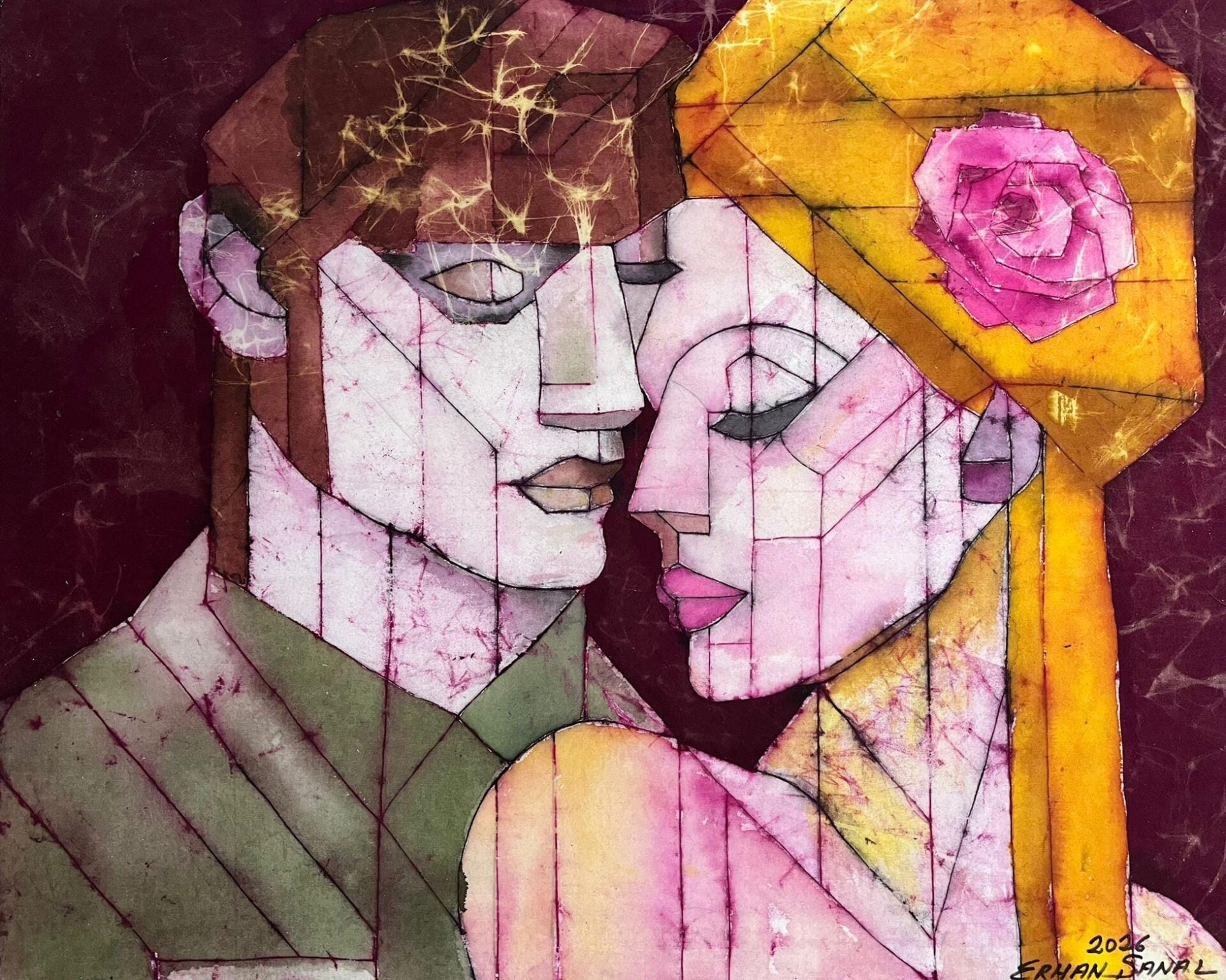
Perhaps the most significant conceptual conclusion to be drawn from Şanal’s practice is this:
Tradition survives only when it is reproduced anew.
If batik is preserved merely as a technique of the past, it risks becoming a museum object. When, however, an artist places that technique in relation to new forms, new surfaces, and new understandings of art, tradition remains alive.
In conclusion, when Erhan Şanal’s practice is considered within the history of contemporary batik, it would be inaccurate to regard him simply as a continuation of the Malaysian or Indonesian batik traditions. His work develops from within a different cultural geography—Turkey—and from the particular histories of Turkish art and textiles.
Şanal’s distinctive position within this international history lies in his contribution to making the wax-batik tradition visible once again in Turkey.
In Şanal’s work, batik ceases to be a decorative remnant of the past and becomes a field of relations between material, memory, labour, and contemporary aesthetics.
For this reason, describing his works simply as “batik paintings” would be insufficient.
More accurately, Şanal’s practice can be understood as a hybrid artistic practice in which traditional textile knowledge is reconstructed within the framework of contemporary art.

Latest
Arts
FROM WITHIN THE INVISIBLE : AN INTERVIEW WITH DELAL TEKIN
7 September 2026
Arts
TONY GATLIF: A CINEMA BEYOND BORDERS
5 September 2026

Essays
Mental Essays–4: The Empire of Algorithms
4 September 2026