

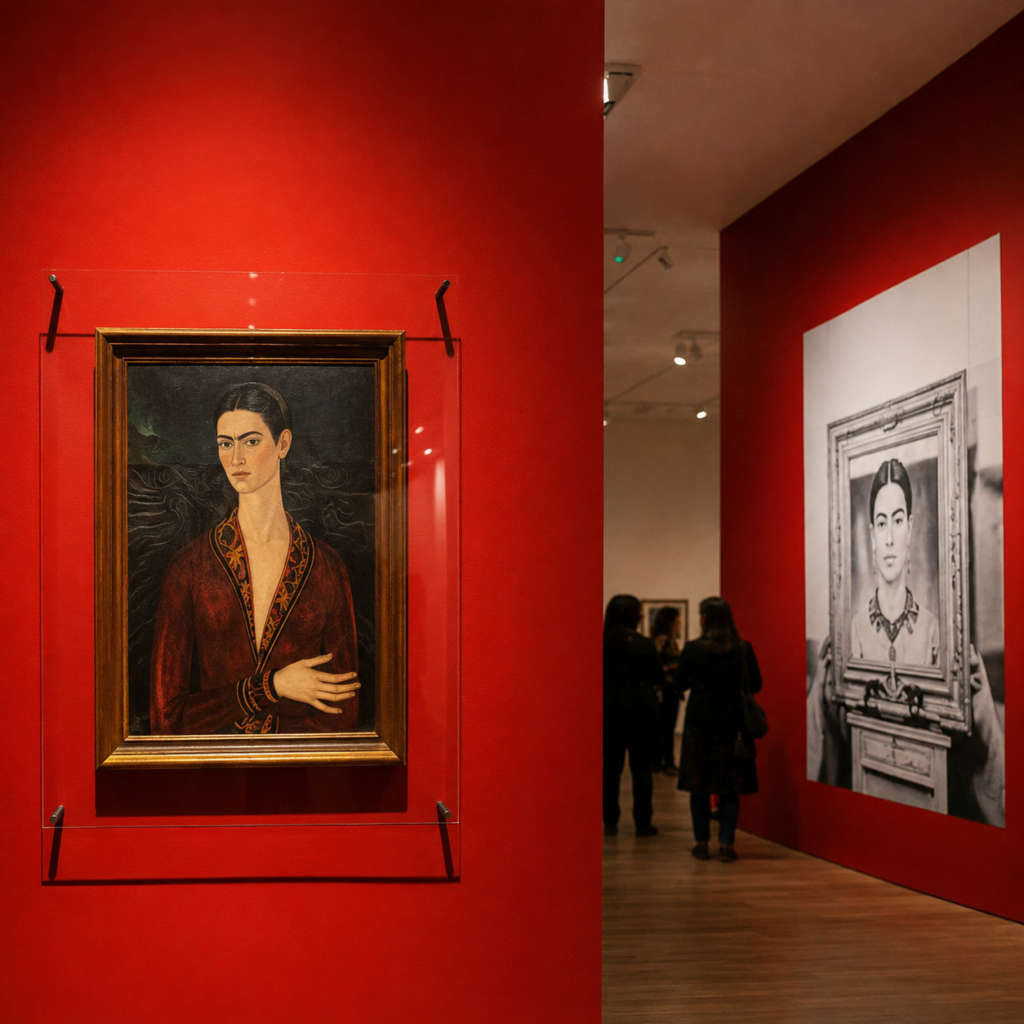
On the Tension Between the Artist and the Image at Tate Modern
Tate Modern, London • Frida: The Making of an Icon
As I walked through Frida: The Making of an Icon at Tate Modern, one question stayed with me: was I looking at Frida Kahlo’s paintings, or at the image of Frida that has been constructed around her over the years? From the outset, the exhibition suggests that these are not the same thing.
On one side is an artist who painted her own body, pain, identity and the world she inhabited; on the other is a cultural figure whose face, eyebrows, clothing and gaze are recognised all over the world. It is not difficult to understand why Kahlo is so widely known today.
In her self-portraits, she looks directly at the viewer; her clothes, hairstyle and jewellery are integral to this appearance. These are not simply personal choices.
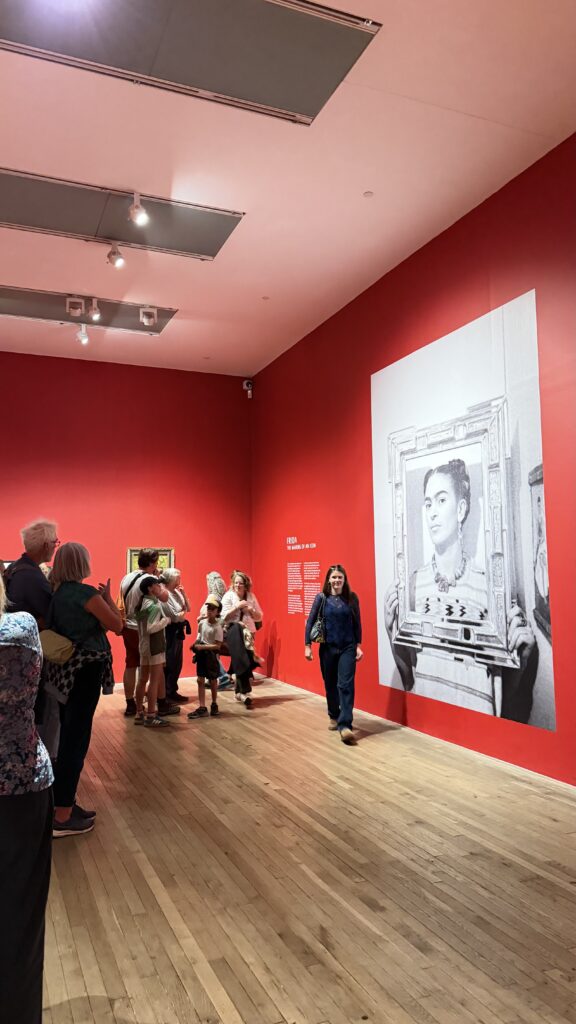
Kahlo thought carefully about how she presented herself, making her own image part of her art. This is why the exhibition’s presentation of paintings alongside photographs, clothing and personal belongings feels significant.
It allows us to see more closely the relationship between the artist’s life and her work. But as the exhibition unfolds, something else becomes apparent.
Works by other artists who were influenced by Kahlo or reinterpreted her image are placed alongside her own. The exhibition therefore begins to tell us not only what kind of artist Kahlo was, but also how she became an icon after her death.
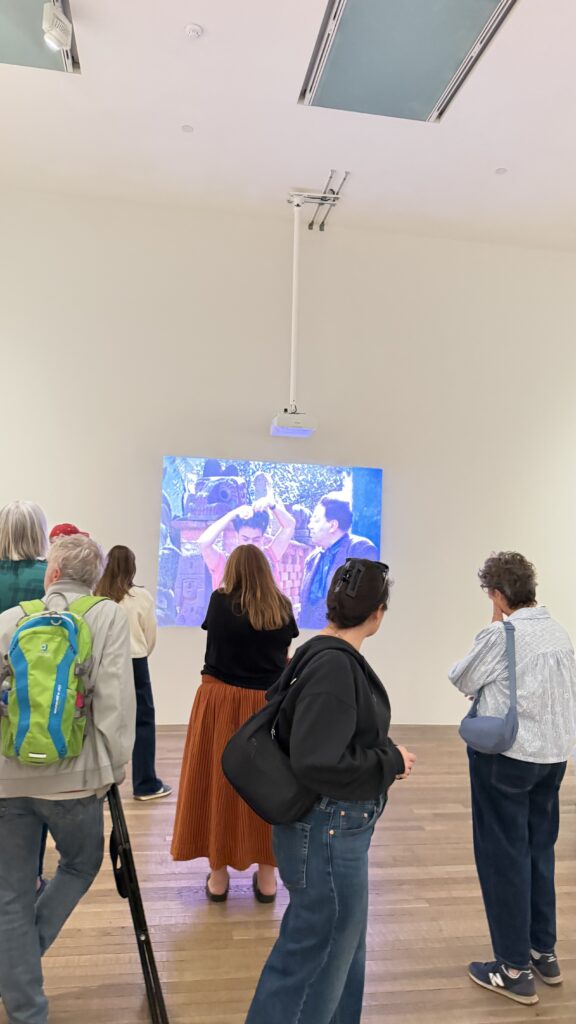
There is something compelling about this approach: seeing an artist’s influence on later generations helps us understand her cultural legacy. For me, however, this is also where the exhibition’s most debatable aspect begins.
Seeing Kahlo’s influence is not the same as really looking at her art. As works by other artists accumulate, Kahlo sometimes ceases to be the artist at the centre of the exhibition and becomes a reference point through which the other works are explained.
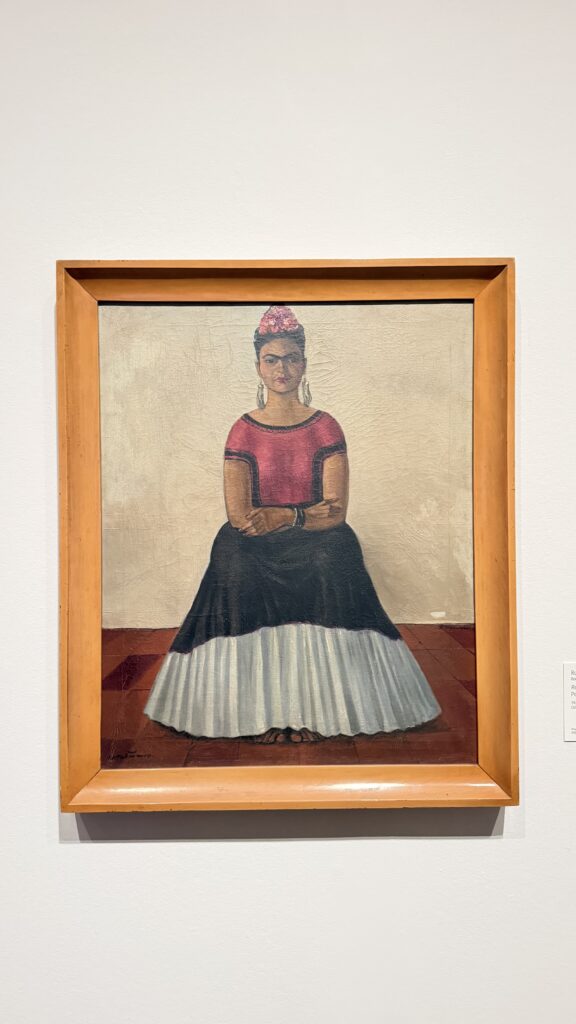
Her name and face are everywhere, yet her own paintings can recede into the background amid this dense visual narrative. This is not an objection to the inclusion of other artists in the exhibition.
On the contrary, it is important to see how Kahlo has been interpreted in different periods and contexts. The real question is at what point these interpretations begin to overshadow her own work.
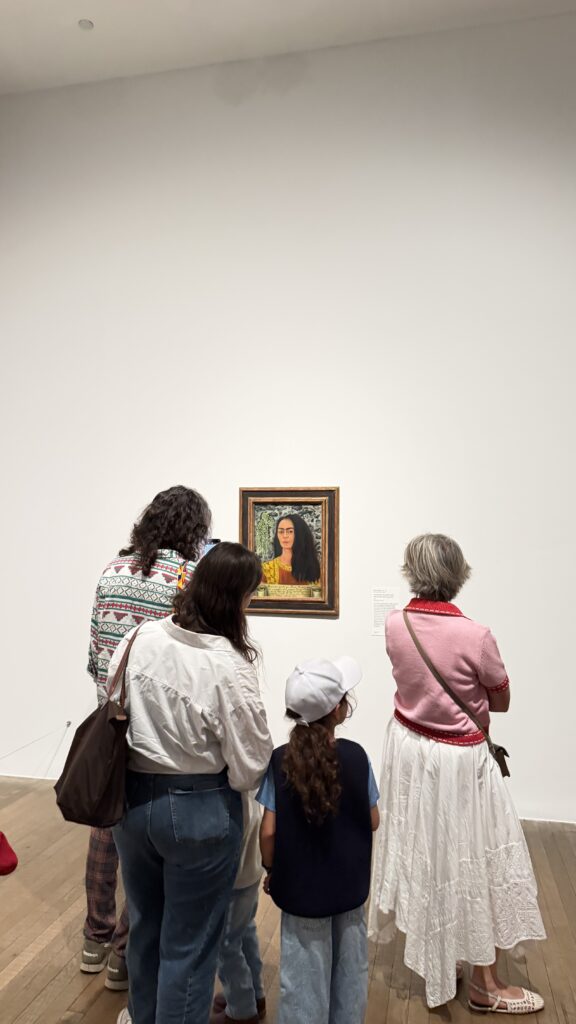
The exhibition’s title raises this very question: what is being explored here is not only Frida Kahlo herself, but also how the name ‘Frida Kahlo’ has gradually become an image.
The fact that Kahlo’s face is recognised independently of her paintings may be the clearest sign of this transformation. Even someone unfamiliar with her work may have seen her distinctive eyebrows, hairstyle or traditional clothing somewhere.
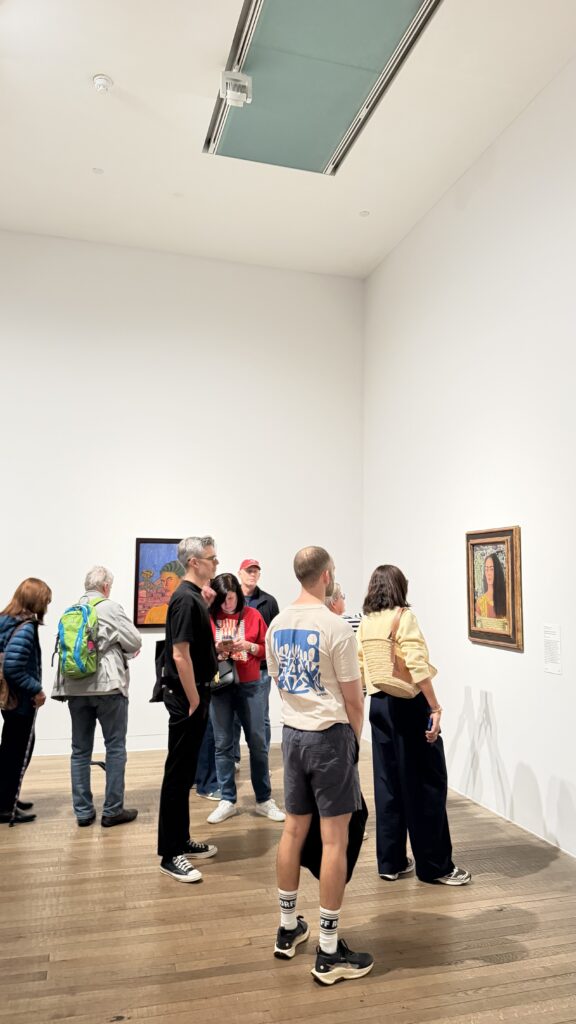
This recognition increases the artist’s visibility, but it also carries the risk of reducing her to a handful of easily recognisable features.
The complex world of a person and an artist can be compressed into a single image circulated again and again. Returning to Kahlo’s paintings makes clear just how inadequate this narrow frame is.
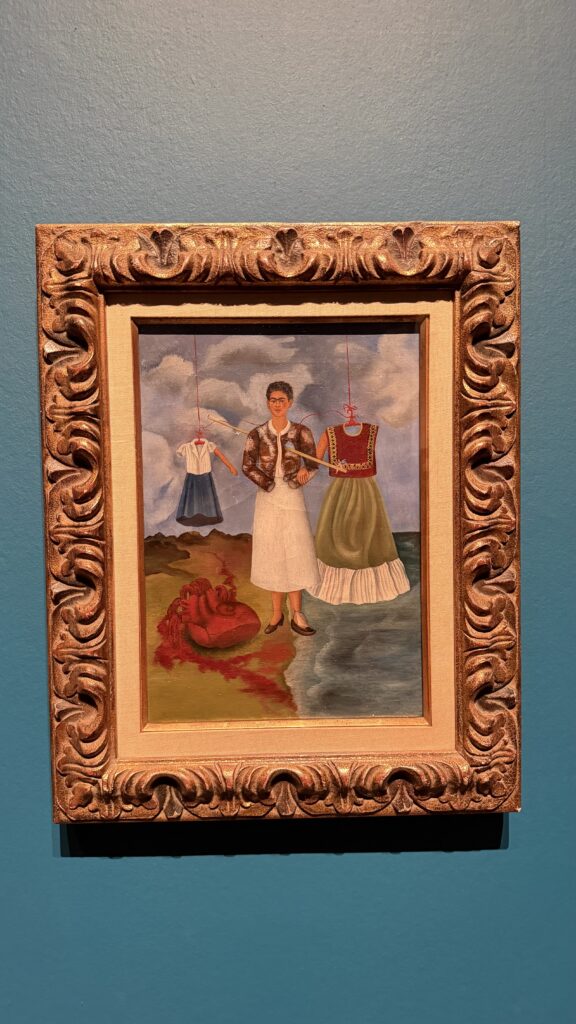
Frida Kahlo 1907–1954 · Born and worked in Mexico · El corazón, also known as Recuerdo / The Heart, also known as Memory · 1937 · Oil paint on metal
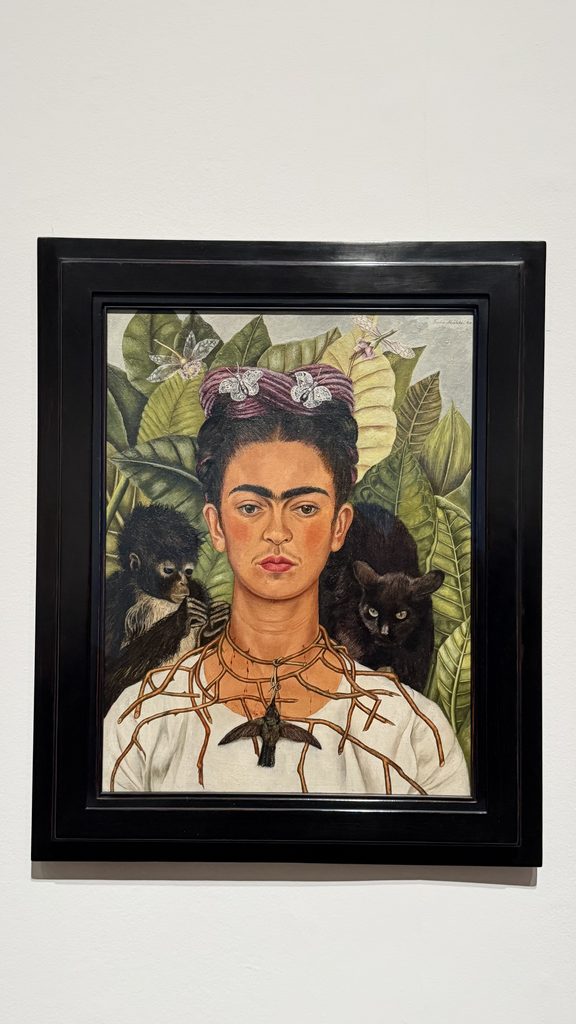
Frida Kahlo , Self-Portrait with Thorn Necklace and Hummingbird 1940
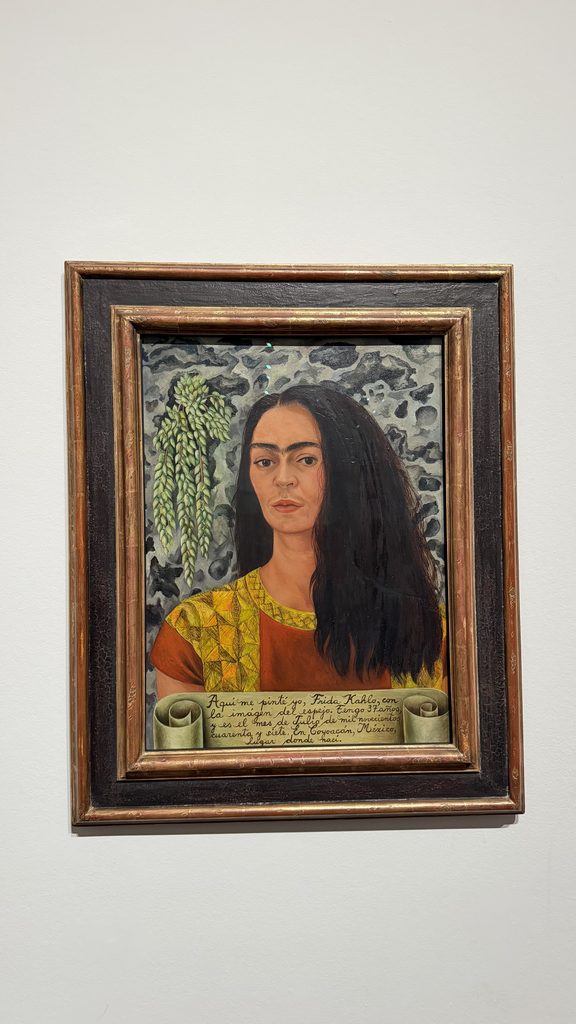
Frida Kahlo 1907–1954 , Self-Portrait with Loose Hair · 1947 · Oil paint on masonite
In her work, the body, physical pain, love, death, gender, Mexican identity and politics do not exist as separate subjects.
The personal and the political, the symbolic and everyday life are intertwined. Her self-portraits do more than show what the artist looked like; they open up a space for understanding how she experienced herself and the world.
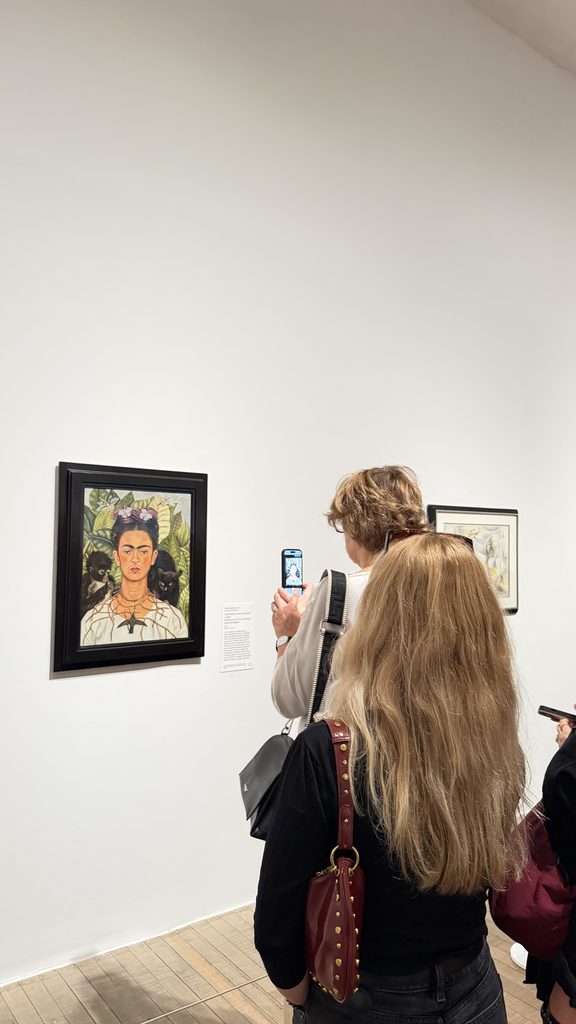
To read Kahlo only as a powerful visual symbol is to miss a significant part of these layers.
There is an interesting contradiction within the exhibition itself. In making Kahlo’s iconisation visible, it brings her image back into view—and, in doing so, contributes to its circulation.
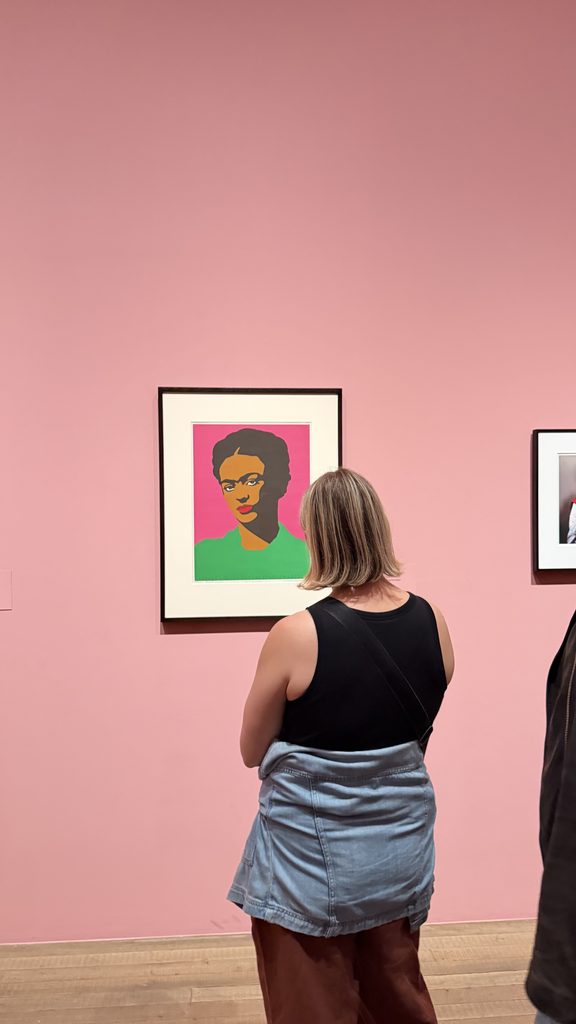
An exhibition that explores how an icon is created becomes, in a sense, a place where that icon is reproduced.
This does not invalidate the exhibition. On the contrary, it becomes one of its most thought-provoking aspects.
Yet viewers need to keep asking themselves whether what they are seeing is the artist herself or the cultural narrative that has accumulated around her.
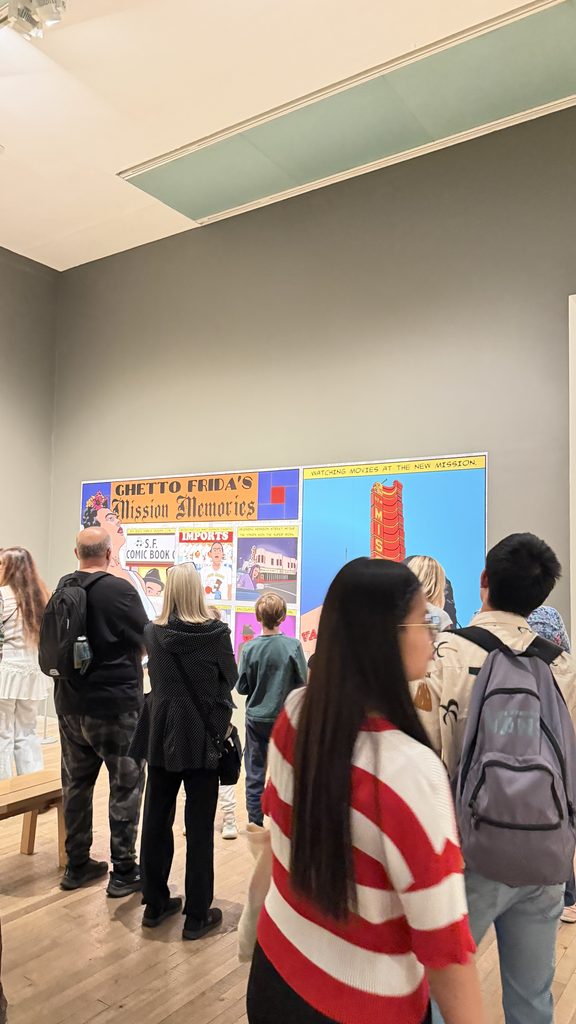
In this respect, it would be misleading to view Frida: The Making of an Icon as a conventional retrospective offering a comprehensive survey of Kahlo’s art. Rather, the exhibition examines how an artist becomes a cultural icon after her death, and how different communities make use of that image.
This is valuable in its own right.
But as this aspect of the exhibition grows more prominent, the space to spend time alone with Kahlo’s paintings seems to narrow. As I left, the question that stayed with me was not why Kahlo is so famous, but how that fame has affected her art.
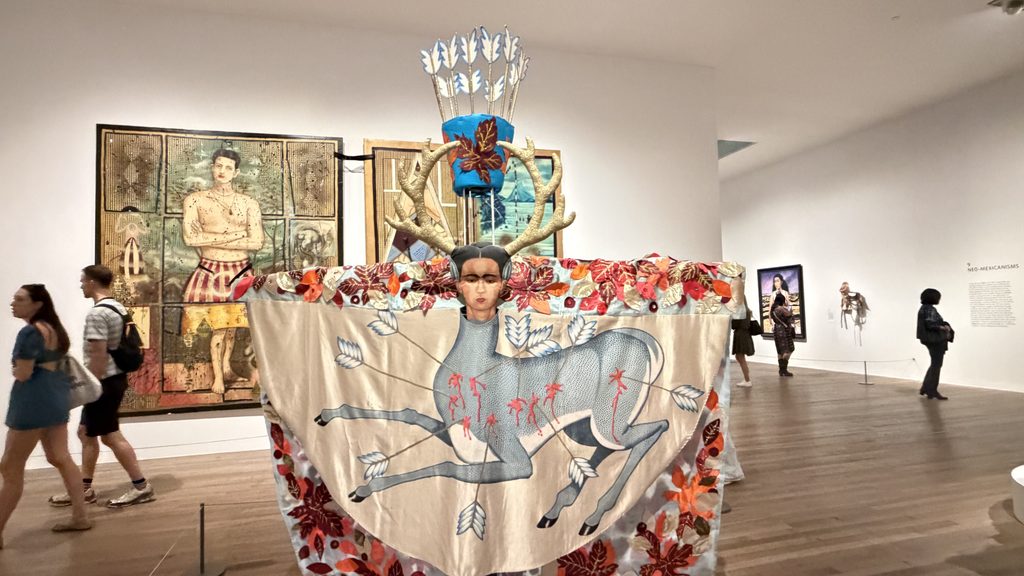
An artist’s legacy, of course, consists of more than their works alone.
How people remember an artist, how their work is interpreted and how their image changes over time are also part of that legacy. Even so, at its centre should remain the work of the artist who first created that image.
Tate Modern’s exhibition makes Frida Kahlo’s cultural power visible.
At the same time, it prompts us to consider the possibility that this very power may reduce her to a single image. Recognising Kahlo’s face is easy; the real challenge is to encounter the art behind it.
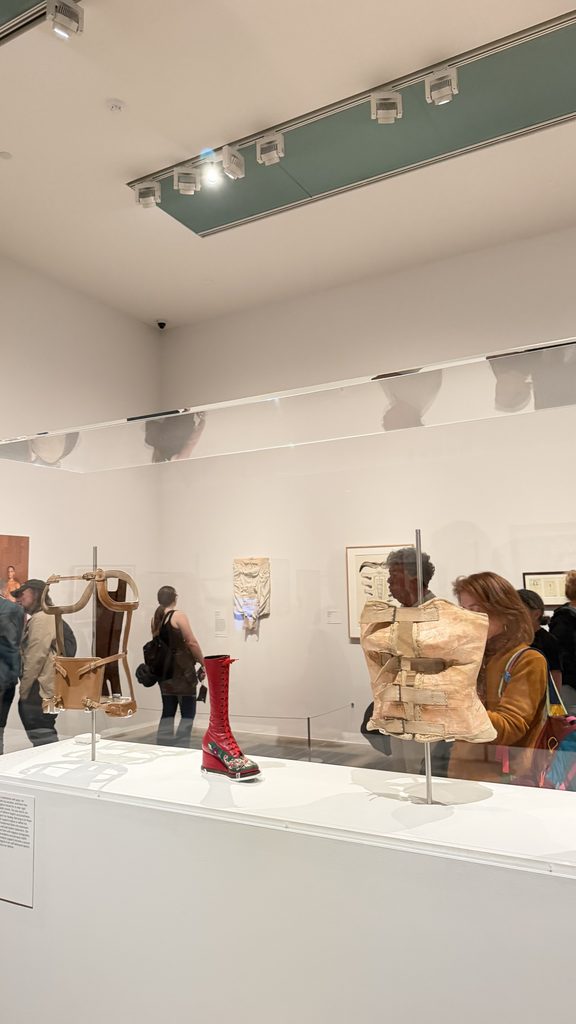
Perhaps her lasting impact lies not simply in becoming an icon recognised by everyone, but in the powerful and deeply personal world of painting that still awaits a fresh look behind that familiar image.
The Zamansız app


Author
Gamze Kartal
Gamze Kartal is a London-based visual artist and a graduate of the Department of Art Education at Dicle University. Working across painting, collage, photography and digital manipulation, her practice explores the relationships between the body, memory, identity and perception. Using the image of the hand…
All articles (12) →Gamze Kartal more from this author

Arts
IN THE FOOTSTEPS OF ART: MEMORY, NATURE, ROOTS AND TRANSFORMATION AN INTERVIEW WITH FIRAT BINGOL
1 October 2026
Arts
Edward Hopper,Nighthawks (1942)
18 August 2026
Latest
Arts & Culture
IOANNA KUCURADI:A LIFE DEVOTED TO PHILOSOPHY
5 October 2026
Arts
BREAKING FROM WITHIN: AN INTERVIEW WITH OMER EKEN
19 September 2026

Art Review
Batik Aesthetics and the Intersections of Contemporary Art in Erhan Şanal’s Portraits
15 September 2026