
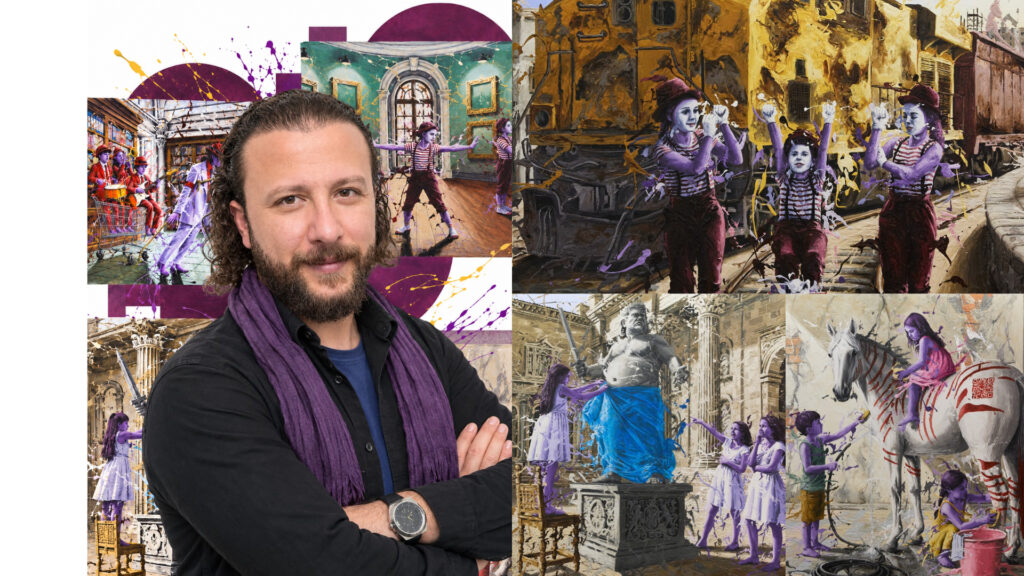
Born in Batman in 1987, the artist graduated from the Painting Education Department at Dicle University in 2012. The theoretical background of his artistic practice took shape through his master’s thesis, entitled “An Assessment of the Representation of Children Affected by War in Painting,” which he completed in 2023. Aydin Bicen is a founding member of the Diyarbakır Art Initiative and contributes to the development of independent contemporary art. He continues his practice in his studio in Diyarbakır.
“Purple is memory against forgetting. I am a reminder who paints the silence of children.”
1. How would you describe your identity as an artist and the artistic journey that has brought you to where you are today? What key experiences shaped your path from your art education to your current practice? Can you speak about an encounter that significantly transformed your relationship with art?
I have been painting since childhood. I do not remember exactly when I began drawing. I did not have an art teacher until my high-school years. During middle school, my music teacher happened to notice my talent for drawing and helped me discover myself. My relationship with art began to take shape during those years and gradually became an indispensable part of my life.
I studied painting at university and then began teaching. While continuing my profession, I also kept painting. However, my master’s studies opened a new chapter for me. Meeting my thesis supervisor, İsmail Ateş, gave me the opportunity to make a fresh start in my artistic life and to look at myself from a different perspective. During this period, I began to question more deeply my practice, the subjects I addressed, and what I wanted to communicate through painting. My search for a distinctive visual language and technique also became more pronounced at this time.
Today, I address war, power, capitalism and social contradictions in my paintings, placing children at the centre. I see children not merely as symbols of innocence, but as subjects who bear witness to what is happening in the world, question it and, when necessary, resist it. For me, painting means more than transferring my thoughts onto canvas: it means asking questions about the world we live in and making the viewer part of that questioning.
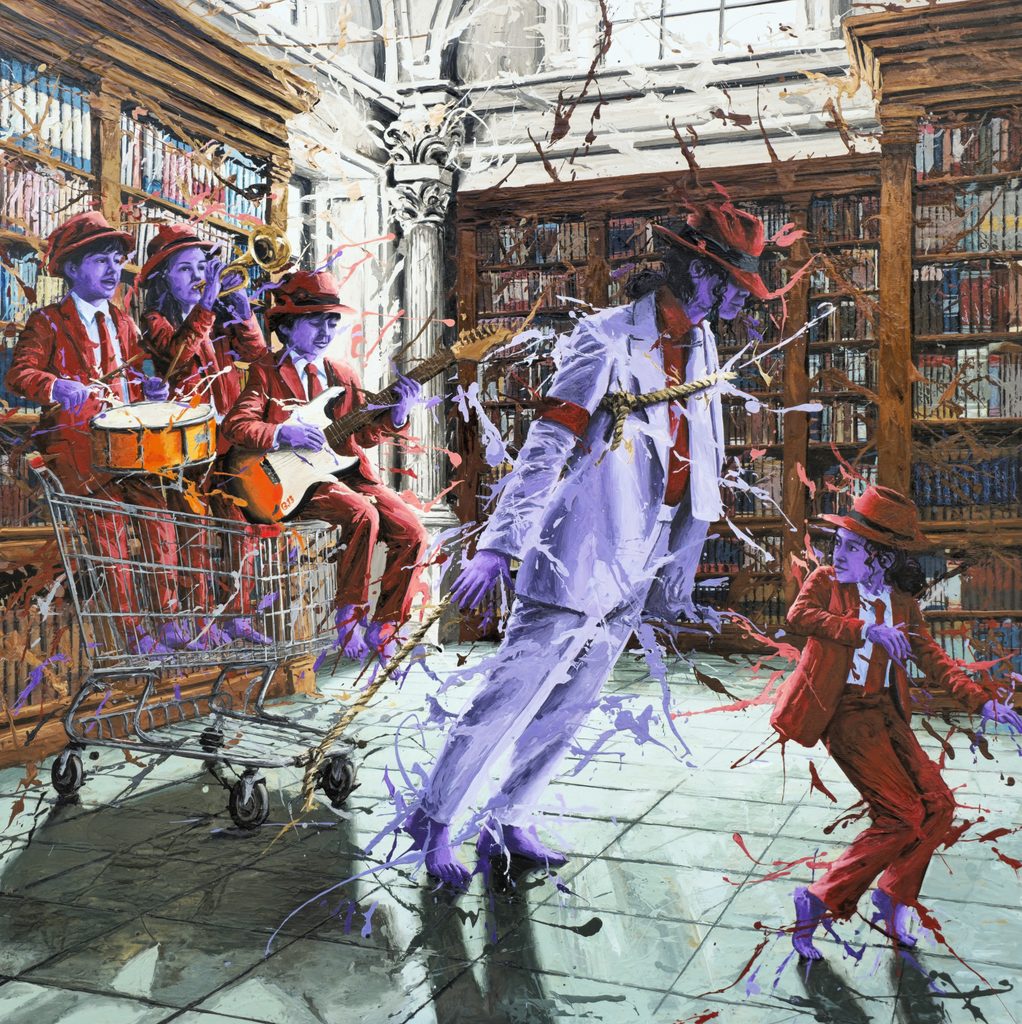
Aydin Bicen, Gravity, 150 × 150 cm, acrylic on canvas, 2026.
2. In your master’s research, you examined the representation of children affected by war in painting. How did the relationship between your academic research and artistic practice develop? What difference do you see between examining an issue theoretically and making it visible through painting?
While preparing my master’s thesis, I researched how children affected by war have been addressed in art history. This work allowed me to examine more deeply an issue I had already been thinking about. But academic research and painting are not the same thing for me. When researching, you look at sources, artists’ approaches and how children are represented. When painting, you express your own thoughts, objections and view of the world.
For me, the main issue is not simply to show the effects of war on children over and over again. Depicting children only as people who suffer and need help can also confine them to a particular mould. In my paintings, I approach children as figures who question, bear witness and, when necessary, resist. I try to make visible those responsible for war, the power relations involved and the contradictions of this system. Academic work deepened my thinking on the subject; painting opened up a space in which I could express those thoughts in my own language. The two nourish one another, but when I paint, I am not writing an academic text. I try to paint what I have to say through my own images.
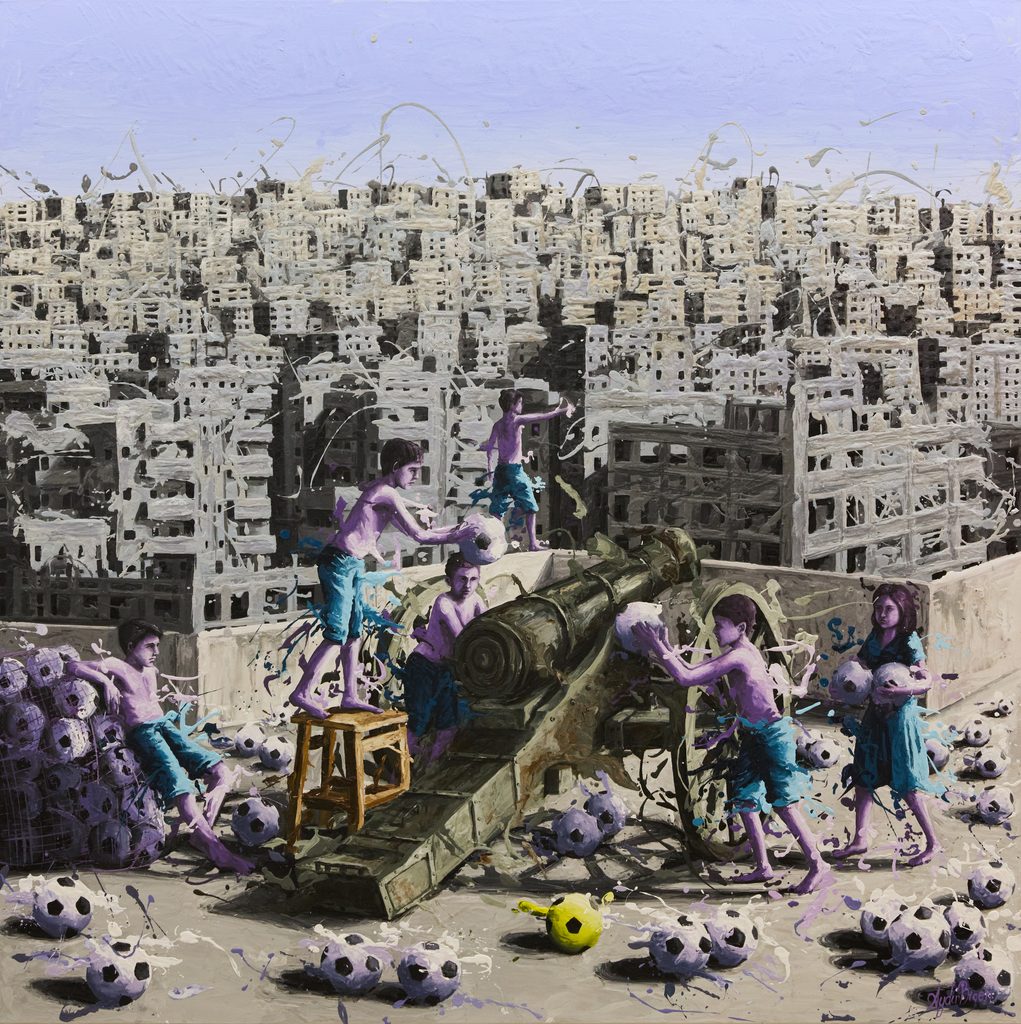
Aydin Bicen, Ball, 150 × 150 cm, acrylic on canvas, 2026.
3. The recurring purple figures in your works create a strong visual unity. These figures, which are not directly associated with a particular identity or geography, establish a narrative world of their own. What lies behind your choice of purple? How has this colour’s gradual transformation into a distinctive element of your visual language affected the meaning of your figures?
My choice of purple is partly rooted in my objection to history and power. In the past, purple dye was obtained from the secretion of a type of sea snail living in the Mediterranean, and it was an extremely laborious and expensive colour to produce. For this reason, especially during the Roman period, purple became associated with empire and power, and its use was restricted to certain groups. The use of this colour by religious and political authorities such as popes and emperors was linked to the belief that their right to rule had been granted to them by God. In other words, purple was not merely a colour; it was also a sign of power and privilege.
What makes me think is that even a colour has been brought under the control of power throughout history. The inequalities, injustices, poverty and oppression produced by an outlook that claims power and the right to rule for itself continue to exist today in different forms. I use this colour, which once represented the privilege of those in power, on the skin of children who question power today. In a sense, I reverse the colour’s historical burden. Once a symbol of power and authority, purple in my paintings has become part of a search for questioning, dissent and liberation.
My choice is also influenced by the fact that purple has not commonly been used as a skin colour for figures in art history. I do not want my figures to appear as belonging to a particular nation, race or geography. Purple takes them beyond familiar identity categories and makes them part of a more universal narrative. Over time, this colour has become one of the defining elements of my visual language. What matters most to me, however, is that purple does not remain merely a formal choice or visual signature. Its historical associations with power and privilege converge with the objection I express in my paintings today.
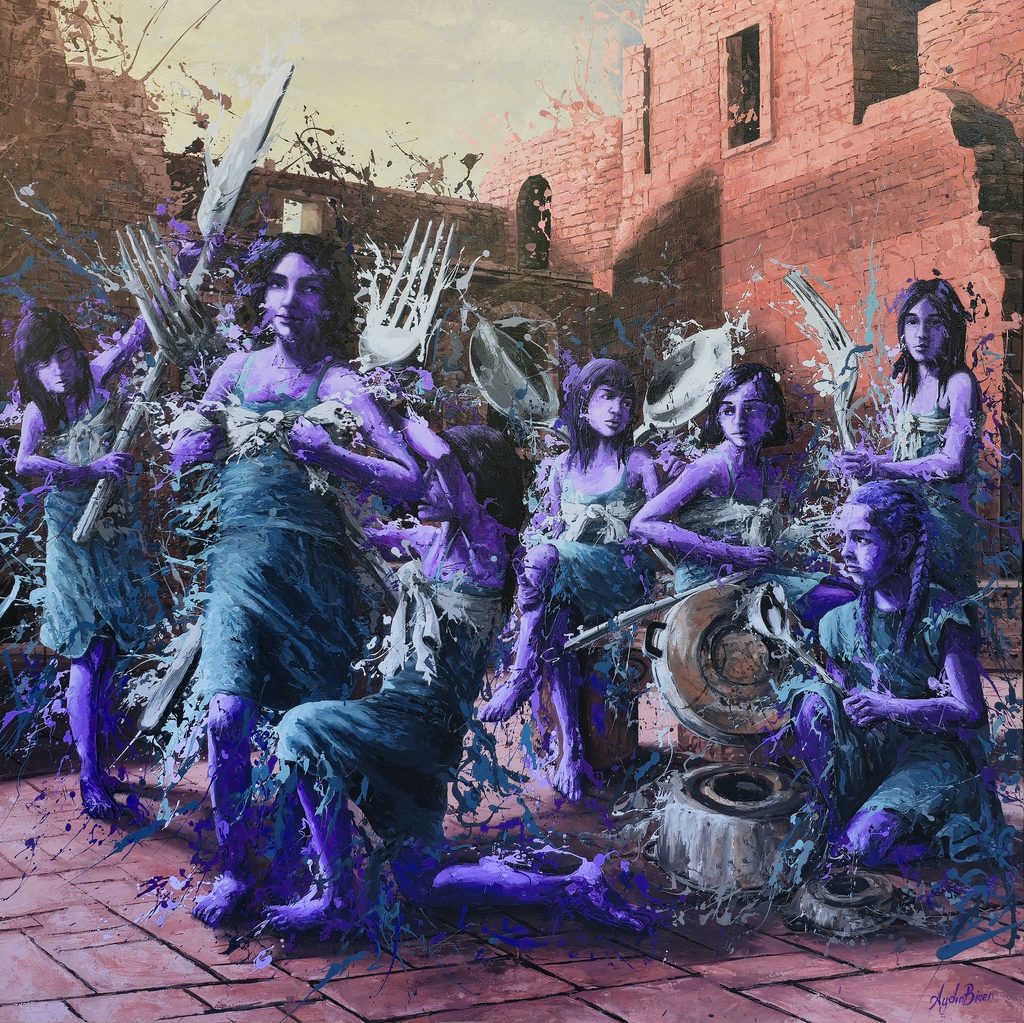
Aydin Bicen, The War Banquet, 150 × 150 cm, acrylic on canvas, 2025.
4. In your Pantomime series, the body and gesture become a means of expression when words are insufficient. What meaning does the encounter between child figures, historical spaces and industrial elements acquire in your narrative? How would you define the role of the body in these paintings?
Pantomime is a series consisting of three paintings. In this series, I approach the body as a universal language of expression that goes beyond words. Sometimes spoken words are not enough to convey the truth; the body’s posture, gestures and movements can create a much more powerful field of expression. By bringing child figures face to face with historical spaces and industrial elements, I question the relationships between past and present, people and systems, and individuals and power. The children here are not passive figures; they are subjects who question the spaces they inhabit, intervene in them and express an idea through their bodies. For me, pantomime is not only a form of theatre, but also a way of objecting without speaking and making the invisible visible. In this narrative, the body is both a vehicle for thought and a means of resistance.
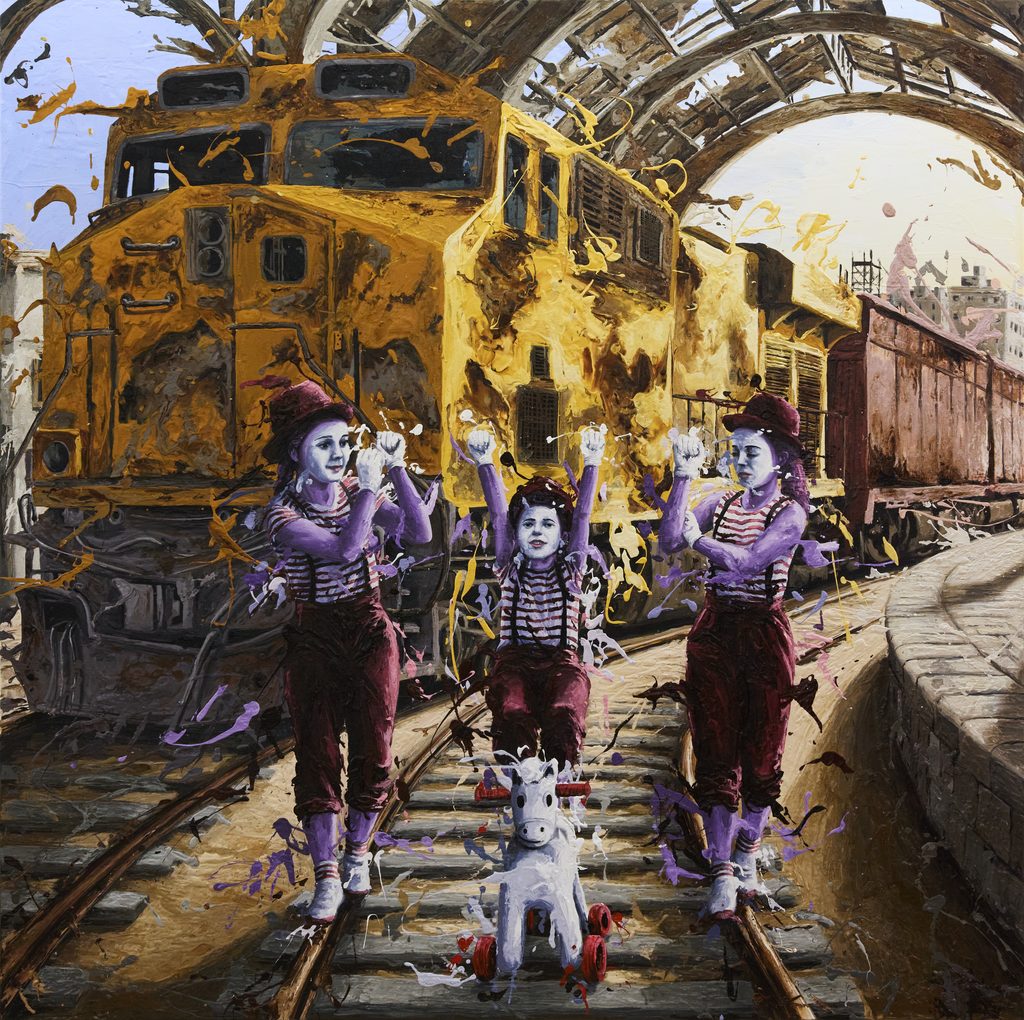
Aydin Bicen, Pantomime-2, 150 × 150 cm, acrylic on canvas, 2026.
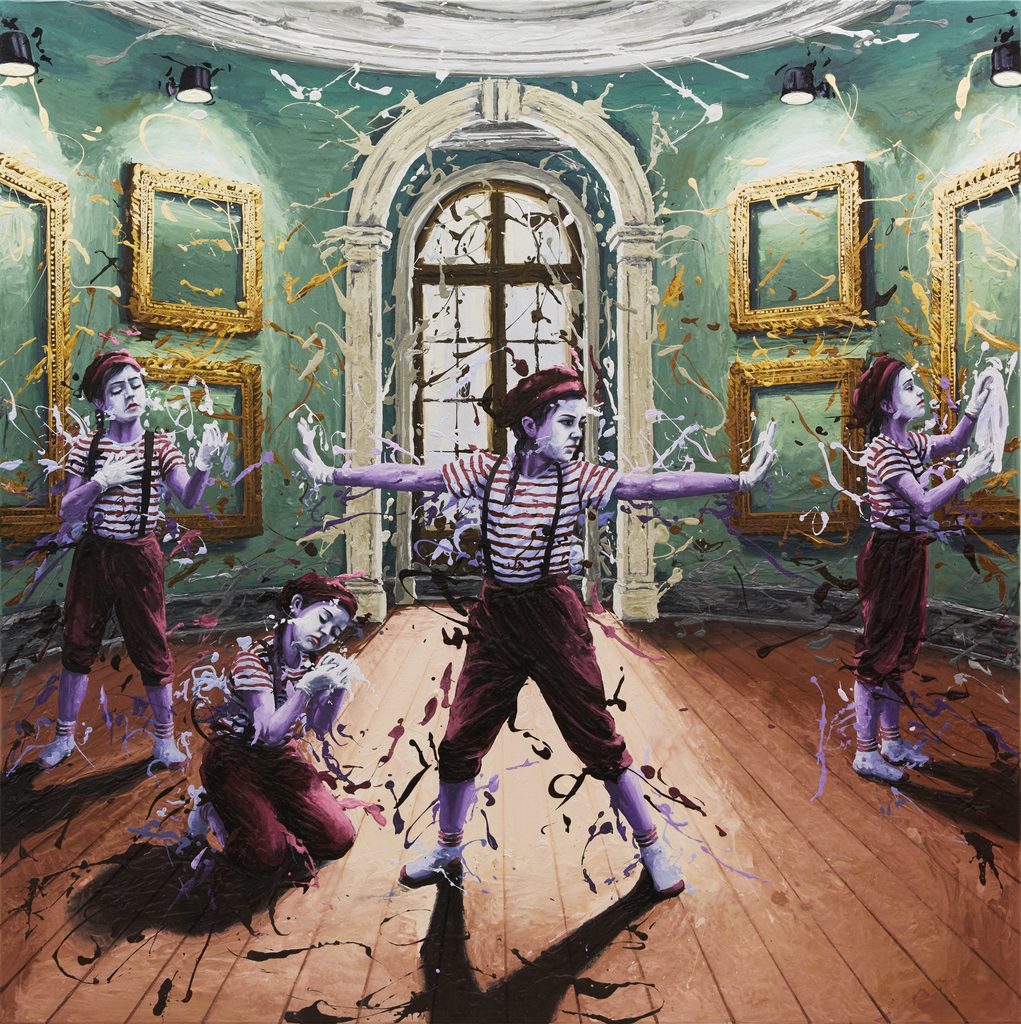
Aydin Bicen, Pantomime-3, 150 × 150 cm, acrylic on canvas, 2026.
5. In Scapegoat, goats, children and a dried-up olive grove bring into focus the question of who is made to bear the blame. In Monument, the children’s outstretched hands evoke solidarity and the idea of rebuilding. What conceptual connection do you draw between these two works in terms of blame, responsibility and solidarity? Can painting challenge narratives that have become embedded in collective memory?
Although Scapegoat and Monument have different narratives, they meet on the same conceptual ground for me: who is made responsible for the problems humanity creates, and who objects to that allocation of responsibility. In Scapegoat, I question the transfer of blame and responsibility to others throughout history through the image of a dried-up olive grove and goats. The children rescuing the goats from their situation is not simply an act of compassion; it is an objection to a mechanism of accusation that society accepts without question. In Monument, this objection becomes an idea of solidarity and rebuilding together.
I do not believe collective memory is unchangeable. Sometimes narratives accepted as true throughout history continue to exist because they are not questioned. Painting can intervene precisely at this point. Rather than imposing a new reality, it can prompt us to question established assumptions and confront viewers with their own responsibility. In my paintings, instead of offering ready-made answers, I value creating a space in which viewers can reconsider familiar ways of thinking.
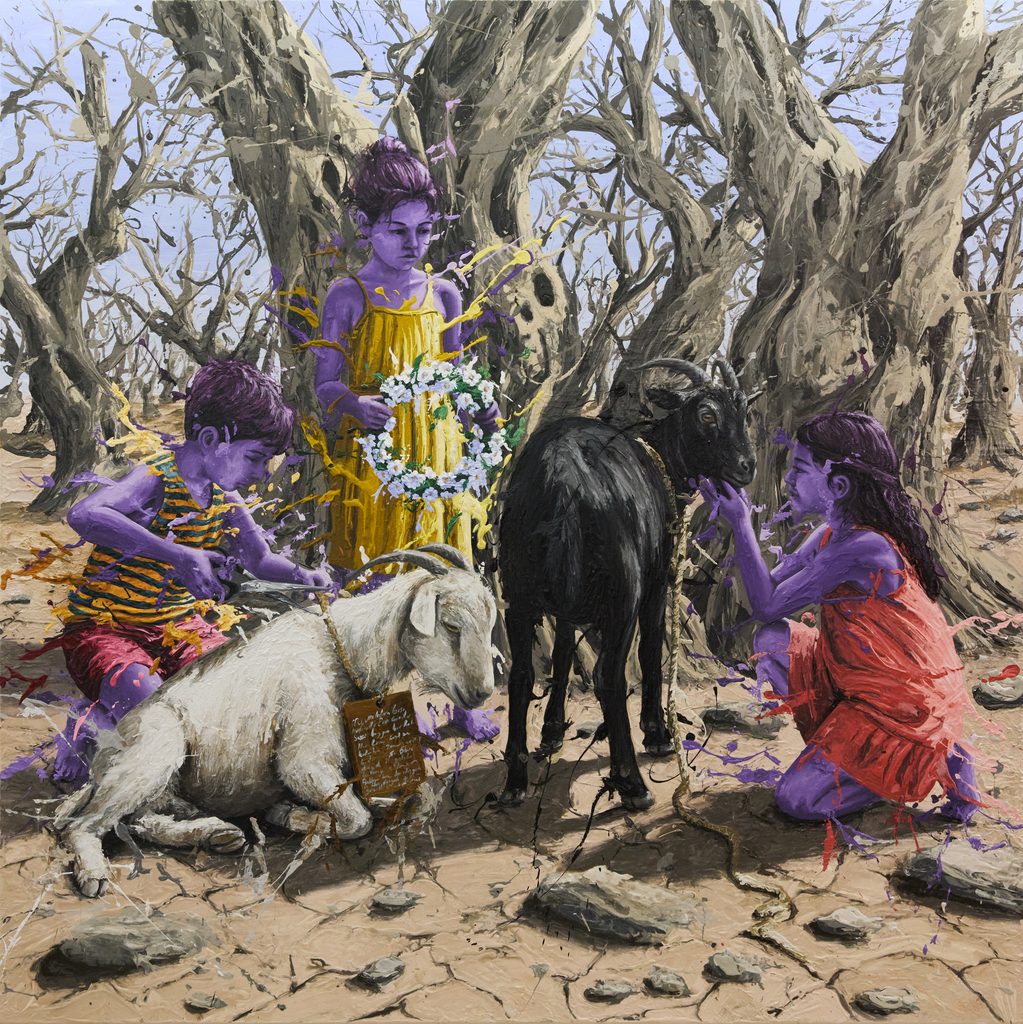
Aydın Bicen, Scapegoat, 150 × 150 cm, acrylic on canvas, 2026.
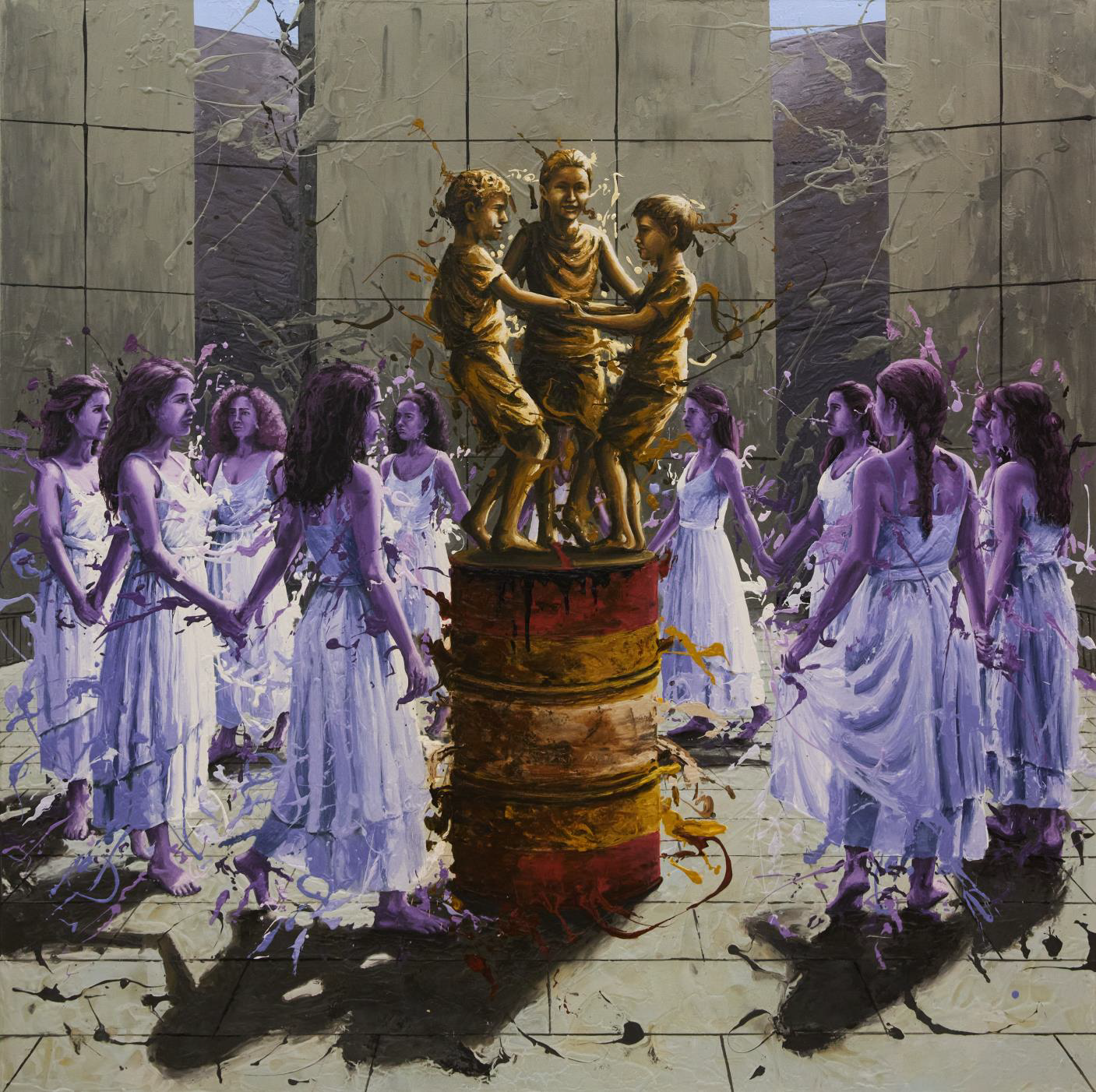
Aydin Bicen, Monument, 150×150 cm, Tuval Üzerine Akrilik Boya, 2026.
6. In Innocence 2, we see people working on and intervening in a winged, sculptural figure. A historical sculpture and associations with holiness and innocence meet contemporary human figures on the same surface. How do you relate the reinterpretation of the past’s legacy to questioning the idealised idea of innocence? How would you describe your relationship with historical imagery?
In Innocence 2, I relate the angel figure not only to a religious or historical symbol, but also to ideas of birth, life, motherhood and coming into being anew. Two women working on an angel sculpture in a studio, and another woman painting the sculpture purple, point to the human capacity to create meaning and existence with one’s own hands. After the intervention with purple paint, the sculpture is depicted rising onto its knees and opening its wings, creating the impression that it is about to come to life and cease to be an inanimate object.
In the background, a newborn baby held in a palm, women, children, pregnant women and completed sculptures expand this narrative. Here, I approach women not only as those who give birth, but also as subjects who create, shape and make new life possible. When I use historical imagery, my aim is not to confine it to its meanings in the past, but to bring it into dialogue with the ideas of today. In Innocence 2, too, I build a narrative around the creation, protection and renewal of life through the image of the angel.
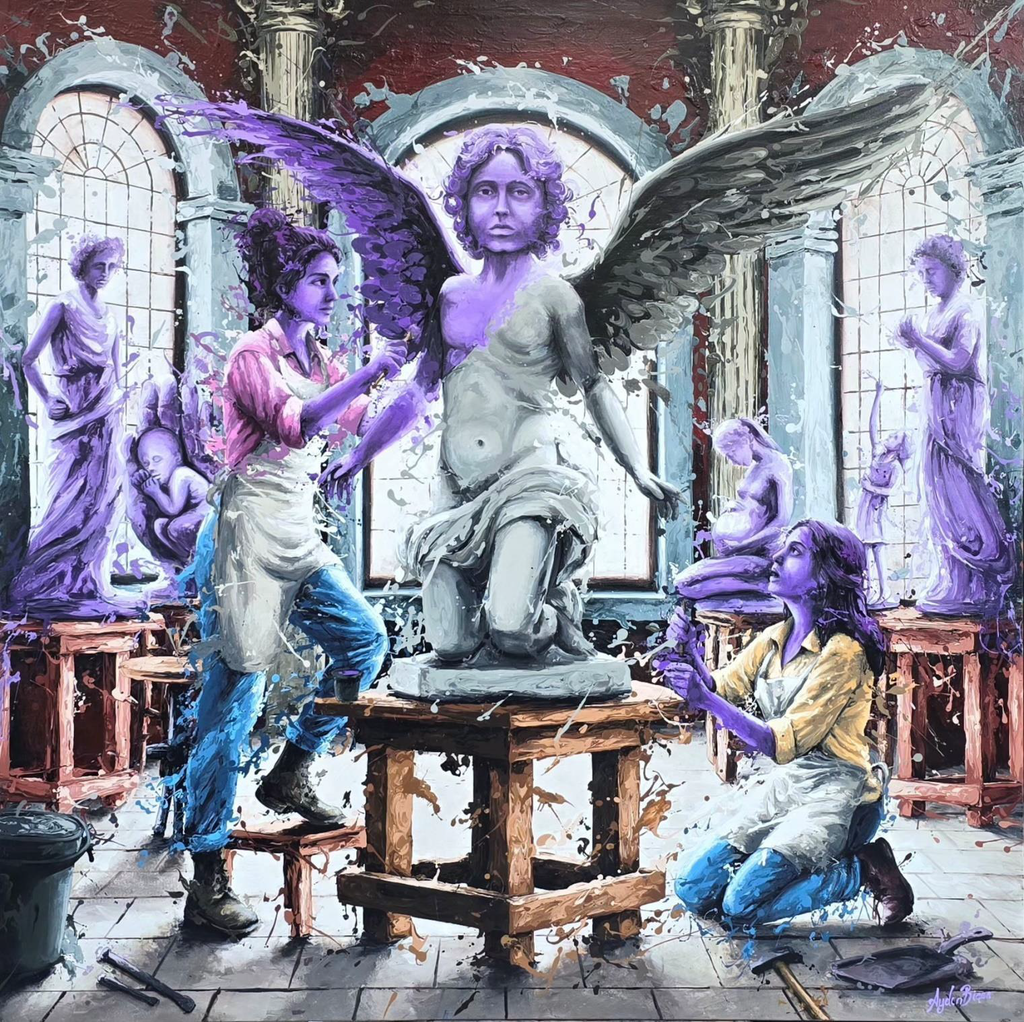
Aydın Bicen, Innocence-2, 150 × 150 cm, acrylic on canvas, 2026.
7. Museum galleries, frames, monuments and historical architecture play an important role in your paintings. These spaces invite reflection on how the past is represented and which narratives are preserved. How do you assess the role of art institutions in shaping collective memory? Do you aim to question official historical narratives or established forms of cultural memory through your paintings?
One of the main reasons I include museum galleries, monuments, frames and historical architecture in my paintings is that I reflect on how history is written and remembered. History books, monuments and museums tend to tell stories of the heroism of wars, victories, conquests and the achievements of those in power. Yet the poor who lose their lives in the same wars, displaced people, families forced to migrate and the losses experienced by those left behind are often excluded from these narratives. My criticism is directed precisely at this selective understanding of memory. History is not only the story of victors and those who hold power; it is also the history of those who pay the price, whose voices are unheard and whose experiences are not recorded. I believe art institutions have significant power in shaping collective memory.
This is because exhibiting a work in a museum, turning a person into a monument or including an event in history books also affects what society remembers. In my paintings, I try to look at this established memory through another window. Rather than retelling the past, my aim is to make what has not been told visible and to leave viewers with this question: when we tell the story of a victory, why do we forget those who paid the price for it?
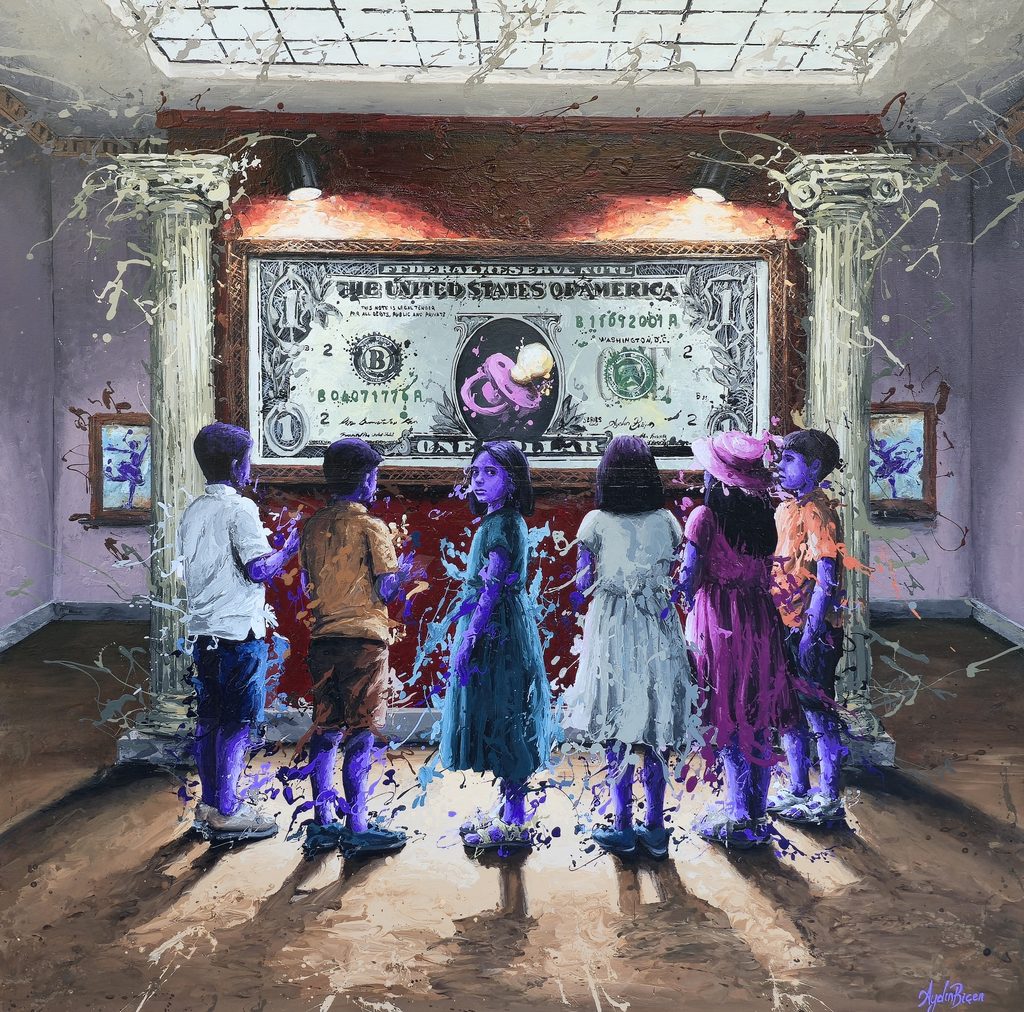
Aydin Bicen, Museum of Shame, 150 × 150 cm, acrylic on canvas, 2025.
8. Your practice of pouring paint directly onto the canvas creates a clear tension between figurative narrative and the movement of paint across the surface. How is the boundary between chance, the artist’s intention and composition established in this method? Is allowing the paint to move on its own part of the process through which you create meaning in a painting?
Pouring paint directly onto the canvas is not merely a technical choice for me; it is a form of expression that I incorporate into the process of making a painting. I allow space for the flows, dispersals and relationships of marks that the paint creates through its own movement across the surface. Although chance plays an important role in this process, I do not leave the entire painting to chance. For me, the artist’s intention emerges precisely when selecting and directing these chance formations and incorporating them into a meaningful composition.
Sometimes the paint produces forms and relationships that I had not planned in advance, and I incorporate these formations into the painting’s narrative. Bringing figurative elements together with free movements of paint allows the controlled and the uncontrolled to encounter one another. This encounter creates both visual and conceptual tension in my paintings. Thus, allowing the paint to move on its own is not merely a formal exploration for me; it is also an important part of the process through which the painting’s meaning is produced.
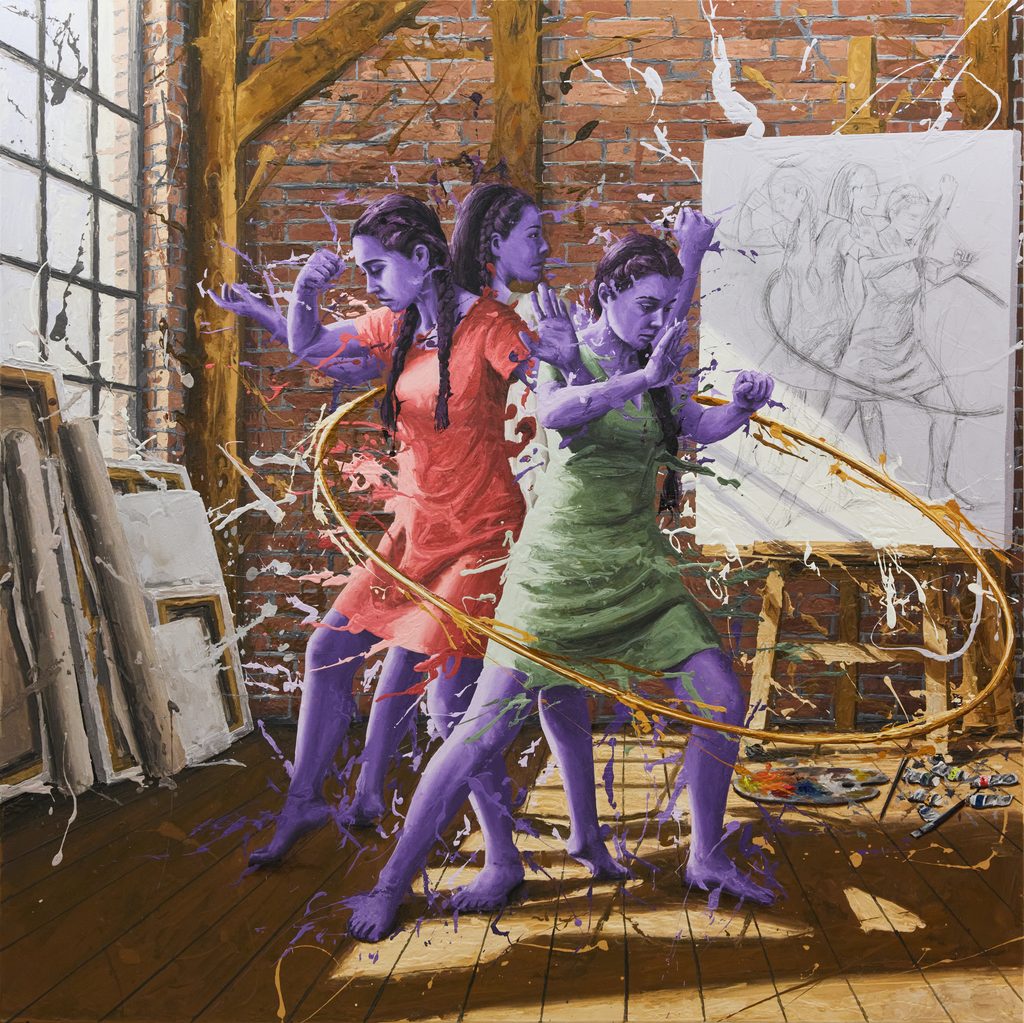
Aydin Bicen, Hula Hoop, 150 × 150 cm, acrylic on canvas, 2026.
9. In your paintings, women and children often bear the traces of war, social oppression or historical conflicts, yet it seems insufficient to read your figures solely through victimhood. What does it mean to you not to reduce the experiences of the people you represent to material for visual narrative when transforming suffering into an aesthetic image? How do you understand the artist’s ethical responsibility between witnessing and representation?
First of all, I do not approach my works as the transformation of suffering into an aesthetic image, and I would like to state that I am also opposed to presenting suffering as an aesthetic element. What matters to me is not turning suffering into visually striking material, but drawing attention to the social, political and historical conditions that produce it. In my paintings, women and children do not appear only as victims of war, oppression or conflict. I also approach them as subjects who think, question, object, build solidarity and speak through their very presence.
There is an important difference between representing the suffering a person has experienced and confining them to an image of victimhood. I try to remain mindful of this distinction. I see the artist’s ethical responsibility precisely here: preserving the dignity and agency of the people represented and not reducing them to figures whose only purpose is to evoke emotion in the viewer. In my paintings, what should really be questioned is not the people who suffer, but the systems that produce that suffering and often remain invisible.
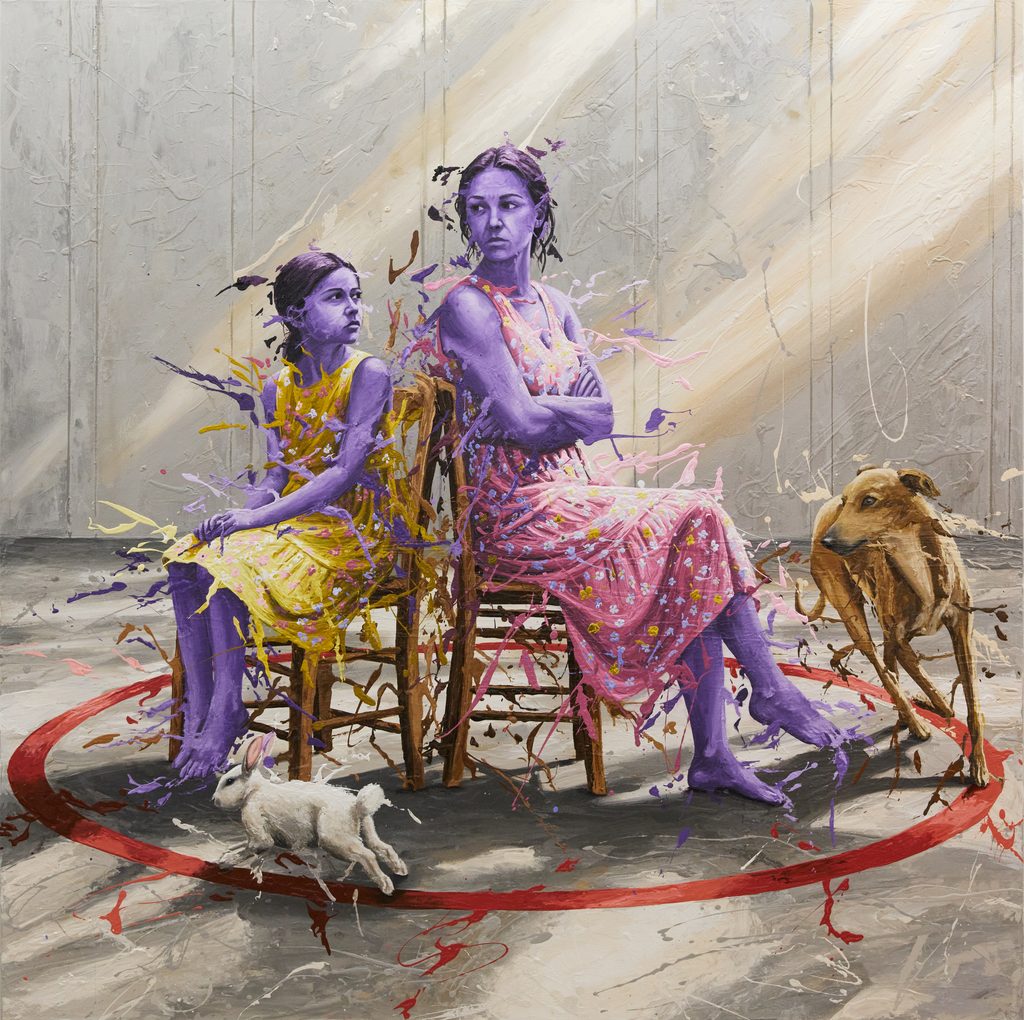
Aydin Bicen, To Run with the Hare and Hunt with the Hounds, 150 × 150 cm, acrylic on canvas, 2026.
10. In contemporary art, works that address political and social issues sometimes risk allowing their conceptual messages to overshadow their visual language. How can a balance be established between a painting’s intellectual force and its aesthetic autonomy? Do you expect viewers to arrive at a particular conclusion, or is it more important to you that the work remain open to different, potentially conflicting interpretations?
I do not think that conceptual narrative takes precedence over the plastic elements in my paintings. On the contrary, my view—which has also been reflected in the assessments of knowledgeable people in the art world and art critics—is that the plastic values in my paintings come to the fore first. The relationships between colour, mark, composition, form, texture and figures appeal to the viewer’s visual perception at the first encounter. This visual encounter then guides the viewer towards the conceptual and semantic layers of the work. For me, the plastic language is not an obstacle to the narrative; it is a gateway and a guiding element that enables meaning to be discovered. I make a conscious effort to maintain this balance in my process. I believe a work that communicates only a message but fails to establish its own presence as a painting would be incomplete.
I also have a particular approach to what viewers should understand from a work. I do not try to produce enigmatic paintings whose meaning is completely closed off and can be deciphered only by people with a particular level of intellectual knowledge, nor am I trying to create a mystery. Above all, I want my paintings to meet the public and society. For this reason, I value an expression that is clear and direct. I want viewers to grasp the central issue of a painting without needing lengthy explanations or specialised knowledge. Of course, everyone can bring different depths to a work through their own life experiences, knowledge and emotions. What matters to me, however, is that viewers first meet on the ground of the painting’s central narrative. After that, I hope they will relate this narrative to their own lives and carry it into their thoughts and feelings. I care not only that a painting is seen, but that it continues to live in a person’s mind and heart.
For me, the power of art lies not in being incomprehensible, but in leading people towards profound thought through a comprehensible narrative.
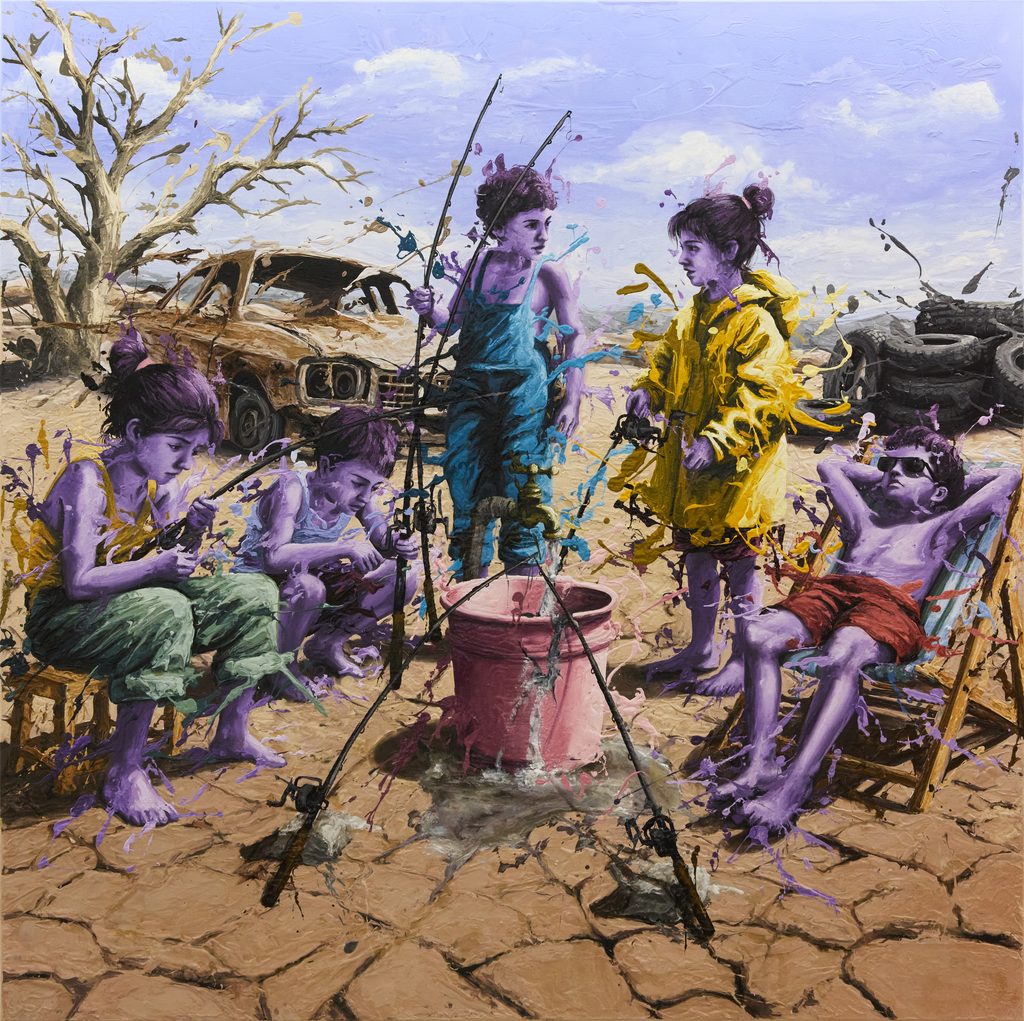
Aydin Bicen, Hope, 150 × 150 cm, acrylic on canvas, 2026.
11. The exhibition Trace–Memory–Resistance brings together concepts that are prominent in your practice within a shared conceptual framework. Looking back at your work to date, what questions do you feel your art has not yet answered? In your future work, do you intend to deepen your existing visual language or open yourself to new explorations that may lead you towards a different field of expression?
I think this question actually contains two separate questions concerning two subjects that are independent of one another. First, as for the issues that I feel my art has not yet answered: global politics, social relations and the problems humanity faces are constantly changing. As throughout history, new conflicts, injustices, struggles for power and humanitarian problems emerge every day.
Consequently, there are many subjects that can be addressed and considered through art that I have not yet touched upon. For this reason, I do not see my practice as a completed body of thought. Secondly, regarding my future artistic direction, I would say that I do not think it is right for an artist to believe they have completed their development and declare at a certain point, “I have arrived.” Artists, too, continue to change, develop, learn and transform as part of life. I do not want to give a definite answer today as to how far I will deepen my existing visual language in the future, or whether I will embark on new explorations that lead me towards different fields of expression. My experiences, observations, feelings and relationship with the world over time will determine that. What matters to me is not adhering to a predetermined conception of art, but continuing to create, question and learn. I believe this ongoing search and change is one of the most important things that keeps art alive.
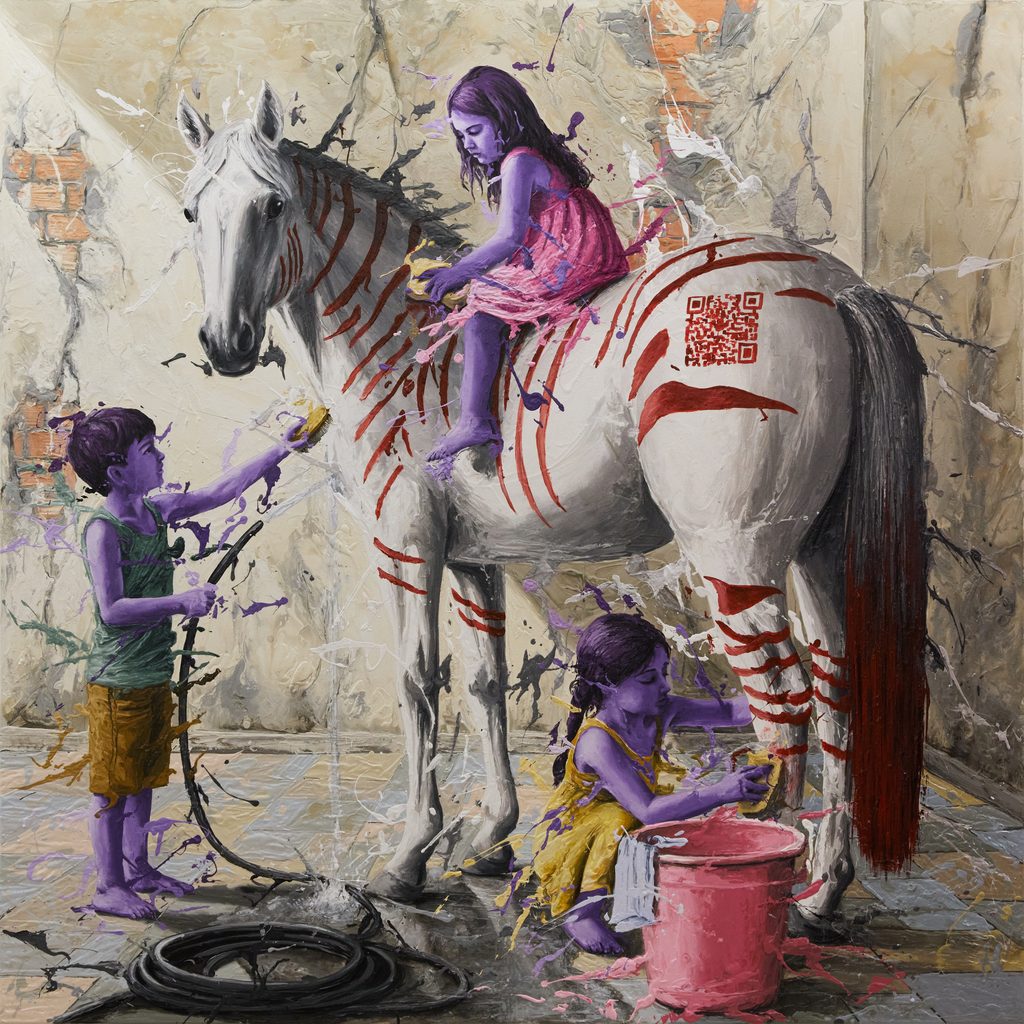
Aydin Bicen, Identity-2, 150 × 150 cm, acrylic on canvas, 2026.
12. Finally, in a period when individuality and the search for personal expression are coming to the fore in a changing world, and the art market and commercial concerns increasingly influence artistic production, how do you assess the relationship between art and society? Do you think art is becoming an individual field of expression, moving away from social issues, or is it seeking new ways to connect with society despite these transformations?
I believe the relationship between art and society can never be considered independent of one another. Artists are not separate from the society they live in, the events they witness or the transformations taking place in the world. I do not consider it sufficient for an artist to adopt an approach to making art that retreats entirely into their inner world and remains limited to individual expression. Personal expression is certainly an important part of art; however, people, society and human sensitivity lie at the centre of my understanding of art. I cannot reconcile my own practice with an approach to art that remains indifferent to wars, injustices, inequalities and the problems faced by children and women around the world.
Personally, I do not paint out of commercial concerns or personal expectations, nor according to the expectations of any administration or circle. I do not choose to shape my work according to someone else’s tastes, wishes or direction. I create my paintings in line with my own thoughts, convictions and human sensibilities. When necessary, I do not hesitate to take a radical stance against familiar assumptions, established ideas and the outlook imposed by powerful structures. I believe an artist’s freedom lies not only in being able to choose their subject, but also in being able to express their thoughts without pressure or expectations. The commercial dynamics of the art market will undoubtedly continue to exist; however, I oppose their becoming the main criteria that determine what artists produce, how they produce it and why.
On the other hand, I believe artists have a responsibility towards society. This responsibility is not limited to depicting social problems.
Making art accessible to different sections of society, and striving to reach a wider audience by overcoming class and cultural divisions, is also part of this responsibility. I do not think art should remain a field accessible only to people with a certain level of economic means, education or cultural background. Artists should make an effort to develop a language of expression through which people from different social groups can understand their work, relate it to their own lives and reflect on it. In my paintings, too, I place particular importance on establishing a clear visual language that allows viewers to engage directly with the work.
I believe artists must also be willing to take responsibility for maintaining art’s connection with society. Art is not a field of practice that exists only in exhibition spaces and circulates within its own circles. It should also resonate in the street, in everyday life, and in people’s memories and thoughts. For me, the value of a painting is not limited to how it is assessed within art circles; it also matters that people from different sections of society encounter it, think about it and establish a connection with their own lives.
In conclusion, rather than confining art to a field of individual expression, I see it as a field of thought and expression that remains in constant relationship with people and society. I believe artists should be sensitive to the world they live in, question what they see and, when necessary, be able to object. For me, art is not only a way of expressing oneself, but also a way of making visible the voices, experiences and unseen realities of others. For this reason, in my work I consider it important not to move away from social issues, but to confront them and invite viewers to take part in that confrontation.
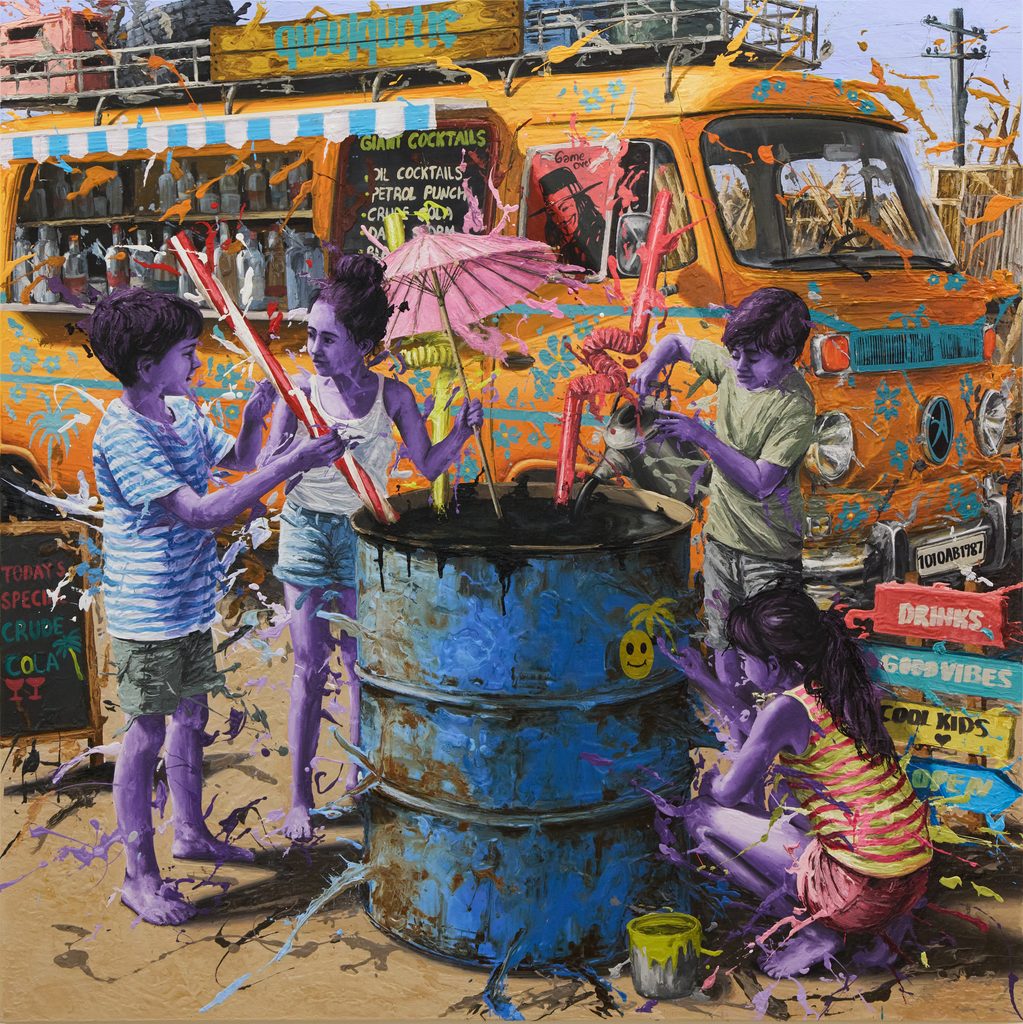
Aydin Bicen, Cocktail, 150 × 150 cm, acrylic on canvas, 2026.
The Zamansız app


Author
Gamze Kartal
Gamze Kartal is a London-based visual artist and a graduate of the Department of Art Education at Dicle University. Working across painting, collage, photography and digital manipulation, her practice explores the relationships between the body, memory, identity and perception. Using the image of the hand…
All articles (14) →Gamze Kartal more from this author
Arts & Culture
OTHER PEOPLE’S FRIDA
25 October 2026
Arts
IN THE FOOTSTEPS OF ART: MEMORY, NATURE, ROOTS AND TRANSFORMATION AN INTERVIEW WITH FIRAT BINGOL
1 October 2026
Arts
Edward Hopper,Nighthawks (1942)
18 August 2026
Latest
Arts & Culture
IOANNA KUCURADI:A LIFE DEVOTED TO PHILOSOPHY
5 October 2026
Arts
BREAKING FROM WITHIN: AN INTERVIEW WITH OMER EKEN
19 September 2026
Art Review
Batik Aesthetics and the Intersections of Contemporary Art in Erhan Şanal’s Portraits
15 September 2026